From Munich to the Board of Peace, the Trump Administration Struggles to Reassure its Transatlantic Partners; The Supreme Court Pushes Back  

Analysis
by Leslie Vinjamuri

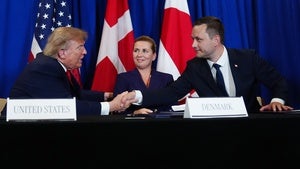
The United States and Europe are scrambling to reform their partnership. It is an open question as to whether the transatlantic partnership can continue to be an anchor for international order as the rest of the world presses rapidly ahead.

President Donald Trumpl listens during a Board of Peace meeting at the U.S. Institute of Peace
Mark Schiefelbein / AP
US Foreign Policy

A Healthier Alternative to Trump's Tariff Obsession

Analysis
by Jim O'Neill

The US Supreme Court struck down US President Donald Trump’s sweeping tariffs. History offers a potential path forward for the economy.

President Donald Trump speaks during an event to announce new tariffs in the Rose Garden
Mark Schiefelbein / AP
Global Economy

A New and Dangerous Era for US-China Ties

Analysis
by Evan Medeiros

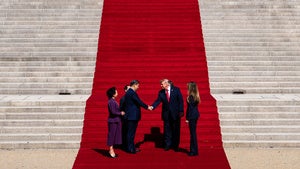
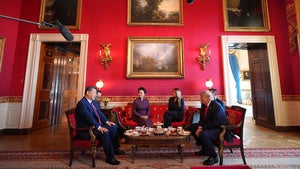
With Washington prioritizing deal-making over competition, Beijing’s confidence is growing—and the risk of miscalculation is rising. Could China use America’s time-out from strategic competition to surpass it economically, technologically, and geopolitically?

President Donald Trump and Chinese President Xi Jinping walk in front of people waving American and Chinese flags
Andrew Harnik / AP
US Foreign Policy

Olympic Officials Want the Games to Be Politically Neutral—Can They Be?

Analysis
by Alexander Cooley

By barring Russian athletes from competing under the Russian flag, the International Olympic Committee demonstrated its power as a global norm-maker. Now, sporting federation leaders are seeking to distance their games from geopolitics.

Ukraine's Vladyslav Heraskevych holds up his crash helmet during a press conference following a skeleton training session at the 2026 Winter Olympics, in Cortina d'Ampezzo, Italy, Tuesday, Feb. 10, 2026.
Steve Moore / AP
Global Politics

What Takaichi's Win Means for Japan's Foreign Policy Priorities

Analysis
by Craig Kafura

With her party now holding a majority in the Lower House, Prime Minister Sanae Takaichi turns to managing Japan's relationships with the United States, China, and Korea.

President Donald Trump, with Japanese Prime Minister Sanae Takaichi, speaks to members of the military aboard the USS George Washington, an aircraft carrier docked at an American naval base, in Yokosuka, Tuesday, Oct. 28, 2025.
Mark Schiefelbein / AP
Global Politics

The Upside to Donald Trump's Unorthodoxy

Analysis
by Leslie Vinjamuri

After months of punitive US tariffs, President Trump and Prime Minister Modi announced a trade deal between the world’s two largest democracies. But India has been following a now familiar pattern—building resilience in the face of a disruptive Washington.

India's Prime Minister Narendra Modi speaks as President Donald Trump listens during a news conference in the East Room of the White House, Thursday, Feb. 13, 2025, in Washington.
Ben Curtis / AP
US Foreign Policy

The Trump Administration's New National Defense Strategy Expands the US 'Homeland'

Analysis
by Kathleen Hicks

The new strategy "suggests a very geographically grounded way of thinking about defense," former US Deputy Secretary of Defense Kathleen Hicks told the Council. She explains what it could mean for China, the war in Ukraine, and US alliances—and what comes next.

Secretary of Defense Pete Hegseth stands at a podium with a logo at the Pentagon.
Mark Schiefelbein / AP
US Foreign Policy

What the EU-India Trade Deal Means for Middle-Power Networks

Analysis
by Leslie Vinjamuri

The free trade agreement between India and the European Union is a bold statement by middle powers, demonstrating to both the US and China that there could be better alternatives in a multipolar world.

Indian Prime Minister Narendra Modi, center, welcomes European Council President Antonio Costa, left and European Commission President Ursula von der Leyen before their meeting in New Delhi, India, Tuesday, Jan. 27,2026.
Manish Swarup / AP
Global Economy

Why 'America First' Has Prevailed—Despite Public Opinion

Analysis
by Bruce W. Jentleson

American public opinion is increasingly at odds with US President Donald Trump’s approach to foreign policy. Fifty years of Chicago Council on Global Affairs polling reveals why the "America First" agenda has prevailed—and where it might break down.

The U.S. Capitol is seen from the base of the Washington Monument shortly before sunset, Tuesday, Dec. 16, 2025, in Washington.
Julia Demaree Nikhinson / AP
America at 250

The American Political Environment Is Ripe for a New Foreign Policy Vision

Analysis
by Jordan Tama

Fifty years of Chicago Council on Global Affairs polling reveals significant reservoirs of cross-party agreement and a strong base of public support for a more cooperative approach to world affairs.

An early morning pedestrian is silhouetted against sunrise as he walks through the U.S. Flags on the National Mall and past the US Capitol Building in Washington.
J. David Ake / AP
America at 250