In Cuba, Food Security Is a Point of Political Pressure—and Solidarity

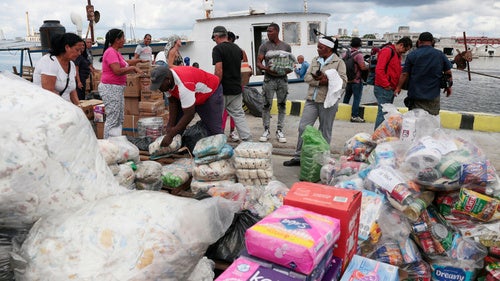
The global response to Cuba’s worsening humanitarian plight reveals a growing divide over whether limiting access to food and energy is an acceptable form of leverage or if there is a shared international responsibility for humanitarian intervention.
Just 90 miles from the United States, an entire national system is failing.
Cuba has experienced repeated nationwide blackouts over the past week, including the collapse of its electrical grid. Electricity no longer cycles predictably. In many areas, it has largely disappeared. For the country of 11 million people, this no longer reflects an infrastructure problem. It reflects a systemic breakdown. Framing the crisis as economic understates its severity. What is unfolding is a cascading failure across energy, food, and public systems. The lights are out in Cuba, and with them, the systems that allow people to eat.
Modern food systems depend on energy. Electricity enables refrigeration and storage. Fuel enables planting, harvesting, and transport. When energy systems collapse, food systems follow. In Cuba, that relationship is now playing out in real time. Fuel shortages have forced power plants offline and constrained transportation across the country. Without electricity, food spoils. Without fuel, crops remain in the field. Without gasoline, even when food exists, it does not reliably reach markets.
The question no longer centers on scarcity. It centers on whether the system that delivers food continues to function at all. This is what systemic failure looks like, not at the margins, but across an entire society.
The consequences already register across daily life. Food shortages have become routine. Lines for basic goods stretch for hours. Hospitals operate under emergency conditions, relying on intermittent generator power and facing shortages of essential supplies. Public services, from water systems to waste collection, function inconsistently, if at all. The social contract is fraying. Recent protests, some escalating into confrontation, reflect more than economic frustration. They reflect a breakdown in access to basic necessities, including food. Cuba has moved from chronic crisis to acute instability.
This outcome did not emerge from a single cause. Cuba’s infrastructure has long suffered from underinvestment and inefficiency. Its energy system is fragile and heavily dependent on imported fuel. But those vulnerabilities alone do not explain the speed or scale of the current collapse.
The Trump administration’s tightened enforcement of longstanding sanctions and recent intervention in Venezuela—Cuba’s primary energy supplier—have further restricted fuel flows to the island. These actions have compounded existing vulnerabilities, constraining access not only to fuel but to the systems that depend on it. In this context, food security is not simply a neutral humanitarian concern, but an instrument of leverage. And when food access becomes a channel through which foreign political pressure is applied, the resulting instability rarely remains contained within its intended boundaries or borders.
When food access becomes a channel through which foreign political pressure is applied, the resulting instability rarely remains contained within its intended boundaries or borders.
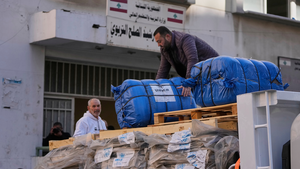
Even as the US government recalibrates their global commitments, a coalition of nations and civil society actors are continuing to assert that access to food, energy, and basic services should not collapse, even—and especially—under political pressure. In recent days, a humanitarian convoy delivered 14 tons of food, medicine, solar panels, and bicycles to Cuba as part of a broader effort involving organizations from more than 30 countries. Additional aid from regional organizations and countries including Mexico, Brazil, and China has begun to flow, even as broader geopolitical tensions persist. But these shipments do not resolve the crisis. They are, in the words of organizers, “a drop in the ocean of need.” Still, the contributions signal something important.
The divergence raises critical questions. What does it mean for the global order when food security becomes both a point of political pressure and political solidarity? Is there an international responsibility for humanitarian intervention? The answers will shape more than Cuba’s trajectory, as countries with fragile energy systems and heavy dependence on imported inputs face similar vulnerabilities. What is happening in Cuba demonstrates how quickly external constraints can convert those vulnerabilities into systemwide failure, and how rapidly food insecurity can evolve from a humanitarian concern into a driver of instability.
The policy implications are clear. First, food security must be treated as a core component of societal stability, not as a secondary outcome of economic policy. Second, policymakers must recognize that actions affecting energy access inevitably affect food systems and, by extension, political stability. Third, humanitarian response pathways must remain functional, even in politically contested environments. Food and the inputs required to produce and distribute it, especially fuel, cannot become discretionary tools of political pressure. Because when they do, the consequences cascade.
Cuba brings into focus a deeper divide in how the world is choosing to act. On one side, access to food and energy is constrained to influence political outcomes. On the other, a coalition of nations and civil society actors continues to treat that access as a shared responsibility—one that must hold even amid geopolitical tension. That divide will not remain confined to Cuba. It will define whether future crises are managed or allowed to escalate, and whether food security serves as a stabilizing force or becomes the trigger for systemic instability.
The Chicago Council on Global Affairs is an independent, nonpartisan organization and does not take institutional positions. The views and opinions expressed in this commentary are solely those of the author.
Related
 Food Security & Sustainability