War in the Middle East Ushers in a World of 'Might Makes Right'

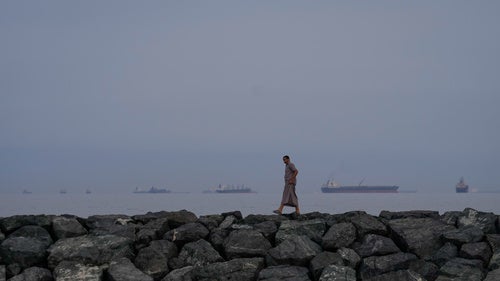
The US-led postwar international order is being tested in the waters of the Strait of Hormuz and in the shrewd calculations of governments from New Delhi to Helsinki.
In the early weeks of 2026, US President Donald Trump’s capture of Venezuelan dictator Nicolás Maduro and bid for a takeover of Greenland fueled a transatlantic ambition to define a successor to the Western-led postwar international order. Canadian Prime Minister Mark Carney’s call to action for middle powers was rapidly followed by Trump’s launch of the “Board of Peace.” Within weeks, US officials traveled to the Munich Security Conference, trumpeting a reform agenda as if to prevent the collapse of the existing order and the defection of US allies.
Now, two weeks into the military campaign against Iran, the world has been seized by a disruptive war that has spun out of the United States' control. Any coherence attached to the search for an alternative order has grounded to an abrupt halt, displaced by an incoherent US effort, seemingly to force Iran to back down but possibly to negotiate a settlement, Iran’s skillful use of the Strait of Hormuz to gain the upper hand, and Europe’s search to assert itself, or possibly to negotiate with Iran on its own terms.
Despite the Trump administration’s important military successes —including the assassination of Iran’s Supreme Leader Ayatollah Ali Khamenei and dozens of senior members of the Islamic Revolutionary Guard Corps—a war that the president anticipated would be swift has been anything but. While Iran’s ability to project power externally has been weakened, it has skillfully pursued a strategy of asymmetric warfare. In cutting off access to the Strait of Hormuz—through which roughly 20 percent of the world's traded oil passes—it contributed to what the International Energy Agency described as “the largest supply disruption in the history of the global oil market.”
US military success has not translated into domestic support, and the war has remained widely unpopular among Americans since the first round of US-Israeli strikes. A recent Quinnipiac University poll found 53 percent of American voters oppose the US military action in Iran, while just 40 percent support it. The disruption to oil exports has contributed to this, as Americans have watched prices at the pump increase by more than 50 percent. Everything from home heating to groceries are at risk of a price hike if the war drags on.
In one of the most disturbing and devastating moments in the war to date, a preliminary investigation indicated that the United States was responsible for a mistargeted missile strike on an Iranian girls’ elementary school that killed more than 175 people, mostly children.
US partners and allies in the Gulf are experiencing even greater impacts in the fallout of Washington’s campaign against Iran. In focusing its air defenses on Israel, the United States has left the Gulf states exposed. American bases in the region have now become a liability for these countries, increasing their vulnerability rather than diminishing it. And the symbol and reality of the Gulf as a safe haven for tourism—and also for investment, trade, and business—has been fundamentally shaken and may never return.
US partners and allies in the Gulf are experiencing even greater impacts in the fallout of Washington’s campaign against Iran.
America’s European allies are caught in the crosshairs, struggling to hang together while calculating their response to the US war effort—including an effort to navigate US use of Europe's air bases, limiting these to defensive purposes in an attempt to shield Europe from complicity, and to maintain a veneer of independence. "A scenario such as we have seen in Libya, Iraq, or other countries in the region would also harm us all," German Chancellor Friedrich Merz said earlier this week. "This affects our security, our energy supply, and possibly also the situation surrounding migration.” In a sign that the United States can no longer assume its dominance, France and Italy reportedly opened separate talks with Iran to regain access to the Strait of Hormuz.
In what has been one of Europe’s worst nightmares, Russia will profit from the war in the Middle East. Last week, the United States temporarily lifted sanctions, allowing countries to purchase Russian oil until April 11. Leaders from both the G7 and European Union were quick to push back on the decision, which will provide a new, albeit temporary, revenue stream for Moscow to fund their invasion of Ukraine. Ukrainian President Volodymyr Zelenskyy noted that the move “could provide Russia with about $10 billion for the war,” which “certainly does not help peace.” Even India, who benefited from the decision, felt patronized by the US effort to dictate its oil purchases from Russia.
All of this suggests that the widening Middle East war will not pull the West closer together or bring Americans to rally round their flag. Rather, it will accelerate the demise of the US-led postwar international order. "The United States was the principal superpower actor that was upholding global order, that supposedly intervened to bring about an end to conflicts," Karim Haggag, director of the Stockholm International Peace Research Institute, said on this week's episode of the Council's Deep Dish podcast. "Now, the reality is the United States is the biggest disrupter.”
At this year’s Raisina Dialogue in New Delhi, Finnish President Alexander Stubb said in his opening speech that “the Global South will decide what the next world order will look like.” It is a tall order for developing countries to step into the void that the West is creating. But they may not have a choice. The US-led world order is being tested, right now, in the waters of the Strait of Hormuz and in the shrewd calculations of governments from New Delhi to Helsinki. With Trump threatening a “friendly takeover” of Cuba, and opinion of the United States continuing to take a turn for the worse across much of Europe, world leaders will continue their search for an alternative to American power.
The Chicago Council on Global Affairs is an independent, nonpartisan organization and does not take institutional positions. The views and opinions expressed in this commentary are solely those of the author.