The Iran War is Dividing America Along Party Lines
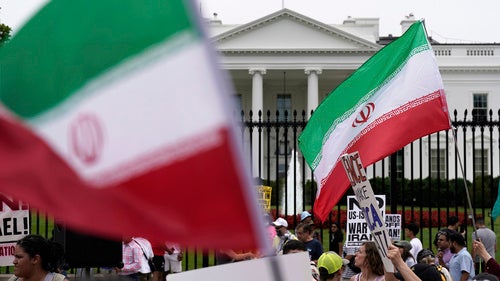
Recent polls show Democrats and Independents oppose US policy toward the conflict, while Republicans back the Trump administration's approach.
More than a month of hostilities, an extended ceasefire, and a series of negotiations between the United States and Iran have yet to produce a tenable peace agreement between the warring parties. As the Trump administration weighs its next steps in the war, analysis of recent public opinion surveys suggests a majority of the American public would prefer the United States end the conflict as quickly as possible. However, Republicans remain staunch supporters of the Trump administration’s approach to Iran, believing US intervention will reduce the likelihood of Iran developing nuclear weapons and improve regional stability.
Key Findings
- Across several polls, American public opinion on the war in Iran has remained consistent over the last month and a half, with few fluctuations.
- More than half of Americans—including majorities of Democrats and Independents—oppose the war in Iran; Republicans, on the other hand, support the war and approve of US military strikes against Iran.
- Americans across the board oppose sending US ground troops into Iran, citing concerns over the risks to the lives of military personnel.
- Two-thirds of Americans want the United States to end its involvement in the conflict, even if US military objectives are not met—a policy view shared by Democrats and Independents.
- By contrast, a majority of Republicans think the United States should work to achieve its goals in Iran, even if it means US involvement in the conflict continues for an extended period of time.
- More than half the US public—including majorities of Democrats and Independents—do not believe the Trump administration has been disseminating accurate information about the war in Iran; Republicans believe they have been receiving accurate information.
Republicans Remain the Sole Supporters of Trump’s War in Iran
An April 10-12 Ipsos poll finds six in 10 Americans disapprove of US military strikes against Iran (59%, 37% approve). Democrats overwhelmingly disapprove of the direct military action (91%), as do a majority of Independents (67%). But in stark contrast, three-quarters of Republicans approve of the strikes (76%), consistent with readings from early March. This partisan divide mirrors that found in an April 3-6 Economist/YouGov poll, in which majorities of Democrats and Independents oppose the war in Iran (84% and 57%) and two-thirds of Republicans support it (67%). Both surveys show little change in opinion since the war began in late February.
Despite the stark partisan divide in support for military action against Iran, a March 27-29 Ipsos survey finds a point of relative consensus among the public: The United States should not send ground troops into Iran. Three-quarters of Americans oppose putting boots on the ground in Iran (76%), including majorities of all partisan groups (95% Democrats, 83% Independents, 55% Republicans).
Costs of Iran War Are Top of Mind for Many Americans
Recent surveys suggest public opposition to US military action in Iran could be driven by concerns over the safety of US military personnel in the region, the resulting economic repercussions, and the welfare of Iran’s population. Ahead of its surprise attack against Iran, the United States orchestrated its largest military buildup in the Middle East since 2003. Since the conflict began, at least 13 US Service Members have been killed, with more than 300 wounded. Officials in the Trump administration have also hinted at the deployment of ground troops if negotiations with Iran do not produce a tenable peace agreement before the ceasefire ends.
The March Ipsos poll finds more than eight in 10 Americans across the board are somewhat or very concerned about the risk posed by US military action in Iran to the lives of American military personnel.
Americans also take issue with the economic costs associated with the war in Iran and share a bleak outlook for the wartime economy. According to a March 23-29 survey conducted by the Pew Research Center, seven in 10 Americans are concerned about higher gas and fuel prices (69%, with 45% being extremely concerned). The April Ipsos poll further reports two-thirds think gas prices will get worse as a result of the war (66%), and more than half confirm it has had a mostly negative impact on their own personal financial situation (54%).
These concerns likely reflect the reality of rising prices at gas stations and grocery stores following Iran’s closure of the Strait of Hormuz—the primary maritime route for roughly 20 percent of the world’s oil and liquified natural gas supply, as well as a third of internationally traded fertilizer. Considering both the costs and benefits to the United States, half of Americans in the April Ipsos poll think US military action in Iran has not been worth it (51%), while a quarter believe it has been worth it (24%); roughly the same share is not sure (22%).
Americans Doubt War in Iran Will Improve Life for Iranians or Stability in the Middle East
Americans are not only concerned about rising costs and the safety of American troops, but also the wellbeing of the Iranian people, whose lives the Trump administration claimed American intervention would improve. Despite the administration’s promise, more than half of Americans in the April Ipsos survey foresee the quality of life for Iranians either remaining the same (14%) or worsening (51%) as a result of US military action against Tehran, consistent with findings from early March.
These results mirror those from the March Economist/YouGov survey, which found twice as many Americans think US military intervention in Iran will worsen the situation for the people of Iran (45%) as those who think it will improve it (21%). In this poll, Republicans stand apart from other partisans in their view that US military action will improve the situation and quality of life for Iranians (48%); Democrats and Independents tend to think Iranians will fare worse as a result of the war (70% and 47%, respectively).
Americans also foresee the war in Iran further destabilizing the Middle East, which has been engulfed in a conflict between Israel, Iran, and Iranian-backed proxies in the region since late 2023. Ipsos’ April survey reports most think US military action in Iran will either maintain stability in the Middle East at its current level (13%) or worsen it (52%, and just 19% think it will improve stability). The public’s skepticism may be driven by events on the ground, as the US attack against Iran plunged the region further into chaos. Iran retaliated by launching drone and missile attacks against US military bases and energy infrastructure across the Middle East and blocking the Strait of Hormuz. As a result, the United States’ closest allies have sustained significant damage to their economies and energy infrastructure that experts warn will take at least 12 to 18 months to recover.
Thinking of the broader implications of this conflict, only a third of Americans in a March 19-23 Quinnipiac University poll say the war in Iran will make the world safer (35%). More, by far, say it will make the world less safe (42%) or make no difference (20%). Here, too, Republicans stand apart from other partisans; The majority of the GOP is confident the war will make the world safer (79%), while almost the same share of Democrats think the war will make the world more dangerous (74%, 22% no difference). Independents are more divided, with half expecting the war to make the world less safe (49%), a quarter believing it will make it safer (25%), and 22 percent expecting it to make no difference.
Finally, the March Pew Research Center survey also shows more than half of Americans think US military action against Iran will make its development of a nuclear weapon either more likely (27%) or about as likely as before (29%); an additional 27 percent think military action will make it less likely. Most Republicans share this optimistic outlook, that US intervention will make Iranian nuclear development less likely (47%).
Most Americans Would Rather Withdraw and Abandon Objectives in Iran
Overall, Americans disapprove of the way Trump is handling the situation with Iran (58%). According to an April 9-13 Quinnipiac University poll, nearly all Democrats (96%) and two-thirds of Independents (65%) disapprove. The vast majority of Republicans, on the other hand, approve of the president’s handling of the war (85%).
Americans show little appetite for another protracted war in the Middle East. Two-thirds in the March Ipsos poll say the United States should work to end its involvement in the conflict quickly, even if it means it does not achieve all of its goals in Iran (66%)—a policy view shared by majorities of Democrats (91%) and Independents (74%). By contrast, Republicans think the United States should work to achieve its goals in Iran, even if it means US involvement in the conflict continues for an extended period of time (57%).
Despite their willingness to wait the war out, the March Ipsos poll finds that Republicans foresee US military involvement in Iran ending in just a matter of weeks (58%), which could reflect their confidence in US President Donald Trump’s handling of the conflict. Yet the public at large—including Democrats (89%) and Independents (70%)—expects the United States to be at war with Iran for an extended period of time (65%).
When asked about the probability of reaching a peace agreement, few in the March Economist/YouGov poll are confident the United States and Iran will reach a negotiated settlement to end of the war within the next month (22% overall, 18% Independents, 10% Democrats). Even among Republicans, more expect negotiations to fall through (45%) than succeed in reaching a settlement within the next month (39%), contrasting Ipsos’ findings.
Slim Majority of Americans Doubt Official Narratives on Iran
Some experts have also suggested top officials from the Trump administration—including Trump himself—have made inaccurate, false, and contradictory claims about the war’s rationale, US military operations, and Iran’s involvement in negotiations. The March Economist/YouGov poll finds Americans also doubt the accuracy of information released by the Trump administration.
More than half the US public at large (55%)—including 87 percent of Democrats and 58 percent of Independents—do not believe the Trump administration has been disseminating accurate information about the war in Iran. Conversely, the majority of Republicans believe they have been receiving accurate information (57%).
Conclusion
Majorities of Americans express skepticism or outright opposition to the war in Iran across nearly every dimension measured in public opinion surveys between March and April. Yet Republicans stand in stark contrast, supporting the intervention and believing it will improve the lives of the Iranian people and reestablish stability in the Middle East. As the Trump administration weighs its next step in the war, including the potential deployment of ground troops, it faces mounting pressure from a public that prefers to walk away rather than commit to another protracted war in the Middle East.


Related Content
 US Foreign Policy
While few Americans want to see Iran develop a nuclear weapon, just half expressed support for US airstrikes against Iran’s nuclear facilities—and most believe direct military action would spark a broader regional war.
 Global Politics
Thinking about Pakistan as a South Asian power misses the fact that it has regional connections to the Middle East—and global power connections it can leverage.
 Food Security & Sustainability
Catherine Bertini and Michael Werz explain how the Iran war could ripple from energy markets into global food systems, driving prices higher and worsening global food security.
 Global Politics
A European-led international mission and the Gulf Cooperation Council are trying to determine who will guarantee openness and stability in the strait once the Iran war ends—and how.