
Majorities also oppose using US troops to overthrow governments in Cuba or Colombia, occupy Venezuela, and gain access to the natural resources of other countries.
Following the January 4 United States special forces operation which captured Venezuelan President Nicolás Maduro and his wife in Caracas, US President Donald Trump has set his sights on other governments in the Western Hemisphere. In recent comments, Trump has threatened Colombian President Gustavo Petro and hinted that the Cuban government might also crumble without Venezuela’s financial backing. Most concerning for Europeans is Trump’s renewed focus on acquiring Greenland, which some Danish leaders say would effectively end the North Atlantic Treaty Organization.
A new Chicago Council on Global Affairs-Ipsos survey, fielded January 9–11, 2026, finds the American public does not approve of Trump’s military forays. Majorities across partisan lines oppose using military force to invade Greenland, overthrow governments in Latin America, occupy Venezuela, gain access to another country’s natural resources, or expand the territory of the United States.
Key Findings
- Americans overwhelmingly oppose invading Greenland to make it part of the United States (85%) and using US troops to overthrow the Cuban (78%) or Colombian (80%) governments.
- Seven in 10 Americans oppose using US troops to occupy Venezuela if the new government refuses to cooperate with the United States (74%).
- For each of these items, majorities across all political affiliations oppose, though Republicans to a lesser degree than other partisans.
- Few Americans say it is acceptable for the United States to use military force to compel governments to cede territory to the United States (15%), give the United States access to oil reserves or natural resources (22%), or change their government to install more pro-US leadership (25%).
- Americans are evenly divided on whether it is acceptable (48%) or unacceptable (47%) to use US military force to make a country abandon its nuclear weapons.
Majorities Oppose Using US Troops to Take Over Greenland, Overthrow Governments in Colombia and Cuba
Chicago Council-Ipsos polling conducted just days after Maduro’s capture finds broad public opposition to the use of US troops in offensive operations. Across the board, Americans decisively oppose using military force to invade Greenland (85% overall), gain access to the natural resources of other countries (81%), and overthrow the governments of Colombia (80%) and Cuba (78%). However, Republicans are less likely to oppose the use of force in these circumstances than Democrats and Independents.
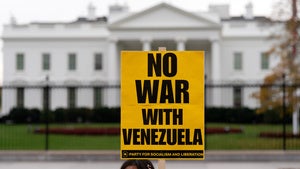
Three-quarters of Americans also oppose using troops to occupy Venezuela if the new government doesn’t cooperate with the United States (74%), though Republicans are somewhat divided on the issue (51% oppose, 45% favor). By contrast, nine in 10 Democrats (91%) and eight in 10 Independents (80%) oppose occupying Venezuela.
Instead, Americans are most likely to support using the US military to help defend allies, like Baltic members of NATO (52% favor, 44% oppose) and South Korea (46% favor, 48% oppose) (see appendix).
Most Americans Oppose Using Force to Ensure Oil Supply
When asked if they would support using US troops to “ensure the oil supply,” six in 10 Americans say they oppose this action (62%, 34% favor). This marks a dramatic decline from 2014 when 52 percent favored using US troops for this purpose. Republicans stand apart from other partisans in their attitudes (62% support). While GOP supporters have consistently been more likely to favor the use of force for this purpose, the differences between Republicans and other partisans have grown substantially over the past decade. Currently just 19 percent of Democrats approve of using force to ensure the oil supply (down from 51% in 2014). Similarly, just 27 percent of Independents support the use of force for this purpose (down from 50% in 2014).
Majorities Say It Is Unacceptable to Use US Military to Gain Territory or Natural Resources
In a separate but related question, three-quarters of Americans (73%) say it is unacceptable to use US military force to compel another country to give the United States access to its oil reserves or natural resources, while just 22 percent think it is acceptable. Republicans are more divided on whether this is acceptable (54% acceptable, 43% unacceptable) than are other partisans, who strongly consider using military force to gain access to other countries’ natural resources unacceptable (86% Democrats, 79% Independents).
However, most unacceptable to Americans is the use of military force to compel another country to cede its territory to the United States (80% unacceptable, just 15% acceptable). While Republicans are again most inclined to use military force for this purpose (31% acceptable, compared to 12% among Independents and 7% among Democrats), majorities across party lines view territorial acquisition as an unacceptable use of the US military.
As demonstrated in their opposition to using force to effect a leadership change in Cuba and Colombia, a majority of Americans also think it is unacceptable to use military force to install a more pro-US government in another country (70%, 25% acceptable). Republicans are equally divided (48% acceptable, 48% unacceptable) on this use case, perhaps in support of the administration’s recent removal of Maduro. By comparison, relatively few Independents (21%) and Democrats (12%) say installing pro-US governments is an acceptable use of military force.
Americans find the possibility of using force to compel a country to abandon its nuclear weapons more acceptable than other motives presented (48% acceptable, 47% unacceptable). Here there are some clear partisan differences, with two-thirds of Republicans (67%) and nearly half of Independents (47%) saying this is an acceptable motive for using US force. By contrast, only a third of Democrats agree (34%), and the majority believe it to be unacceptable (64%).
Americans Suspect Drugs and Oil Top Reasons for US Military Action in Venezuela
The general public tends to think the most important reasons for recent US actions in Venezuela are to curtail the shipment of drugs to the United States (38%) and obtain access to Venezuelan oil reserves (33%). A majority of Republicans see the curtailment of drug shipments as a very important motivating factor (69%), while Democrats say access to Venezuelan oil reserves was a very important factor (41%). For their part, similar proportions of Independents say each of the two factors were very important (32% curtailing drug trafficking, 29% access to oil).
Less than a quarter of Americans think asserting dominance in the Western Hemisphere (23%) or reducing Chinese influence in Latin America (21%) were very important reasons the US took military action in Venezuela, though Republicans are more likely than other partisans to believe the latter was a motivating factor (38%, vs. 12% Democrats and 17% Independents). Americans are least inclined to think Maduro’s capture was intended to bring democracy to Venezuela (18%). More Republicans tend to think this was a very important reason for the operation (32%) than Democrats (12%) or Independents (15%).
Americans Say US Leaders Focusing Too Much on Venezuela and Not Enough on Inflation
Overall, Americans tend to see US leaders giving the issue of Venezuela too much attention (42%), though Republicans stand out in viewing the amount of attention given to this challenge as about right (58%). By contrast, Americans do not think enough attention is being given to the issue of inflation (72%) or other geopolitical challenges like the Russia-Ukraine conflict (42% not enough) or US competition with China (40%).
Conclusion
While Trump continues to threaten other countries—most recently Iran—with military force, the American public is wary of putting more boots on the ground. Majorities overwhelmingly oppose using US troops to invade and annex Greenland or occupy Venezuela and do not believe gaining access to natural resources or installing pro-US governments are acceptable reasons to use military force against sovereign countries.
This analysis is based on data from a survey conducted by Ipsos from January 9 to 11, 2026, using the probability-based KnowledgePanel®. This poll is based on a nationally representative probability sample of 1,036 adults aged 18 or older.
The study was conducted in English. The data for the total sample were weighted to adjust for gender by age, race/ethnicity, education, Census region, metropolitan status, and household income. The demographic benchmarks came from the 2025 March Supplement of the Current Population Survey (CPS).
Specific categories used were:
- Gender (Male, Female) by Age (18–29, 30–44, 45-59 and 60+)
- Race/Hispanic Ethnicity (White Non-Hispanic, Black Non-Hispanic, Other, Non-Hispanic, Hispanic, 2+ Races, Non-Hispanic)
- Education (Less than High School, High School, Some College, Bachelor or higher)
- Census Region (Northeast, Midwest, South, West)
- Metropolitan status (Metro, non-Metro)
- Household Income (Under $25,000, $25,000-$49,999, $50,000-$74,999, $75,000-$99,999, $100,000-$149,999, $150,000+)
Partisan identification is based on how respondents answered a standard partisan self-identification question: “Generally speaking, do you think of yourself as a Republican, a Democrat, an Independent, or what?”
The margin of sampling error is plus or minus 3.1 percentage points at the 95% confidence level, for results based on the entire sample of adults. The margin of sampling error takes into account the design effect, which was 1.06.





Related Content
 Public Opinion
The US capture of Venezuela’s Maduro echoed intents outlined by Trump in the 2025 National Security Strategy. While the action might have appealed to his Republican base, the strategy’s principles are mostly out of step with US public opinion on America’s engagement in the world.
 Global Politics
As foreign ministers from Denmark and Greenland prepare to meet with Trump officials, Ambassador Julianne Smith explains what US actions to acquire the autonomous territory could mean for the United States’ most important alliance.
 Public Opinion
Most Americans believe the United States has too many interests in Europe to let any one country dominate the region.
 US Foreign Policy
Trump's first foreign policy moves of the new year included invading Venezuela, threatening to coerce Greenland into becoming a US territory, and withdrawing the US from 66 international organizations.