Trump 2.0 Enters 2026 in Full Force

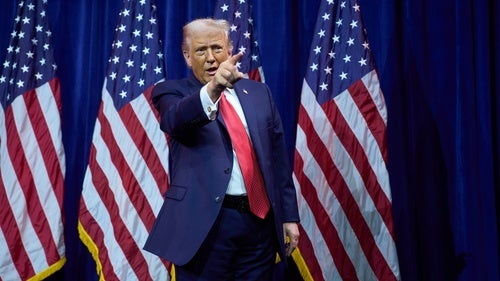
Trump's first foreign policy moves of the new year included invading Venezuela, threatening to coerce Greenland into becoming a US territory, and withdrawing the US from 66 international organizations.
Few of us in the world of global affairs and geopolitics were sad to bid farewell to 2025. While there were some positive developments, it was, as a whole, a highly disruptive, tumultuous, and chaotic year that injected a massive amount of uncertainty into the international order. The United States was a major, if not the only, driver in this global disruption. It formally withdrew from major multilateral institutions—most notably the World Health Organization (WHO) and the Paris Peace Accords—shut down the United States Agency for International Development (USAID) and reduced its funding for many UN agencies. The international trade order was thrown into disarray, and trade deals were explicitly linked to US national security interests. The administration did not abandon its key alliances, but it also made no clear indication that it would work toward a shared agenda.
US President Donald Trump delivered his inaugural address nearly a year ago and outlined his ambition to end major wars and deliver peace. This has proven difficult to achieve. According to the Peace Research Institute Oslo (PRIO), there were more state-based armed conflicts in 2024 than at any point in the past seven decades. The historic high carried into 2025, and the year concluded with peace deals still out of reach in Ukraine and Sudan, and a three-phase ceasefire plan in Gaza effectively stalled. Overseas development assistance reduced dramatically, with the OECD projecting a 9 to 17 percent drop in 2025, and estimates indicate that child mortality rose for the first time this century.
Will 2026 be better? The indicators are not good. PRIO’s AI-driven conflict forecasting system projects that we will see the greatest number of battle-related deaths this year in Ukraine, Sudan, Israel, and Palestine—all stemming from the conflicts that the United States has expressed a desire to end.
The question of what role the United States will play in shaping the international order in the year ahead is top of mind. Will it be a stabilizer? A peacemaker? Or will it continue to be a disrupter? This week’s events made it clear that Trump sees utility for the United States in the latter role.
"The question of what role the United States will play in shaping the international order in the year ahead is top of mind. Will it be a stabilizer? A peacemaker? Or will it continue to be a disrupter? This week’s events made it clear that Trump sees utility for the United States in the latter role."
Trump’s first foreign policy moves of the new year included invading Venezuela in the middle of the night, capturing its leader, and taking him and his wife to New York to stand trial. This was followed by Trump and members of his senior team threatening to coerce Greenland—an autonomous territory of NATO-member Denmark—into becoming a US territory. Then, on January 7, Trump announced he was withdrawing the United States from 66 international organizations, including the Intergovernmental Panel on Climate Change and the Partnership for Atlantic Cooperation, an innovative, multilateral framework for cooperation among the nations that border the Atlantic Ocean. The last remaining arms control treaty between the United States and Russia, which establishes a limit on deployed strategic warheads, is set to expire next month. Trump and Russian President Vladimir Putin have yet to discuss what will take its place.
What can we make of this? First, that Trump is unbound and undeterred by precedent, norm, or law, and neither US allies, nor Congress, nor the US courts have so far given reason for anyone to believe that this is likely to change.
While the United States has long expressed concern over rival powers undermining democratic norms in Latin America, Trump’s actions in Venezuela this week were not about democracy. And they likely had less to do with securing oil than they did with keeping other powers from having it. China, Cuba, Iran, and Russia all benefited under Nicolás Maduro’s presidency, with China taking about 80 percent of Venezuela’s crude exports last year.
One significant thing to watch in the year ahead will be Congress. The US Senate voted to advance a war powers provision that calls for Congress to be notified in advance of any further hostile actions within or against Venezuela, prompting a furious reaction from the Trump administration. Still, there is little sign that this would serve as an effective constraint on the president. Any other legal response seems to be limited to an admittedly robust discussion among academic lawyers and, of course, in Maduro’s trial.
Special attention should also be paid to US allies in Europe and Asia. While many European leaders were notably restrained following the capture of Maduro, they found their voice when Trump renewed threats of seizing Greenland. In a joint statement, six NATO member countries said that they “and many other allies” have ramped up their “presence, activities and investments, to keep the Arctic safe and to deter adversaries.”
But if President Trump does press his case, what will Europeans do? Would they abandon NATO? In the absence of a clear alternative that would serve their security interests, that seems unlikely. Even alongside their condemnation of US statements on Greenland, the United Kingdom found a shared security interest with the United States and so supported the Trump administration in seizing a Russian-flagged oil tanker linked to Venezuela.
Trump may also succeed by gradually shifting how people think about sovereignty, territory, and national security. Already, many people are looking at maps of Greenland and thinking differently about its geography, significance, and appropriate place in the international order.
Second, there is little evidence that what we had come to assume was and should be the top geopolitical priority for the United States, namely managing the China challenge, is actually the top priority. The president did, however, request a 50 percent increase in the defense budget in part to build the ships necessary to deter China.
Third, we can assume that the norm against territorial conquest (read the excellent work of University of Minnesota scholar Tanisha Fazal) has indeed been cast aside, and not only by autocratic states like Russia. Territorial conquest is back. Even if the United States does not execute on its threat to take over Greenland, the fact that the leading proponent and guarantor of the post-war order would threaten to take over a peaceful state is enough to unsettle the norm. Watch for more.
Trump has no hesitation when it comes to playing a tough, hard game of great power politics. While his actions this week demonstrated his intent to exclude US adversaries from the Western Hemisphere, there is little evidence to suggest that he is willing to cede any other sphere of influence to US adversaries. Notably, Council polling shows that Americans do not support a world ordered by spheres of influence. Whether Trump’s desire for public approval will pull him from his bid for global power—or the public will be pulled along by Trump—remains to be seen.
The Chicago Council on Global Affairs is an independent, nonpartisan organization and does not take institutional positions. The views and opinions expressed in this commentary are solely those of the author.
Related Content
 US Foreign Policy
"This administration wants to enlist its friends to help secure its dominance in the Western Hemisphere," Leslie Vinjamuri says. "It's also willing to push the boundaries of what we have come to see as normal, expected, legitimate, international behavior in order to secure that dominance."
 Global Politics
We need to think about an approach to international law's control of the use of force that is true to the moral and power political realities of today's world.
 US Foreign Policy
The Trump administration's recent posture toward Venezuela reflects a long-standing focus of US foreign policy: control of the Western Hemisphere.
 Geopolitics
Insider insights from the architect of Trump’s 2017 National Security Strategy.