How Should International Law Be Considered in the Case of Venezuela's Maduro?

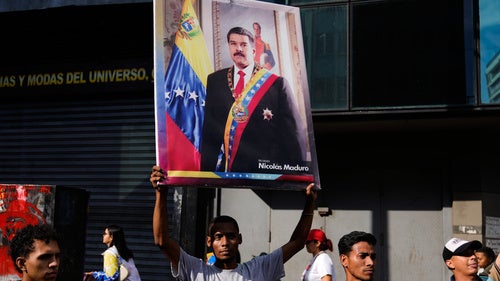
We need to think about an approach to international law's control of the use of force that is true to the moral and power political realities of today's world.
The last couple of days have seen a sorry spectacle of some very good international law experts holding up that piece of paper known as the UN Charter and wagging their finger at US President Donald Trump, saying the only basis for using force on the territory of another state is self-defense. But as soon as humanity or human security norms began to take on a status equal to those protecting the territorial integrity of states—a process brilliantly laid out by Ruti G. Teitel in Humanity’s Law—simply shouting out article 2(4) of the charter was bound to ring hollow.
In the 2003 case of Bosnian Serb detention camp commander Dragan Nikolić, the appellate chamber of the International Criminal Tribunal for the Former Yugoslavia pronounced a new approach to the abduction of international criminals, which was in fact foreshadowed decades before with the capture of Holocaust perpetrator Adolf Eichmann: One must determine whether “the damage caused to international justice by not apprehending [those] accused of serious violations of international humanitarian law is comparatively higher than the injury, if any, caused to the sovereignty of a State by a limited intrusion in its territory.”
Instead of trying to prop up a crumbling Westphalian formalism around the charter, international lawyers could more usefully apply this balancing test to the Venezuela operation. While it isn’t clear that the balance would come out in favor of the Trump administration’s actions, it is also not clear whether Venezuelan President Nicolás Maduro’s alleged crimes fall short of the required gravity, or that the injury to Venezuela’s sovereignty—at least so far—has been excessive.
Within the framework of the International Criminal Court (ICC), sitting heads of state or government do not enjoy immunity, which explains the indictments of Russian President Vladimir Putin, Israeli Prime Minister Benjamin Netanyahu, and others. Why then should they have immunity under customary international law?
In its case law, the International Court of Justice (ICJ) has placed emphasis on the difference between immunity and domestic and international prosecution. But this is a poor surrogate for the essential question: Can we expect that a foreign leader will get due process in the domestic courts of another state? The Trump administration has sent Maduro to New York, where the federal courts have frequently stood up to the Trump administration, rather than cowering before it.
Even if the ascent of humanity or human security as fundamental international law values need to be carefully considered before simply condemning the abduction of Maduro, the claim that the United States is entitled to use force to address economic injuries to its nationals—one which Trump and US Secretary of State Marco Rubio seem to be making—unravels more than a century of international law and takes us back to gunboat diplomacy. What had replaced gunboat diplomacy? Ultimately, investment arbitration—through which the international law clique has awarded billions of dollars to multinationals against poor countries and, in some cases, crippled the capacity of those countries to pay for basic social services. Gunboat diplomacy can cost lives, but we should not kid ourselves; bankrupting the treasuries of poor countries does as well. While one form of imperialism is roundly condemned by the international law mainstream, the other is touted as “rule of law.” But the latter has, after all, made more than a few international lawyers very wealthy through their roles as arbitrator or legal counsel.
Considering the humanity law transformation of international legal norms, one might have thought that the community of jurists would have spent more effort developing a set of acceptable, principled justifications for breaching territorial sovereignty on human security grounds (as they did in effect in the Nikolić case). Some jurists, including Anne-Marie Slaughter, have tried to develop a doctrine of humanitarian intervention that responds to liberal sensibilities and hopes of the moment. But most of the crowd has held to the refrain that only self-defense can justify a use of force that is an apparent violation of the charter.
Charter purism is not helpful when debating the risks and costs—as well as the potential benefits—of intervention.
Resort to force is a grave act, for sure, and the spirit of the charter lives on in that such actions are subject to heightened scrutiny of not only states but to global public opinion. As Trump admitted himself during his press conference on Saturday, the Venezuela operation was risky, and it could easily have gone bad. It still could go bad. Charter purism is not helpful when debating the risks and costs—as well as the potential benefits—of intervention. We need a strong but flexible normative framework that considers consequences, not only principles. The burden of proof the Trump administration must meet is high because, despite good intentions, many such interventions have gone south in the past, resulting in less, not more, human security and even more violent and vicious regimes, if not chaos and failed states. But prissy charter violation talk evades that debate, rather than informing it usefully.
In a world where Israel bombs whatever country in the region it feels like on a given day without much of an effort at justification and where regional powers can, with effective impunity, fuel with arms and money atrocities in Sudan on an even far greater scale than Israel in Gaza, making Trump the major villain in the breakdown in international law orthodoxy seems at least half blind. The last real victory of the UN framework was in fact because of, not despite, Trump. A Security Council resolution entrenching a path forward on Gaza, and indeed Palestine more generally, got through unvetoed. How many of the international jurists now demonizing Trump as the destroyer of the charter system cheered the passage of that resolution?
We need to think about an approach to international law’s control of the use of force that is true to the moral and power political realities of today’s world. While Hugo Grotius, often considered the founder of modern international law, is frequently disdained these days as an apologist for the use of force, there is something to be said for a return to the Grotian sensibility—where legal, moral, and prudential restraints and justifications concerning the use of force are all considered together, fluidly, in evaluating the actions of states and their effects on the interests of humanity.
The Chicago Council on Global Affairs is an independent, nonpartisan organization and does not take institutional positions. The views and opinions expressed in this commentary are solely those of the author.
Responses
We asked experts to share their responses to this commentary. Click to read their thoughts below.
Rob Howse’s provocative comment rightly notes that the international regime governing the use of force seems to have little restraining power in our current moment. He highlights an old theme in jurisprudence, namely that there is a gap between what positive law requires in any particular situation and how we might assess things morally. The Venezuela raid, which violated many rules of positive law, might end up being morally justified on balance. But as he rightly notes, it might end badly. Much will depend on the decision to leave the miserable Bolivarian regime completely intact, minus its titular head.
Howse calls for a new framework for thinking about the use of force. Be careful what you wish for. Notwithstanding the bloody second half of the 20th century, the UN Charter regime worked for a long time to uphold some important norms: those of territorial integrity and non-acquisition of territory. That was the principle around which the charter regime was most effectively mobilized in its entire history, namely in the disgorgement of Kuwait after Iraqi President Saddam Hussein’s invasion in 1990.
The principle of non-acquisition of title is what has really broken down in the last few years, with US President Donald Trump’s blessing of the Israeli annexation of the Golan Heights and Morocco’s title to the Western Sahara, as well as Russian President Vladimir Putin’s denial of the existence of Ukraine as an independent state. We may soon see Trump “give” eastern Ukraine to Russia. This all is a return not just to gunboat diplomacy but to raw 19th century imperialism, in which Trump adviser Stephen Miller can say with a straight face that we must dismember a NATO ally. The 19th century was not a particularly good one for “Humanity’s Law,” and the 21st will not be one either if things keep going in this way.
It is worth noting that the early years of this century were the apex for a richer framework for thinking about the use of force, namely the doctrine of humanitarian intervention promoted by Canada, which Howse mentions. This doctrine never was fully accepted, and after the Obama administration invoked it to justify the no-fly zone in Libya with no plan for post-Qaddafi governance, there has been no serious discussion of it. The framework failed in part because it was susceptible to abuse and cut against the charter norms of non-interference. In practice, however, humanitarian interventions have always been judged expost using the consequentialist framework that Howse proposes. The Vietnamese invasion of Cambodia in 1978 was a charter violation but also deposed the Khmer Rouge, and few would say that it should not have happened. Kosovo might be another example, as was collective intervention by the Economic Community of West African States (ECOWAS) in the Gambia—technically illegal but widely seen as justified.
I don’t see much plausible substitute for the UN Charter regime, even if it is observed in the breach. It requires states to make claims to justify intervention, even if those claims are cynical or patently false. Such hypocrisy allows other states to criticize and condemn, and sometimes even engage in collective action. Today’s world is one in which legal arguments are no longer even made. This cannot bode well for humanity and provides few resources for building a new framework.
Tom Ginsburg is the Leo Spitz Professor of International Law at the University of Chicago, where he works on comparative and international law. He also directs the University of Chicago’s Malyi Center on Institutional and Legal Integrity and co-directs the Comparative Constitutions Project, an effort funded by the National Science Foundation to study the world’s constitutions. Previously, Ginsburg served as a legal adviser at the Iran-US Claims Tribunal and The Hague, and he continues to work with international development agencies and foreign governments on legal and constitutional reform. He is the author of numerous award-winning books, including How to Save a Constitutional Democracy (2018), co-written with Aziz Z. Huq, and co-hosts the Entitled podcast on human rights.
Related Content
 Global Politics
The US military captured Venezuelan President Nicolás Maduro during a large-scale strike. Experts assess what the unprecedented US intervention means for Venezuela, US foreign policy, and regional and global stability.
 US Foreign Policy
The Trump administration's recent posture toward Venezuela reflects a long-standing focus of US foreign policy: control of the Western Hemisphere.
 US Foreign Policy
"The person that is probably benefiting the most right now is Vladimir Putin," Nonresident Senior Fellow Bruce Jentleson says. "'What's yours in mine' is what he said to Ukraine."
 US Foreign Policy
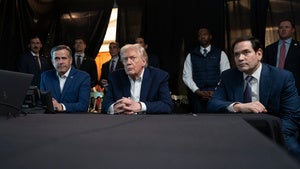
"Whether one loves Donald Trump or hates him, this daring operation shows what leadership in the executive branch looks like," Council Board Member Richard Porter writes following the US intervention in Venezuela.