Our expert research provides trusted, balanced insight and analysis on US foreign policy and America’s global engagement and advances policy solutions on critical global issues.
2021 Chicago Council Survey data show a majority of Americans support a range of US policies towards Taiwan: recognition as an independent country, inclusion in international organizations, and a US-Taiwan free trade agreement.
In picking fronts that offer the paths of least resistance, trilateral cooperation will maximize the presence of all three countries in ASEAN, maintaining balance in the region and making collective progress toward economic and development goals.
A report from the Task Force on Trilateral Cooperation Amid China’s Rise recommends a new policy mix that leverages each country’s individual strengths and advantages.
Majorities of South Koreans cite low birthrates in South Korea and North Korea’s nuclear program as larger threats than China's economic or military power.
A March 2021 survey finds Americans see US priorities in Asia to be less about limiting the expansion of China and more about economic growth and strengthening democracy.
A joint Council and IranPoll survey shows that although Iranian and American public support for the Joint Comprehensive Plan of Action has waned over time, there is still sizable backing for it in both countries.
The 2020 Chicago Council on Global Affairs-University of Texas at Austin survey explores to what extent Democratic, Republican, and Independent foreign policy professionals support Biden’s international agenda.
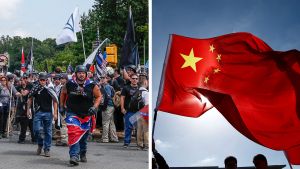
New survey data shows a partisan divide on what Americans believe is the greatest threat to the United States: Democrats rank violent white nationalist groups the highest, while Republicans list China as the greatest threat.
A task force, cochaired by Chuck Hagel, Malcolm Rifkind, and Kevin Rudd with Ivo Daalder, argues that fraying American alliances and a rapidly changing security environment have shaken America’s nuclear security guarantees and threaten the 50-year-old nuclear nonproliferation regime.