We Know How to End Famines

Analysis
by Andrew S. Natsios

Conflicts will continue to drive food insecurity—unless we intervene.

In this Monday, May 16, 2016 photo, two-year old Maria Sheikh, a Syrian refugee child, sits in a trolley at a supermarket in the city of Gaziantep, southeastern Turkey. Maria's mother Huda is using a debit card provided by the World Food Program, to take care partially of the family's groceries.
Lefteris Pitarakis / AP
Food Security & Sustainability

AI Chatbots Are Giving Farmers New Choices

Analysis
by Alesha Miller

A quiet revolution is happening on small farms in Africa and Asia as farmers access better information via AI-powered apps.

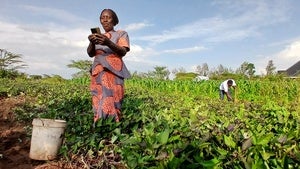
A woman types on a cell phone in a field.
Digital Green
Food Security & Sustainability

Food Security and Trade in a Disrupted World

Analysis
by Hope C. Michelson

Trade helps governments manage food prices in the near term, while growth in agricultural productivity ensures food is plentiful and affordable in the future.

A customer carries grocery products at Market Depot Wholesale Wednesday, March 25, 2026, in Dearborn, Mich.
Paul Sancya / AP
Food Security & Sustainability

Why Fuel Prices May Go Higher Still

Analysis
by Coauthors

Oil-related prices are high, but poised to go even higher.

Gas and diesel prices are displayed at a Mobil station, Tuesday, Sept. 22, 2026, in Los Angeles.
Richard Vogel / AP
Global Economy

Trump and Xi Agree on "Constructive Strategic Stability," But Differ on What It Means

Analysis
by Paul Heer

Prospects for positive breakthroughs and stabilization of the US-China relationship will remain limited as long as the two sides are focused more on maneuvering for advantage than on working to define the concept.

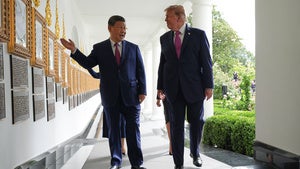
President Donald Trump and China's President Xi Jinping walk along the Colonnade of the White House, Thursday, Sept. 24, 2026, in Washington.
Jacquelyn Martin / AP
US Foreign Policy

The Case for Talking to China Is Not a Case for Détente

Analysis
by Evan Medeiros

Summits, like this week’s between Trump and Xi, are never cost-free.

President Donald Trump and China's President Xi Jinping shake hands as first lady Melania Trump and China's first lady Peng Liyuan watch, after visiting the National Archives Museum, Friday, Sept. 25, 2026, in Washington.
Julia Demaree / AP
US Foreign Policy

Trump's Meeting with Xi Reveals Limits of Personalistic Foreign Policy

Analysis
by Raymond C. Kuo

The two leaders left the US-China summit without any agreement on technology competition, trade, or Taiwan.

President Donald Trump, from right, and first lady Melania Trump attend a tea with China's President Xi Jinping, from left, and his wife Peng Liyuan in the Red Room of the White House, Friday, Sept. 25, 2026, in Washington.
Jacquelyn Martin / AP
US Foreign Policy

What Trump's Greenland Deal Means for Arctic Security

Analysis
by Coauthors

Julianne Smith, Deborah Rosenblum, and Ariane Tabatabai discuss how the US-Denmark-Greenland agreement will impact US force posture, intra-NATO tensions, and Trump’s push to acquire Greenland.

President Donald Trump shakes hands with Greenland's Prime Minister Jens-Frederik Nielsen, before signing a security agreement during the United Nations General Assembly, Tuesday, Sept. 22, 2026, at the UN headquarters, as Denmark's Prime Minister Mette Frederiksen, center, looks on.
Julia Demaree Nikhinson / AP
Geopolitics

Can the United States and China Compete on AI While Managing Shared Risks?

Analysis
by Coauthors

Without buy-in from Washington and Beijing, proposals aimed at reining in artificial intelligence are unlikely to move the needle.

A person passes by a display of robots and a sign that says AI
Ng Han Guan / AP
Technology

Ignoring the BRICS Summit Is a Mistake

Analysis
by Suzanne Nossel

Though internally divided, the grouping normalizes an international landscape where the United States is not at the table.

World leaders pose for a group photo during the BRICS summit in New Delhi
Indian Foreign Ministry via AP
Geopolitics