Food Security and Trade in a Disrupted World

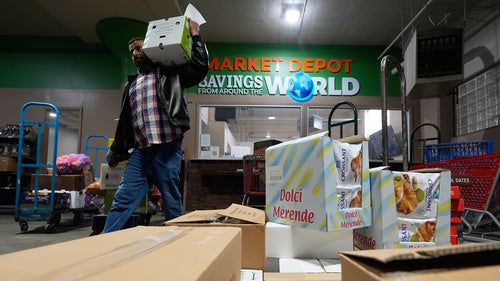
Trade helps governments manage food prices in the near term, while growth in agricultural productivity ensures food is plentiful and affordable in the future.
Agricultural trade is fundamental to the global food system. The economic integration of global food markets has increased significantly in the last 50 years, driven in part by the declining cost of communication and transport, progress in trade liberalization, increases in foreign investment, and the growth of multinational enterprises.
Long-term food security ultimately depends on sustained growth in agricultural productivity, supported by investment in agricultural research and development and access to the technologies, inputs, and institutions that translate innovations into higher crop yields. Trade has facilitated access to many of these essential agricultural inputs and technologies, including nitrogen, phosphate, potassium, lime, seeds, and agrochemicals, helping drive considerable crop yield increases since the 1960s.
Although countries still tend to produce most of the food they consume, they can depend heavily on imports for particular commodities and inputs. Trade helps move surplus production to address regional and temporal deficits, easing shortages and stabilizing domestic prices. But trade can also transmit supply shocks, creating winners and losers within and across national boundaries. Global food markets remain highly concentrated in a small number of commodities. Corn, wheat, soybeans, vegetable oils, and rice constitute more than 50 percent of directly consumed human calories, and maize and soybeans have become critical to global livestock production. Disruptions to production, trade, or prices in these commodities can have wide-ranging consequences.
Governments use a range of strategies to manage domestic food markets and prices, including tariffs, import and export quotas and restrictions, and strategic reserves and buffer stocks. These measures reflect and balance competing objectives: keeping market prices low enough for consumers yet high enough to protect and incentivize farmers.
How Food Prices Shape Food Insecurity
The number of food insecure people worldwide over the past several decades has declined. Global rates of undernourishment fell from roughly 12 percent in 2005 to 7.8 percent in 2025, even as the world’s population continued to grow substantially. But the total number of people lacking sufficient calories for an active life remains enormous: An estimated 645 million people lived in a state of chronic undernourishment in 2025. An additional 2.1 billion people experienced moderate or severe food insecurity, with regular difficulty accessing food.
The primary role of international trade in protecting poor households is not as a direct source of nutrients, but rather as a market stabilizer. Food prices affect both the cost of accessing food and households’ purchasing power, and international agricultural trade can help buffer local food supply shocks and dampen price spikes by moving commodities from areas of surplus to areas of scarcity.
Though price levels and price volatility matter for food security and policy, they matter in different ways for different populations. At the household level, the welfare effect of a food-price increase depends on whether a household is a net food seller or a net food buyer. While households who earn more from food sales than they spend (net sellers) can benefit from food price increases, households who primarily purchase food (net buyers) are worse off. And poorer households tend to be net food buyers, with low-income urban consumers, limited-resource farmers, and landless rural laborers especially vulnerable to food price spikes.
Food price increases place a disproportionate burden on households that spend a large share of their budgets on food. As household income increases, the share of household expenditures allocated to food declines. This empirical regularity, known as “Engel’s Law,” means that the welfare of wealthy households is relatively insulated from food price shocks while poorer households have less room in their budgets to accommodate rising food costs.
A 2025 report found that food accounts for an average of 50 percent of Malawians’ household expenditures, 52 percent of Nigerians’, 53 percent of Zambians’, 43 percent of Algerians’, and 29 percent of Bangladeshis’. For comparison, the average food expenditure share in the United States was 12.9 percent in 2024. And these country averages can mask the considerable range within countries.
Vulnerable households cope with high food prices by shifting to less expensive staples, reducing food consumption, depleting their savings, selling livestock or liquidating other wealth, and reducing expenses on health and education. Price crises can therefore have long-term and sometimes irreversible impacts on human growth and development.
Food Price Policies
While food prices are essential determinants of food security, they are difficult for governments to manage. Prices are affected by forces beyond governments’ immediate spheres of intervention or control: interactions between supply and demand, exchange rates, and trade policy in other regions and nations. And agriculture comes with a range of risks and uncertainties at the best of times: weather shocks, biotic pressures including insects and crop diseases, and significant production lags and disruptions.
Changes in food-price levels impact both what consumers pay and the compensation that farmers and traders receive. Rapid and significant changes in price levels can be economically devastating for consumers, driving cycles of protest, unrest, and upheaval. At the same time, price volatility affects farmers, agribusinesses, and traders, with implications for production, investment, storage, and risk management. Higher and more volatile input prices can lead farmers to invest less in production, contributing to additional declines in food supplies that can push food prices even higher, harming the poor, and further aggravating food insecurity.
The objective for governments engaging in international agricultural trade is thus twofold: Keep food affordable for poor consumers, while simultaneously preserving the price signals and incentives that are necessary to keep domestic agriculture functioning and developing. This compound imperative creates a basic tension in agricultural trade policy. And governmental efforts to influence prices can have broad and sometimes unintended consequences.
Navigating New Complications
The world has recently entered a new period of turmoil and disruption in global markets, marked by rapid and substantial changes in trade policies by the United States; major cuts to international aid and aid infrastructure including humanitarian assistance; and the breakdown and erosion of international institutions that constituted the foundation of the global food system. Disruptions to trade in global energy, grains, and agricultural inputs are already contributing to a worsening food security outlook. In September, the FAO Food Price Index rose 1.5 percent, driven in part by weather-related supply declines and transport disruptions. International maize and wheat prices rose by 5.6 and 6.3 percent, respectively. These dynamics have introduced new uncertainties for international food markets and new complications for countries seeking to stabilize domestic food prices at affordable levels.
To ensure food security for poor populations in the near term, governments should avoid placing export restrictions on food, fertilizer, and fuel, which can prevent food and agricultural inputs from moving to deficit areas and amplify global price spikes. Import barriers can also raise domestic food costs and compound international disruptions, particularly if the country trying to insulate itself is a significant player in the international market. Rather than attempting to insulate domestic markets from global shocks, countries should preserve access to international markets while using targeted social safety nets and humanitarian aid to protect poor households from rising food prices. Trade can help address these more immediate supply and demand fluctuations but should be accompanied by policies that protect the most vulnerable consumers.
Longer-term food security will require improving domestic and regional agricultural production through sustained commitment to agricultural research and development. This means investing in agricultural research and development as well as the infrastructure and institutions supporting technology adoption. Strong improvements in crop yields and food security in many parts of the world came about through Green Revolution technical innovations, including hybrid seeds, fertilizer, and agrochemicals. But productivity also increased because governments and international institutions took direct action to support the development and dissemination of these innovations. Maintaining this commitment is essential.
While the next 50 years may see a significant reconfiguration of trade partnerships and trade flows, for now the foundational priorities remain: reliable markets, sustained agricultural productivity growth, and policies that ensure the poor can access the food and agricultural inputs they need. These approaches can help weather the disruptions of the current volatile international environment while maintaining a shared international commitment to continued agricultural growth and improved access to food.
The Chicago Council on Global Affairs is an independent, nonpartisan organization and does not take institutional positions. The views and opinions expressed in this commentary are solely those of the author.