US-Iran Nuclear Tensions: What Is at Stake and What Comes Next?
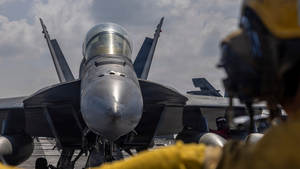
About This Event
US President Donald Trump has officially warned the Iranian regime that “bad things will happen” in the next 10 to 15 days if a nuclear deal is not reached. With anti-regime protests continuing in Iran and around the world and oil prices skyrocketing for the sixth month in a row amid growing US-Iran tensions, Iran is facing an existential threat. What will determine what happens next? And what does this moment mean for Iranians and the future of their country? Join this Rapid Response live stream led by leading policy experts and scholars to assess the current US-Iran tensions and the future of Iran.
Join this Rapid Response live stream led by the Council's Senior Nonresident Fellow Alexander Cooley, as he is joined by Suzanne Maloney of the Brookings Institution and Vali Nasr from Johns Hopkins' School of Advanced International Studies to assess these US-Iran tensions.
This transcript has been edited for clarity.
Alexander Cooley: Good morning. I'm Alexander Cooley, a senior non-resident fellow for Eurasia Affairs at the Chicago Council on Global Affairs and a political science professor at Barnard College. I'd like to welcome you to today's rapid response live stream program on the crisis in Iran.
Before we get started, please note that the Council is an independent, nonpartisan organization that takes no institutional policy positions. Views expressed by participants on the program are their own.
Now, turning to our rapid response live stream topic. Over the past few months, we've seen mounting anti-regime protests in Iran and across global diasporas, as they continue to grow and take on new dimensions. Tensions are mounting with the US as President Trump considers strikes on Iran, officially warning last week that if the nuclear deal has not been reached within the next 10 to 15 days, "bad things will happen."
With the US-Iran Nuclear Talk scheduled for this upcoming Thursday, the world waits with apprehension as to what might come next—not only for Iran, but for the region and global geopolitics.
Can the US and Iran reach a deal, and should a deal be struck? What is the future of Iranians and their country?
Joining me is Suzanne Maloney, vice president and director of the Foreign Policy Program at Brookings Institution, along with Vali Nasr, the Majid Khadduri professor of international affairs and Middle East studies at the Johns Hopkins School of Advanced International Studies.
We are going to dig into this topic and analyze it together. Suzanne and Vali, welcome. Suzanne, let's start with you. Over the past weeks, tensions between the US and Iran have risen. Now we have seen a massive US military hold up the announcement of the evacuation of regional embassy staff. In your judgment, what is the actual potential of the US military strike on Iran in the upcoming days?
Suzanne Maloney: There's a very high potential for some kind of military strike. And thanks, Alex, for the question, and to the Council for having me as part of this program.
This whole episode really began with the intense anti-regime protest you referenced that began in late December and continued to escalate during the early weeks of January. Somewhat to the surprise of much of the policy community in Washington, the president interceded in those protests by tweeting, first of course on Truth Social, that the United States was locked and loaded and would come to the rescue of Iranian protestors. That commanded a lot of attention both in Iran and here in Washington.
What has followed has been a slow-motion effort to get the material and military assets in the region that would be necessary to effectively make good on what the president promised. As we know, in fact, there were massive repression of the protests back in January by the regime, and at least 7,000 were killed. It looks like many, many more than that died in those protests.
What the president has since done is pivot to an effort to try to win some serious nuclear and other concessions from the Iranians, particularly demanding that Iran must shutter its nuclear program. The strikes during the June war were said by the White House to have obliterated Iran's nuclear program. Much of the most sensitive technology is largely buried underground, and the Iranians are not enriching for the first time in more than two decades. But this is an opportunity, potentially, to try to get some kind of concessions through negotiations that will take place in Geneva later this week involving Special Envoy Steve Witkoff, Jared Kushner, and the Iranian Foreign Minister. I'm not confident that the Iranians will really put much seriousness on offer at this point. They are bracing for strikes. They believe, based on the June war, that they can survive them again.
AC: Vali, now to you. What does the situation look like from your vantage point?
Vali Nasr: First of all, thank you very much to the Council for inviting me; it's great to be here. I agree with everything Suzanne said about how the Iranians are looking at it—both the people in Iran and the government.
Starting with the people. They went through a tremendous amount of trauma in December and January with the protests. Of course, there are underlying problems that brought them into the street. The miserable situation with Iran's economy. But then the whole scale of the protest, the way the government reacted, the number of people killed, that very much has traumatized the population. There's a clear rupture between the people and the government at this stage.
Iranians right now are angry at their government. They're shocked by what happened, but also they're quite despondent, from what I hear. There's a great deal of anxiety about war, what war might mean, how long it might take, and what would happen if the war is prolonged and goes on.
But they are not the decision makers at this point in time. They are going into the streets and universities to protest, but as Suzanne said, this has pivoted from what's happening in the streets to what's going to happen in Geneva at these talks. There, the Iranian government thinks that the protests are part of the war. These things are not separate.
First of all, in their mind, it's the sanctions that have caused the widespread anger in Iran. They also blame the violence on outside agitators. As Suzanne said, when the president of the United States weighed in for the first time, threatening military intervention on the part of the protesters, in effect, he tied up the protests with American policy. Even though now he's pivoted to the nuclear issue, I don't think the Iranian government is convinced that the ultimate aim is not regime change. Because after all, he said the program was obliterated. It was not on his radar.
He didn't mention it when he first threatened intervention in January. Now, all of a sudden, it has become such an urgent issue that the United States might go to war over a program he said was no longer a problem. So, the Iranians are approaching these talks with a great deal of trepidation and distrust.
They think that war is coming one way or another. They don't trust this particular president based on his leaving the original nuclear deal and the fact that Israel started the war while negotiations were going on. And they don't think they're going to get anything out of a deal, at any rate.
In other words, what the president is asking—which was probably paraphrased by Steve Witkoff a few days ago—is really capitulation. In other words, what is on the table with Iran is that if you give up your nuclear program, we're not going to hit you. The Iranians aren't convinced there's anything else being offered, beyond that.
The calculation, for them, is that they're going to go to Geneva. They're not going to abandon the process, but they're bracing themselves for a war. In that context, they've decided that if they get hit, they're going to hit back. Because their conclusion is that if President Trump calculates that war with Iran is cost-free, he's going to continue doing it.
In June, they responded to the US, at least symbolically. No Americans were killed. This time, they think that they have to handle an attack on Iran differently, and that creates a great deal of danger. Even if the president starts with limited strikes, they can quickly escalate into something much bigger. Then we can talk about the consequences for Iran in the region.
AC: Thank you, Vali, for adding those points. Suzanne, I wanted to give you a chance to respond and build on those. Vali's points raise the issue: what does the US actually want? We've seen this kind of brinkmanship before from this administration, and many times it's to establish leverage. To leverage negotiations and bargains.
So that brings up the question, is the ultimate goal here regime change? Is it a new nuclear deal? Is it actual regional reordering? What do you think Washington wants from these talks? And what is this leverage actually being used for?
SM: It's not entirely clear what the president wants from either the talks or from the strikes that he may order later this week or into the weekend. He hasn't made that case to the American people. We may hear more about this in the State of the Union later today. This has gone from an administration that celebrated what they claimed was the end of Iran's nuclear program (most experts understood that wasn't, in fact, the case) to associating itself with the cause of protestors who want to change the regime. They clearly represent a diverse array of opinions from across Iran, but are not well-positioned to actually make that change because they're outgunned on the streets by a regime that is prepared to use military-grade weapons to slaughter its own people.
What the president actually thinks he can achieve and what is most viable at this stage are probably two different things. He wants something historic. Either a deal that completely ends the Iran nuclear issue that enables him to say, "I did what Republicans have been demanding since the beginning of the negotiations between the United States and Iran in 2013. I got to the end of the program. President Obama was only able to limit the program for a certain period of time with certain constraints on it, but I was able to end it conclusively and permanently."
Or, he may want something even more ambitious, which is to say, "I was able to open an embassy in Iran. I was able to help end this cancer that has done such damage across the region." The Islamic Republic has been a blight on the Middle East for 47 years. If he were actually able to precipitate some kind of stable transition to a new, more democratic and more responsible government, that would be an incredible achievement.
But the reality is that there is a legitimate cause. There is a legitimate effort to push for change in Iran. But that is a very hard task to accomplish. It is not going to be done by one-and-done military strikes, and though the president has assembled the largest array of material and military assets in the region since the 2003 invasion of Iraq, we are not well-positioned for anything other than a few weeks of airstrikes on Iran.
Most experts and Iranians themselves appreciate that airstrikes will not take down this regime. It will require some long-term effort to try to precipitate defections from the current system to ensure that the military isn't willing to engage in the kind of mass violence that we saw in January, and the kind of planning for a new regime that is actually going to produce some better future for Iran.
Unfortunately, we're in a predicament of the president's own creation, from his tweets to this brinkmanship on the ground, and I'm not sure that we're actually going to achieve very much.
AC: Thank you for that. Vali, I'll ask you to weigh in on that. Also, if you could give us some insight into how military actions would play out with Iranians, both domestically and across the diaspora? Is this something they would support in light of the massive protests and repression that's going on? Or would this lead to a kind of rally-around-the-regime dynamic?
VN: First of all, the points that Suzanne raised are fairly important because, at some level, this is really a domestic issue in the US. The president has not made a case about why war is necessary and why it is important.
If we think about the Iraq War, where we had a similar kind of military buildup, it took months for the administration to make the case about why it was necessary to remove Saddam. Even then, they wanted regime change, but they decided that they couldn't sell regime change to the American public as a reason for going to war.
They had to come up with the issue of Iraq's alleged possession of nuclear material. Then you had 9/11, basically, as an overhang on American public opinion. Now, none of that is there. That's important because the Iranians would calculate that they could let the air out of the president's chest-beating pretty quickly. He hasn't built a case for war with Iran. He doesn't have the American people behind him.
If it's something like Venezuela, in and out, with no American casualties, it's one thing. But if casualties mount, we may be in a very different place very quickly. Iranians, unfortunately, are motivated to explore that kind of scenario rather than sit back and absorb a hit.
At the moment, particularly in the diaspora, there is a very loud community that is demanding war on Iran. They do have a segment in Iran that supports them, although those who are in Iran also experienced the 12-day war. The reaction to the prospect of the war is much more nuanced and based on what they went through during those 12 days.
Those who are advocating for war are really advocating for regime change and are envisioning a quick, cost-free war. But what happens afterwards is very difficult to gauge, particularly inside Iran, given the trauma of what happened in January with the repression. But the Iranian people's reaction will not be about what happens to the regime, but what might happen to the country and what might happen to their daily lives. That will feature much more importantly in the thinking of Iranians inside Iran than those loud voices outside.
There is a sense that everybody wants this regime gone inside Iran. The majority of people want it gone. But the question is at what cost? Now, if the war is short, if there is a quick fall, if there's an assassination of a certain number of leaders, and if it really doesn't impact people's lives, the reaction is going to be very different than if there is much more damage done.
I'll give a very quick anecdote. When the 12-day War happened, the first night, when Israelis killed about 30 Revolutionary Guard commanders, in talking to family and friends inside Iran, there was a tremendous amount of euphoria and glee that these awful people who've been repressing us have been killed. Then, within 24 hours, when the damage to apartment buildings, et cetera, began to show and was posted on Instagram, the mood changed very quickly. Not out of love for the regime, but out of love for the country and out of fear of what might happen to their daily lives.
So, I would say there could be a rally to the flag, but not to the regime. It's important for us to make that distinction as we gauge how Iranians may react.
AC: Thanks for that. I also wanted to mention to the audience that the Council conducts really interesting and informative polls of domestic public opinion. Over the summer, in polling on different aspects of US-Iranian relations, they found that large percentages of Americans, often pluralities, felt they hadn't heard enough to provide opinions on the developing situations. But also that there was some nuance in responses: while a narrow majority supported carrying out airstrikes in response to potential Iranian escalation against US forces in the region, they actually oppose the use of US troops to overthrow the Iranian government. So again, the US domestic side, as you're talking about, does have nuances to it and can distinguish between different purposes.
In the three minutes we have left before we open it up to questions, I'd like to ask both of you about some potential regional ramifications. We can't cover every regional reaction, but Suzanne, what do you think might be some of the regional fallout, among allies in the region or other great powers, of a US airstrike or sustained military intervention?
SM: There will be a variety of reactions depending on precisely what happens. If there is a deal that simply looks as though it's giving the regime a greater lifespan, then there'll be a lot of frustration, certainly in Israel, which is hoping to use this opportunity not just to do some more damage to Iran's nuclear program, but also to set back its ballistic missile program, which the Iranians have been escalating and investing heavily in. That is the primary threat to Israel in the very near term.
If things appear to take some kind of turn, most of Iran's neighbors in the Gulf are going to be relieved. They have been pushing against a sustained US military intervention simply because they are eager to move forward with their economic and technological development programs for their own countries. They're not eager to see another period of intense unrest and potentially a power vacuum in one of the most powerful and dangerous countries in the region. There would be at least some sense of relief, and obviously, those reactions will be somewhat flipped if, in fact, there is something more.
If there is an American escalation over the days and weeks to come, one of the real concerns is that this regime sees its very existence at stake. They were prepared to use unprecedented and really horrific violence against their own people on the streets in January. They're going to do whatever they can and whatever they believe will help them stay in power. That does include striking both their neighbors, against energy infrastructure in the region, and of course, against Israel and the US military and any other presence in the region. It could be a very dangerous time in the aftermath of American military action in Iran.
AC: Thank you. Vali, same question to you. And one of the questions on the live feed concerns news that Iran is nearing a deal to buy supersonic anti-ship missiles from China. Are we on the verge of a regional war that might be supported or fueled by the interests of great powers?
VN: It's no secret that Iranians have announced to their neighbors that if they're attacked, there will be regional ramifications. You can see in the region's response that they take this extremely seriously. That's why they oppose the United States striking Iran.
The larger issue for Iran's immediate neighbors, the Gulf countries, is that they have no confidence in the United States to be able to do this cleanly without any collateral damage. If they were to take seriously what President Trump's top military advisor apparently has said, that there are great risks that this war will not be contained and can spill over, then they would fear that it would disrupt energy supplies, there could be tanker wars or attacks on energy infrastructure. A prolonged environment of insecurity in the Gulf will damage the economic visions that Saudi Arabia, Qatar, and the UAE have for themselves.
In other words, you cannot be building the global AI infrastructure, data centers, or service centers in an environment that at any moment could have airports shut down, missiles arriving, et cetera. The US is thinking of a clean war, but every indication in the region is that it will not be a clean or quick war, and the collateral damage will fall on countries that are closest to Iran.
Even if the regime fell, nobody sees an alternative that can take over the next day and establish regular order, for better or for worse. A chaotic situation will not yield the same kind of result. Iran has every incentive as a strategy of war to actually use that kind of a warning in order to dampen enthusiasm or confidence in the US's ability to go to war with Iran and control the damage.
AC: Great, thanks. Suzanne, we have some questions about the Israeli position on this—both Israeli public opinion and the preferences of Prime Minister Netanyahu. It's no secret that there have been numerous talks between the White House and the Israeli government on this. What's your read on the Israeli position, at the moment, and do you think Tehran would retaliate against Israeli interests directly in the event of a strike?
SM: Prime Minister Netanyahu was just in Washington, and there is a desire on the part of the Israeli government at this time to push for military action against Iran. We're positioned to undertake that action. There is a threat posed by Iran with ballistic missiles at this moment. This is a prime minister who has been on record for decades as having a very strong desire to see Iran's threat minimized by military actions. So it's no surprise to see the Israelis taking that strong position.
There would be an Iranian reaction to strike Israel, and that causes some concern among the Israeli security establishment. Obviously, Israel and the United States overwhelmingly did far more damage to Iran than Iran was able to do to either Israel or American assets in the region during the 12-day War in June of last year. But it is also clear that Iran was able to continue firing ballistic missiles even after its military leadership was decapitated, and even after it was under assault by a very sophisticated Israeli operation.
The accuracy of some of those strikes has provoked some concern. All Iran needs to do is get lucky a couple of times, hit a couple of either strategic or highly populous places in Israel, and there will be a different mood in the country and a different response from the government—it escalates very quickly.
There's both an awareness of the potential complications and some sobriety about the likelihood of a one-and-done set of strikes ending the Iran threat to Israel.
AC: Vali, feel free to weigh in on that, too. I also wanted to pose one of the audience questions to you about the nature of the protests in Iran. Are they truly organic, or is there some sort of foreign element to them? How does that play into some of the regime's messaging?
VN: By and large, the basis of the protest is organic. In fact, in the first few days, large numbers of people came out to the protests as families, including grandfathers and grandmothers, children, and so on.
Outside reporting, including the Financial Times, notes that there have been elements trying to go in a particular direction at the protest. Or perhaps even make it a bit more violent. And that's not surprising. Israel, for instance, has been operating inside Iran at will.
President Trump also showed that protest is the Achilles heel of the Iranian regime because once it loses its population, it's much more difficult for it to sustain itself. But the fundamental issue is that the public in Iran, generally, wants a different kind of state. They want a different situation for the country. There are those who are firmly opposed to the Islamic Republic, but even those who are in a gray area don't believe that the current situation of the country is sustainable. The economic pressure on them is too much, and if this regime cannot solve it, then they want the regime gone.
What binds Iranians across the board is their desire for a very different future. To that extent, the anger and the protests are organic. But that does not mean, particularly given how important the protests are to the weakening of the regime, that its adversaries and foes would not see benefit in using it against the Islamic Republic.
Having said that, the Islamic Republic's view has obviously exaggerated the role of the outside in actually causing the protests. It sees this essentially as Israel and the United States doing. That may have an impact on the way they calculate how they can manage this particular movement.
What is very evident, whether organic or not, is that the Iranian regime is on a two-front war, both inside and outside.
AC: We have time for one more question. Suzanne, another really interesting question from the audience is: last summer, we saw a US strike in Iran that escalated tensions and seemed decisive. That was the messaging that we got. But ultimately, didn't seem to accomplish much politically. So what will be the implications of another military strike? Has the administration learned lessons from last summer that perhaps might be pertinent or might not be analogous to what they're proposing now?
SM: Great question. I'm not sure what lessons, if any, the administration has learned. It's clear that President Trump prefers very quick, decisive action, as he's successfully done in Iran and elsewhere, including Venezuela. It is not possible to eliminate the entire threat posed by the Islamic Republic. Either to the region or to its people in a quick series of strikes.
It's also not possible to end that via diplomacy at this point. The real opportunity here is that Iranians have demonstrated, on successive occasions, through protests that have been going on for decades and are escalating and increasing in frequency, diversity, and representation across the country.
It is very clear that Iranians want a different regime. If President Trump wants to achieve something truly historic, he should invest in the kind of support that helps create media and education about civil disobedience. All the work that some of the organizations that used to be funded by the State Department and the US Agency for International Development.
That's the kind of work that's a long-term effort. It does involve support from those groups in the diaspora, including Reza Pahlavi, who has attracted a lot of attention and clearly has some support on the ground in Iran. But there really has to be a long-term effort rather than the expectation that some kind of one-and-done set of strikes is going to change the calculus, either of the regime or the threat that it poses.
AC: Unfortunately, we're out of time. Suzanne Maloney, Vali Nasr, thank you so much for joining us for this rapid response live stream. We truly value and appreciate your insights and expertise on this critical matter. We will closely monitor the situation with your insights and words of wisdom.
And thank you to the audience for joining us today. Have a good day.



Related Content
 Global Politics
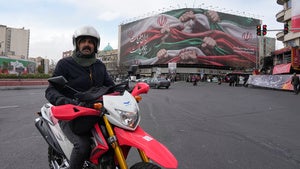
With the death toll rising in Iran amid a crackdown on protests, US President Donald Trump is weighing a strike against the nation. Iran’s capacity to respond to such an action is far more limited than its leaders suggest.
 Global Politics
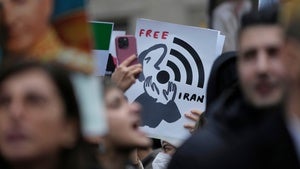
What's driving unrest in Iran—is this time different?
 Public Opinion
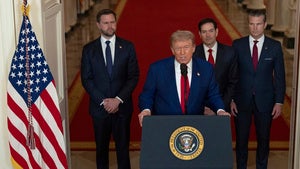
Many hesitate to give their opinions on the conflict, but attitudes seem to fall along partisan lines on whether the United States made the right move.