A Changing Hemisphere: China's Growing Role in Latin America
Margaret Myers, Oliver Stuenkel, Julián Ventura, and Karla Ruth Orozco Toledano discuss China's growing influence in Latin America and its implications for the region.
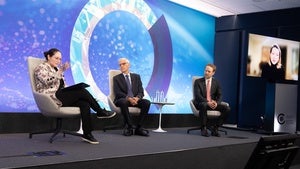
About This Event
Over the past two decades, China has expanded its economic and political footprint across Latin America. Through massive infrastructure investments, growing trade partnerships, and deepening diplomatic ties, Beijing has become a major player in the region—and Latin American countries are actively weighing what this relationship offers them. What should the United States make of China's growing presence in the hemisphere? What does this mean for Latin America's future? Join us for a conversation with Margaret Myers, Oliver Stuenkel, and Julián Ventura, moderated by Karla Ruth Orozco Toledano, as they examine China's growing influence in Latin America.
About the Speakers
Senior Advisor, Inter-American Dialogue; Managing Director, Institute for America, China, and the Future of Global Affairs, School of Advanced International Studies

Margaret Myers established the Dialogue’s China and Latin America working group in 2011 to examine China’s growing presence in Latin America and the Caribbean. She also developed the China-Latin America Finance Database, the only publicly available source of empirical data on Chinese state lending in Latin America.
Senior Fellow, Democracy, Conflict, and Governance Program, Carnegie Endowment for International Peace

Oliver Stuenkel is a senior fellow affiliated with the Democracy, Conflict, and Governance Program at the Carnegie Endowment for International Peace. He is also a Fellow at the Belfer Center at the Harvard Kennedy School and an associate professor at the School of International Relations at Fundação Getulio Vargas (FGV) in São Paulo, Brazil.
Former Deputy Secretary of Foreign Affairs of Mexico; Distinguished Nonresident Fellow, Latin America and the Global Economy, Chicago Council on Global Affairs
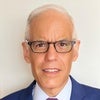
Ambassador Julián Ventura is a senior advisor at DGA-Albright Stonebridge Group. With over 30 years of diplomatic experience across four Mexican administrations, he most recently served as deputy secretary of foreign relations, overseeing relationships in Asia, Europe, Africa, and the Middle East while leading Mexico's G-20 negotiations. He joined the Council in 2025 as distinguished nonresident fellow, Latin America and the global economy.
VP of Economic Development and FDI, World Business Chicago

Karla Ruth Orozco Toledano has over a decade of experience in international affairs, trade, and economic diplomacy, with a strong focus on China–Latin America relations. She currently serves at World Business Chicago (WBC), where she promotes Chicago as an inclusive global economic hub and supports foreign companies expanding across the Chicagoland region.