The Strategic Challenges of the US Military Campaign Against Iran

US President Donald Trump has called for regime change, the destruction of Iranian military capability, and the degradation of proxy groups. But an operation with multiple goals carries greater risk.
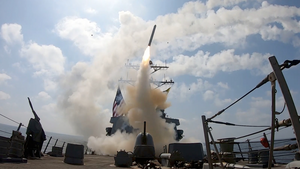
Americans woke on Saturday to the news of a US-Israeli coordinated attack on Iran. Iran responded by launching strikes against Israel, Jordan, and US military bases in Qatar, the United Arab Emirates (UAE), Bahrain, and Kuwait.
While recent talks between Iran and the United States were centered on nuclear weapons, in a statement announcing the attack, US President Donald Trump outlined a number of objectives for American action, including regime change, the destruction of Iranian military capabilities, and the reduction or elimination of Iranian-supported proxy groups. Trump called on the Iranian Revolutionary Guards to “lay down” their weapons or “face certain death,” and urged the Iranian people to “take over” their government. “It will be yours to take,” he said.
But an operation with multiple goals carries greater risk. If all are truly pursued, it is less likely that US and Israeli action will conclude within the communicated timeline of one week, increasing the chances for a more prolonged and costly entanglement. As of this writing, there are reports that Israel and the United States may be already extending the window of conflict from one to four weeks. That is troubling.
As the Trump administration continues with “Operation Epic Fury,” they face at least four strategic questions: 1) Should they be prepared to accept the decapitation of the Iranian regime at the expense of regime change? 2) Can they help regional allies avoid significant unrest? 3) Are they able to ensure that the economic benefits of the campaign outweigh the costs? 4) And if their military campaign does not achieve immediate success, will they have enough support from the American people—and the international community—to sustain a prolonged campaign?
The challenges of regime change in Iran
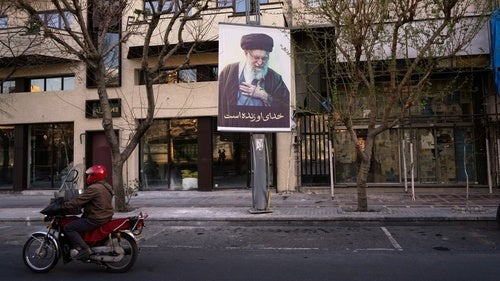
On Saturday, Iranian Supreme Leader Ayatollah Ali Khamenei was reported dead, along with dozens of very senior Iranian leaders in what an Israeli official referred to as one of the largest regime “decapitation operations” in the history of modern warfare. But the Iranian regime is built for survival. Succession plans are in place and Iranian institutions exist to keep the conservative clerics and Revolutionary Guards in power, meaning opposition figures do not have standing among those with guns operating inside the country. Within 24 hours, a three-person council was named, including the president, head of the judiciary, and a senior cleric. If the Iranian regime survives the current action, it will continue to be led by the same kinds of people who have pursued the policies the United States says it is fighting to change.
History has shown that regime change is hard. As Matthew Bunn writes for the Bulletin of the Atomic Scientists, “efforts to cause regime change with air strikes have a stunning record—stunning because it is unbroken by success.” Regime change is violent, takes patience, and requires a long-term, in-country presence, which is exactly what Trump has campaigned against and the US public has grown weary of. It is difficult to see how Washington will achieve any realistic definition of a quick victory if true regime change remains a key goal.
Despite Trump’s exhortation for the people of Iran to rise up, Iran’s repressive capacity may be intact a week from now, leaving few realistic pathways for internal change. Combined with a historic US unwillingness to become bogged down with weak opposition forces, a less powerful version of the current regime will likely continue to live on. This suggests that the US may scale back its objective and be satisfied with the elimination of the ex-ante senior leadership—a move that certainly seems to be the preference among Arab allies. They have been at the receiving end of Iranian subterfuge for years, and there is no love lost between Arab and Iranian leadership. But local actors have also lost lives in the aftermath of American-inspired regime change operations in Iraq and Libya, which led to years of instability, radicalization, and violence.
It is possible, however, that a new Iranian leadership could adopt a different set of internal and external policies—perhaps seeing so as the most reliable path to regime preservation in the near-term. After the June strikes, there was an active discussion within Iranian leadership circles about how to chart their future course. While those seeking a more conciliatory foreign policy lost the debate, that conversation is sure to be revived after the current campaign ceases. This, of course, is the hope of the US administration.
It is also possible that a restored Iranian regime would restock their missile arsenal, resume the country’s support for non-state actors, rebuild uranium enrichment facilitates, and crack down on domestic groups—including those who were in the streets Saturday night celebrating the death of Ayatollah Khamenei. The Iranian regime went on a buying spree after the strikes in June, turning to China for key components that would allow them to reassemble their ballistic missile arsenal. China and Iran were reportedly close to signing a deal for sophisticated anti-ship missiles that US defense analysts viewed as a potential “game changer” because of its ability to target US and allied forces in the Persian Gulf. In this situation, the United States may well end up in an ongoing pattern of strikes, similar perhaps to how Washington approached Iraq in the 1990s, in which the US was criticized for “punching holes in the sky” to deter Iraqi military maneuvers and protect domestic populations. China may be happy enough to continue resupplying Iran as it would ensure the US stays bogged down in the region.
In the Middle East, a history of instability
Instability can be contagious. Tehran has a number of allies throughout the region who may use the current moment as an opportunity to challenge neighboring nations. Within 24 hours of the attacks, pro-Iranian protests erupted in Pakistan and Iraq. Bahrain, where the US Navy’s 5th fleet is located, is particularly vulnerable as it is home to a large, restive Shia population. Both Bahrain and Saudi Arabia have violently but successfully shut down Shiite opposition in the recent past, but they remain vulnerable in today’s uncertain environment.
Iran may have miscalculated when it decided to target American bases in Arab countries, as it gave Arab leaders cover to rally their populations against Iran under the auspices of defending national sovereignty. Saudi Arabia came out strongly after its territory was hit by Iranian missiles, with the Ministry of Foreign Affairs expressing “its strongest condemnation” of the “blatant” and “cowardly” attacks targeting Riyadh and the Eastern Province regions, and forcefully condemned Iran’s “flagrant violation” of the sovereignty of the UAE, Bahrain, Qatar, Kuwait, and Jordan.
Further, the Washington Post reported that Saudi Arabia privately urged Washington to strike, fearing that the Iranian regime would be emboldened if the United States assembled enormous fire power in the region only to do nothing with it. Throughout the day, Arab leaders reportedly exchanged phone calls, building solidarity in response to the attacks. Only Oman called for the United States to stand down, saying, “This is not your war.”
While it does not appear that domestic opposition poses a significant threat to local leaders currently, the longer the conflict endures, the more difficult it may become for leaders to ignore local dissent. The Iranian regime could also activate sleeper cells dug in globally to cause terror and challenge support. As with much of this operation, speed is crucial to avoid increasing the risks of instability across the region, particularly among US allies.
The impact on energy prices
Oil traders and analysts are waiting to see how markets respond. In the past, threats to the Strait of Hormuz have caused oil prices to skyrocket as about 20 percent of the world’s oil consumption passes through it each day. Global tracking services have already shown significantly reduced tanker traffic in and out of the Persian Gulf, and Iran has noted that transport there is not safe.
The Organization of the Petroleum Exporting Countries (OPEC) met on Sunday and agreed to add 206,000 barrels to the market—about 70,000 barrels beyond the 137,000 barrels per day that was originally expected to be added in an effort to keep prices stable amid the political volatility. The effects of this decision will comfort markets but will not take effect until April, meaning that it won’t have an immediate benefit over the next few weeks should conflict escalate.
The Saudis strength in oil markets is not simply the amount they produce (though they produce a lot). Rather, their geopolitical strategy of not producing to capacity allows them to serve as a “swing producer” during tumultuous times. They, more than other OPEC members, are able to easily add oil to and remove oil from the market to ensure price stability. Currently, OPEC has more supply that they could add to the market if the conflict continues. Additional oil production outside of OPEC, including in the United States, may be incentivized should prices elevate for a sustained period, which means the Saudis will likely prefer to keep oil prices around $80 per barrel over time.
However, there is less flexibility in gas markets. Qatar provides a significant percentage of the world’s liquified natural gas and all of their export transits the Persian Gulf. Israel has already shut its gas fields in anticipation of the weekend’s activities. And unlike with oil, there is no strategic reserve of gas. This means a spike in gas prices is perhaps more likely.
Experts suggest that energy markets can absorb a relatively short conflict. Once again, though, if Iran sinks a ship, targets energy infrastructure, or if the conflict persists, there could be a spike in energy prices, which will further disrupt an already fragile global economy. It is perhaps for this reason that Israeli and American leaders intended to engage in a week-long campaign.
Mixed support among Americans and US allies
The Chicago Council on Global Affairs has conducted considerable polling on US views on using military force against Iran. Iran’s nuclear program routinely receives greater support than other reasons presented for striking Iran. This is likely why Trump has continued to focus on Iran’s nuclear program, despite the real setbacks the program experienced after the June strikes. Even so, in a survey conducted last April, only 48 percent of Americans supported airstrikes against Iran’s nuclear facilities in the case of a restart to its nuclear weapons program, with 69 percent of Republicans, 36 percent of Democrats, and 44 percent of Independents signaling support.
However, Americans appear confused about the goals of this current campaign—and for good reason. In his lengthy State of the Union address, Trump devoted only a few minutes to Iran, and he did not seek congressional authorization or UN approval prior to the attack. In other words, he has made no legal argument nor received a mandate of support for the activities undertaken this weekend in the name of the American people. This could become a problem if events in the region take longer than expected and especially if economic conditions worsen as a result.
International support will also be required should the conflict endure. The response from world leaders has, to date, been relatively supportive. Perhaps the most surprising response was from Canadian Prime Minister Mark Carney, who threw his full support behind US actions. Other strongly supportive responses came from Australian Prime Minister Anthony Albanese and, notably, Ukrainian President Volodymyr Zelenskyy, whose country has been on the receiving end of deadly Russian attacks using Iranian drones—which pose a significant threat to his country as well as NATO defense strategies.
The most tepid response came from traditional US allies in Europe. In a joint statement, the presidents of the European Commission and the EU Council referred to the developments in Iran as “greatly concerning.” But even they appeared supportive of the Arab states targeted by Iran, affirming their "steadfast commitment to safeguarding regional security and stability.”
What comes next
Many of the optimistic assessments assume that events will unfold as Washington and Israel have planned—a brief, high-intensity operation that results in a substantially changed Iran.
In the first few days of this conflict, it seems that the high-risk, high-reward set of actions may be bearing fruit. If Washington had outlined a tightly-defined set of goals—for example, to further degrade Iran’s military capability or weaken the current regime—then these first few days would more likely be seen as a reliable signal of the end state. However, with so many objectives on the table, there is less confidence in a clean outcome. The fog of war is known to produce unintended consequences, especially ones that prolong duration and heighten risk.
Time favors Iran in this conflict. The Iranian regime and their allies aren’t without options. They too get a say in the shape and duration of the current conflict. If Washington can keep the timeline as tight as it intends and raise the costs for Iran’s leader should they continue down their current path, then the Trump administration could chalk up a major victory. If not, we should prepare for sustained military involvement and a more unstable economic future.
The Chicago Council on Global Affairs is an independent, nonpartisan organization and does not take institutional positions. The views and opinions expressed in this commentary are solely those of the author.
Related Event