Olympic Officials Want the Games to Be Politically Neutral—Can They Be?
By barring Russian athletes from competing under the Russian flag, the International Olympic Committee demonstrated its power as a global norm-maker. Now, sporting federation leaders are seeking to distance their games from geopolitics.
Four years since Russia’s full-scale invasion of Ukraine, Russian athletes remain barred from representing their country in major international sporting events, including the 2026 Milan Cortina Winter Olympic Games. However, as the war drags on, some international sports federations have begun to lift the ban, raising questions about whether sports can—and should—serve as a geopolitical norm-setter.
Council Senior Nonresident Fellow Alexander Cooley spoke with the Council’s Christina Colón about the history of the Olympic Games, the rise of ‘sportswashing,’ and the current state of Ukraine-Russia peace talks.
This interview has been edited for length and clarity.
February 2026 marks four years since Russia’s full-scale invasion of Ukraine. At the same time, the Winter Olympics are underway, where Russia has continued to be prohibited from competing as a nation due to the ongoing invasion. Yet conversations within the International Olympic Committee suggest the ban may not hold for much longer, with IOC President Kirsty Coventry saying that while the games do not exist in a political “vacuum,” their “game is sport” and “that means keeping sport a neutral ground.” Are sports truly neutral ground? Have they ever been?
The short answer is no. Think about the Berlin Olympics that became a showcase for Adolf Hitler in the 1930s. During the Cold War, we had consecutive boycotts. The United States and its NATO allies boycotted the Moscow Summer Games in 1980, and then the Soviet Union—along with most of its Warsaw Pact allies—did not go to Los Angeles in 1984. Sport has always been geopolitical. The medal count has always been geopolitical. The prestige that different countries received as validations for their political systems has always been a part of international competition.
I think where it gets kind of trickier and more interesting is in the contemporary era—really since the 1988 Seoul Olympics—we haven't had to think about politics as being part of either the Olympic Games or mega-events like the World Cup, in part because most of the time they were hosted by liberal democracies. There wasn't a whole lot of political controversy as to authoritarian politics, conflicts in war, or statements of political expression by athletes. We had a few low-level incidents, but for the most part, the games sort of proceeded relatively uneventful on the politics front.
The Ukraine war thrust Russia into the limelight, and it led to a ban. However, there is also Russia's involvement in a systematic statewide doping scandal that, for the longest time, had also seen them excluded as a nation from competing. So, there's really two sources of exclusion here.
The IOC issued a total ban on Russian athletes a few days after the war started. And the IOC is important because it's what we call a norm-maker. In other words, all these other international sporting federations took their cue from the IOC ban and banned Russia from team competitions, and they banned Russia from individual competitions too. In April 2023, the IOC relaxed the ban and said that individual Russian and Belarusian athletes could compete. However, they had to meet a few criteria. The criteria include that they don’t have any pro-war statements, that they've never supported or been part of the Russian military, and that they compete under a neutral status. A few Russian athletes are competing under those terms.
I think the more interesting part of this is how, by setting up these criteria, Ukraine and its allies have created a whole system of monitoring Russian athletes for things like social media posts and their appearance in photos that might have pro-war imagery. Once the IOC established the criteria for neutrality, a campaign by Ukraine has ensured that athletes are actually held accountable to those standards.
There are some international federations, such as those overseeing judo and taekwondo, that are now allowing Russian athletes to compete under their national flag. Why has the IOC ban endured? And what does this suggest about the IOC's role as a norm-setting institution within the international system?
For the most part, the ban has been pretty powerful because it has created a framework in which defying it is difficult, and you have to give good reasons. Now, Judo has broken, as you mentioned. Fencing appears to have broken.
Many of these federations are deeply political because they involve the participation of interested elites in Russia and in other parts of the world that are associated with ruling regimes and possibly also their political and economic practices. These individual sports are now trying to sort of pull away.
We also have some federations hanging firm and sort of saying, ‘Until the IOC gives the go ahead, we're not going to change. We're not going to stick our necks out.’
Council polling shows that 86% of Americans place primary blame for the war on President Vladimir Putin. Is there reason to believe that Russia’s return to the Olympics could help Moscow shift international narratives? And, more broadly, do global sporting institutions shape geopolitical norms or simply reflect them?
As we reflect on four years of the war, we should also reflect on changing Russian narratives and strategies about the war. When Russia first went in, in February 2022, a very sullen-looking Vladimir Putin said the goal of the special military operation, as it was termed back then, was to ‘demilitarize and denazify’ Ukraine. That message struck many in the West as extremely horrific and threatening as a pretext, but it also didn't land very well outside of the West.
Moscow has since shifted its justification of the war from being focused on Ukraine, to this being a broader struggle against what it calls the unfair US-led world order. In other words, Ukraine is the front line against a bunch of things that Russia has long complained about, including American hypocrisy, America's rule-setting, American imperialism, the dominance of the dollar—this kind of grab bag of grievances about world politics. Russia has, I would say, successfully evolved its Global South messaging to say this is a proxy war against all that stuff. As a result, what we see is increased sympathy amongst the Global South with the Russian position as they project their own grievances about the state of world politics onto what Russia says that it's doing in Ukraine.
Sport usually reflects prevailing political trends. Once in a while, it can actually also create incidents and shine a light on particular issues.
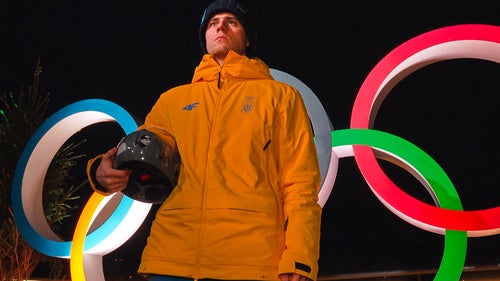
That sets up the answer to your question. Sport usually reflects prevailing political trends. Once in a while, it can actually also create incidents and shine a light on particular issues. Let's take the example of the Ukrainian skeleton racer who insisted on wearing a helmet that depicts the victims of the war in Russia. Now, the IOC has rules that it's adopted—so-called Rule 50—that prohibits athletes displaying political symbols or political preferences during an actual performance. They're allowed to do so in media commentaries and interviews on the sidelines. So, it was judged that this helmet falls afoul of Rule 50. The IOC justified it saying, ‘Hey, we had a really big survey of athletes, and this is something that they supported.’
The IOC really wants to avoid a situation where they're viewed as clamping down on a Ukrainian athlete for political display. On the other hand, they feel as if they have to uphold their own rules about political statements in competition.
Let's talk about how rules are upheld. Critics argue that other countries accused of serious violations of international law have not faced comparable Olympic bans. Why has Russia been treated differently? And what does that tell us about the current moment?
This is an issue that you see the Russian media talk about pretty consistently, asking ‘Why are we being singled out? There are dozens of conflicts around the world and horrific things happening.’ They try and sort of bothsidesism the conflict. I think the response is that Russia has been primed with distrust. There's a particular legacy of the doping scandal that made them susceptible to this idea that there is state-sponsored organized cheating that is antithetical to the spirit of competition.
And then I would say the sort of real normative backlash, the stigmatization of Russia after the war, wasn't just applied to sporting competitions. Russian concerts and opera singers were disinvited. It applied to Western corporations that, even though they had initially planned to remain in Russia, their association with supporting the war became so toxic in the West, they actually left within just a few days of the war starting.
We need to distinguish between the question of have Western sanctions against Russia been effective versus has the West’s stigmatization of Russia been effective.
I think the sanctions, in many ways, have not been effective because Russia has found workarounds and different supply chains. However, it has been stigmatized. And I think this lingering ban that it faces in international sporting arenas is one really good example of the power of stigmatization. Although it might be waning across some sports, it's still pretty strong—especially after four years.
As you noted, the Olympics aren't the only arena we're seeing this play out in. There are a number of global sporting events happening, and we are clearly in a moment where states are investing heavily in global sport—through hosting rights, sponsorships, and ownership stakes—to shape their international image. How does Russia’s Olympic question fit into this broader pattern? And how might the growing use of sport as a tool of influence reshape global power dynamics over the next decade?
There are a couple of interesting strands to look at. One is this continuing debate over this term that's now quite popular called ‘sportswashing:’ Do authoritarian countries actively and strategically use the hosting of large global sporting events such as the World Cup in soccer or the Olympic Games to promote a favorable image of themselves and deflect attention from democratic violations and human rights abuses?
This has come up in the context of Russia hosting the Sochi Olympics. It's come up in the context of Beijing hosting both the 2008 and 2022 Games. This was an issue in Qatar staging the World Cup in 2022, and now Saudi Arabia has been awarded—uncontested—the 2034 World Cup. So, this whole question of, are these economic or cultural investments, or do they have a political motive around them? That's number one.
Number two, we see increasing investments by authoritarian countries in important leagues. For instance, LIV Golf is backed by the Saudi Investment Fund. For a while, they set this up as an alternative to the PGA. They were offering vast sums of money for PGA Tour players to switch, and there was this kind of stigmatization if you decided to join LIV. Then a few months ago, the announcement came that LIV and PGA would merge, and LIV and the Saudi funds would sort of inject capital into the golf game. Interestingly enough, one of the agreements of the merger is a non-disparagement clause against Saudi Arabia. So, there's some interesting dynamics about investments in what have been traditionally Western sports, and the question of if they are making them not only politically neutral but making them spaces in which criticism of these kinds of countries is prohibited.
Formula 1 has gone through a similar kind of evolution. It used to be that Formula 1 races were conducted in democracies. Now, the circuit has added at least half a dozen non-democratic hosts. And lo and behold, Formula 1 announced a new sort of speech code that would prevent drivers from making unsolicited criticisms of host countries.
The question of investment in these large sporting leagues—who's changing who, whose norms are operating—is very much a live one.
We opened our conversation with how this is all happening amid the war in Ukraine. Peace talks are continuing, but progress has been limited. As the war enters its fifth year, why have negotiations struggled to gain traction? And what conditions would realistically need to change for talks to succeed?
Peace is still very difficult. There has been a real concerted push, especially by the Trump administration, to try and get the sides to settle. There's been the use of both carrots and sticks. In some ways, the fact that the two sides are meeting in brokered situations is positive. The sticking point, though, is really big, and that is that Russia wants to claim territorially the entire Donbas, including territory it has not yet conquered.
When you actually look at the maps and the terrain, the progress that Russia has made has been extremely slow. The remaining land that it wants to annex in these two provinces is actually quite urban. In other words, it is some of the most difficult territory to fight in and to hold onto. Ukrainian planners know this. They perceive that if they handed over the rest of these territories, not only is this giving Russia a prize it hasn't earned militarily, but it also then opens them up to potential attacks on relatively unprotected territory going into Kharkiv.
One issue in which Ukraine has evolved is on outside security guarantees. You hear the sides are mostly near a framework for that. That's not because Ukraine all of a sudden believes in NATO security guarantees or the ‘Coalition of the Willing.’ It does not. It does not believe that there is a credible external force that is going to function as a tripwire. Rather, it has accepted that it has to build up its own national military capability.
Recent Council polling shows that a majority of Americans believe that the United States’ handling of the war has harmed America’s international image. At the same time, Kyiv’s foreign minister has suggested that only the US president has the leverage to broker a meaningful agreement. What role does the United States realistically play in shaping the trajectory of this war? And what might we expect from Washington in the coming year?
The United States is indispensable in this regard. As much as some might say that the US shouldn't be involved in faraway conflicts, that this is not something that sort of pertains to the United States, the Russian Federation clearly sees Ukraine as being supported by the US. Russia has always had a difficult time accepting Ukrainian agency and Ukrainian capabilities. They have framed this as a proxy war with the West.
Part of the problem they're running into now is, even without substantial US military support, Ukraine is still resisting. They have developed autonomous capability in terms of drone production. They're really innovating on the frontier. Ukraine's capability has built up significantly. But I do think that political part of the US sort of signing off, overseeing the agreement, is absolutely critical to the Russians. What the Russians have overestimated is the degree to which the US can actually dictate complete terms on Kyiv. There are certain lines that Zelenskyy just cannot cross. And of course, both sides would like a seal of American approval.
The Chicago Council on Global Affairs is an independent, nonpartisan organization and does not take institutional positions. The views and opinions expressed in this commentary are solely those of the author.