Beyond Defense Spending: What's at Stake for NATO in Ankara
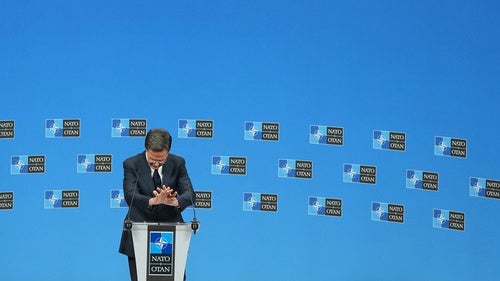
Ahead of the 2026 NATO Summit, Council experts examine deeper fractures over threat perception, alliance trust, and Washington's commitment.
On July 7-8, North American and European leaders will convene in Ankara, Turkey, for the 2026 NATO Summit. Heads of state and government of all 32 member states are expected to be in attendance, including US President Donald Trump.
The 2026 agenda builds on the commitment member states made at last year’s summit in The Hague to increase annual defense spending to 5 percent of their GDP by 2035, up from the 2 percent benchmark set in 2014. As of April 9, European allies and Canada have increased defense spending by 20 percent, and NATO Secretary General Mark Rutte says billions of dollars in new defense-related contracts will be announced at the upcoming summit.
But increasing defense investments is not the only issue before NATO. Russia's continued war in Ukraine, fallout from the US-Israeli war with Iran, during which several allies declined to join the US campaign, and Trump’s threats to annex Greenland have reopened questions about Washington's commitment to the alliance. Beneath that, deeper cracks are emerging: American and European officials increasingly diverge on the nature of the Russian threat, and new Chicago Council polling finds confidence that European allies would defend the United States has fallen sharply among Americans.
Ahead of the high-stakes summit, Council experts weigh in on what's driving these fractures and the challenges NATO faces beyond defense spending.
The Price of Pragmatism
Julianne Smith
Former US Permanent Representative to NATO; Distinguished Nonresident Fellow, Defense and Security
For decades, NATO summits have served as an important opportunity for the alliance to announce new initiatives, send a unified message to partners and adversaries, and exhibit strength, unity, and resolve.
This year's meeting is, once again primarily about managing the United States and keeping US President Donald Trump—a longstanding NATO-skeptic—committed to the alliance. To accommodate the US president, the usual two-day affair has been shortened to a dinner and a single session with all 32 allies in attendance. Instead of the traditional 50-to-70-paragraph communique on the many challenges and threats facing the alliance today, members will issue a short declaration. The chief focus of the summit will be taking stock of which countries have made progress on spending 5 percent of their GDP on defense, and which ones continue to promise progress without demonstrating it.
None of this—a shorter summit, a more concise declaration, and a heavy focus on defense spending—is detrimental to the future of the alliance. In fact, one could argue that these developments are genuine improvements. But they reveal an alliance that is more consumed with managing Washington than the threats arrayed against it—cybersecurity, emerging tech, and Russian gray-zone aggression chief among them.
NATO has no shortage of pressing business to tend to. It must continue to shore up and adjust its eastern flank in light of recent US decisions on force posture, harden members' critical infrastructure against attacks, develop a coherent strategy on emerging technologies, strengthen the defense industrial base on both sides of the Atlantic, keep a watchful eye on deepening China-Russia defense cooperation and joint exercises in places like the Baltic Sea, and sustain support for Ukraine for what may be a long and grinding next chapter. If allies spend most of their diplomatic capital on keeping one country in the room, such real work will go undone.
The upcoming summit in Ankara did not have to go in this direction. The summit could have celebrated what is, by any historical measure, a genuine transformation in European burden sharing. Defense budgets are rising across the continent (even as a few countries drag their feet), industrial capacity is expanding, and one finds a seriousness of purpose in Europe that was unimaginable a decade ago. All of this could help chart an ambitious new course for the alliance—one that reflects the kind of "NATO 3.0" which policymakers, including US Under Secretary of Defense for Policy Elbridge Colby, have articulated.
Instead, allies will arrive in Ankara, heap praise on the US administration, try to avoid any public fissures over Iran, and likely head home having managed a relationship. That outcome may be the pragmatic choice given the constraints of this moment. But pragmatism has a cost.
Russian President Vladimir Putin will be watching this summit closely. His focus will not be on what was said but what the alliance left undone. A truncated agenda, papered-over divisions (or worse, public spats), and an alliance folded in on itself will be a gift he did not have to ask for.
Increasingly Divergent Threat Perceptions
Ariane Tabatabai
Vice President of Research, Security and Defense; Senior Fellow, Middle East
Since returning to the White House, US President Donald Trump has fixated on burden sharing in the NATO alliance. His administration has maintained its focus on eliminating what it characterizes as "free riding," even as Trump's threats of annexing Greenland, musings on making Canada the 51st state, and decision to join Israel in launching a war against Iran without prior consultation with allies have shaken the alliance's foundations. Thus, when foreign ministers gathered in May in advance of the 2026 NATO summit in Ankara, burden sharing predominated the conversation.
Yet in their attempt to appease the US president, allies have continued to largely tiptoe around a more fundamental challenge in the alliance: increasingly divergent threat perceptions. Put differently, what remains unclear is what exactly the allies are sharing the burden to achieve— and what threat they are collectively working to counter.
Since its establishment, NATO has been organized around the principle of deterring Russia (before the end of the Cold War, the Soviet Union) albeit with varying levels of importance. But Trump does not appear to view Russia as a genuine threat today in the same way that many Europeans do. In fact, he has suggested on multiple occasions that he may side with Russia over America's European allies, at one point saying that if NATO allies did not increase their defense spending enough, he would actually encourage Russia to "do whatever the hell they want."
But for much of Europe, the threat of Russia is more real today than it was prior to Moscow's full-scale invasion of Ukraine. Now in its fourth year, the war has spilled into NATO territory and airspace. For several countries especially along NATO's eastern flank, Russian drone incursions have become almost routine.
While a positive characterization of Moscow is specific to the Trump administration, Washington's hierarchy and prioritization of threats were shifting away from Russia before Trump returned to office in 2025. Both the first Trump administration and Biden administration placed China on top of the national security threat pyramid, and frustration grew in Washington over a perception that Europe was not doing enough to counter its rise. However, European security remained a cornerstone of US national security, as the prevailing view was that increased cooperation and alignment among major adversaries—China, Russia, Iran, and North Korea—required a coordinated response with US allies and partners across regions.
But that view of foreign policy is not shared by the Trump administration in its second iteration, which is prioritizing unilateralism, deprioritized coordination with allies, and sought a reset of relations with key adversaries. Today, European allies have been cast as a weakness or a burden for the United States, rather than a force multiplier. And without a coherent guiding principle on foreign policy, the United States has engaged in a series of independent operations, from boat strikes in the Caribbean and deposing Nicolás Maduro in Venezuela to large-scale combat operations in Iran.
While addressing burden sharing could increase the alliance's combined capabilities, absent a realignment on threat perception, the transatlantic alliance will be unable to organize around a guiding principle. Even if it avoids the worst-case scenario of complete dissolution, it will be rendered ineffective.
A Struggle over Europe's Future Security Architecture
Alexander Cooley
Senior Nonresident Fellow, Eurasia Affairs
As NATO leaders gather in Ankara, expect a familiar debate to resurface: Was NATO enlargement a stabilizing force in post-Cold War Europe and Eurasia, or did it drive an insecure Russia to invade Ukraine to protect its sphere of influence? Both framings are equally flawed, because each treats the alliance's eastward growth as one continuous process that Moscow opposed uniformly from the start. In fact, Moscow's attitude toward NATO expansion was always relational.
Consider the politics that surrounded the alliance's largest enlargement wave. At the 2002 Prague summit, NATO invited seven states, including the three Baltic republics—the first former Soviet states to join. Russian President Vladimir Putin did not publicly denounce the move or actively rally against it. He had cast Russia as a US partner in the post-9/11 campaign in Central Asia and, in 2003, the Russian Duma finally ratified a long-pending border agreement with Lithuania. Baltic membership in NATO, a supposed red line, passed with far less drama than later accounts suggest.
The eventual rupture came in 2008. At the NATO summit in Bucharest, France and Germany refused to grant Georgia and Ukraine a Membership Action Plan, NATO's formal, conditionality-based track to accession. Washington, closely tied to Tbilisi's pro-Western government, salvaged a consolation: The Bucharest Declaration that the two inevitably "will become members of NATO."
The result was the worst of both worlds. The pledge was public posturing; it conferred no membership path, no timeline, and no actual security guarantee, yet it signaled unmistakable geopolitical intent to Moscow. Meanwhile, the cooperation of the immediate post-9/11 era had given way to growing US-Russian tensions; the color revolutions across Eurasia had toppled governments friendly to Moscow in Tbilisi, Kyiv, and Bishkek; and the West's recognition of Kosovo's unilateral declaration of independence as an exceptional "special case" suggested—in Russian eyes—that sovereignty was negotiable when it suited Washington. The Russia-Georgia war followed within months, ending in Georgia's defeat, Moscow's recognition of the breakaway territories of Abkhazia and South Ossetia as independent states, and an intensifying Western-Russian tug of war over the future orientation of the Eurasian states.
This history matters for understanding the current moment. Observers of the Ankara summit will understandably focus on the mounting list of disagreements between Washington and its Western European allies, including whether to extend a membership invitation to Ukraine. Yet more than four years after Russia invaded Ukraine, the conflict has become about more than just NATO enlargement.
What was viewed as a Russian attempt to contest the architecture of European security is now increasingly Eurasian, even global, in scope. Russia has fought with Iranian Shahed drones, which it now mass-produces at home, and reportedly shared intelligence on US forces with Iran during Tehran's recent confrontation with Washington. Russian forces have fought alongside North Korean troops in Ukraine, where Russia has also utilized Chinese dual-use technology. Ukraine, for its part, has turned the drone and counter-drone expertise it honed under combat into a globally sought-after asset and export, signing 10-year security deals with Saudi Arabia, the United Arab Emirates, and Qatar.
The struggle over Europe's future security architecture has expanded. NATO membership is only one piece of a rapidly changing and increasingly intertwined European and Eurasian security environment. And no longer the decisive one.
Developing a European Way of War
Armida van Rij
Senior Nonresident Fellow, European Security and Politics
This year's NATO summit takes place against the backdrop of a radically changing US posture in Europe prompted by different threat perceptions of Russia. The US National Security Strategy and National Defense Strategy make clear that the current administration considers Russia a regional threat. But for European NATO allies, Russia continues to be an existential risk to the continent. As a result, burden shifting within NATO—which the United States has demanded since the 1950s but has risen to the top of the agenda during Trump's second term—is now happening on a faster timeline and with significantly less coordination than European NATO allies had hoped.
Perhaps most pivotal was the United States' recent announcement of drastic changes to the NATO Force Model, including scaling back the number of fighter jets, bombers, submarines, maritime surveillance aircrafts, and aerial refueling platforms available to NATO in crisis situations. The United States has also canceled the deployment of a Multi-Domain Task Force long-range fire battalion to Germany, which will negatively impact Europe's ability to hold Russian targets at bay, and has made other decisions cutting US commitments in Europe. The reduction of US troops will create a mighty challenge for Europe, and the allies will need to quickly determine how to overcome capability gaps in the short-term to ensure defense and deterrence.
As with last year's summit, NATO Secretary General Mark Rutte's hope is for the gathering to proceed without any major upheaval or public disagreement between allies. But once the meeting concludes, NATO defense planners will have their work cut out for them. They will need to knock heads together and seriously consider, for perhaps the first time since NATO's inception, what the European way of war is in the absence of US leadership and critical US capabilities. The announced US reductions mean that in any potential conflict, Europe will need to bring mass with fewer people and at a cheaper cost—all of which will have implications for military doctrine, planning, equipment, and people.
Working within a NATO context on European defense in this way will be contentious. But forcing the conversation to take place within the alliance may also help prevent national interests from overriding those of Europe as a whole. Given the security outlook for Europe, ensuring deterrence should override some allies' concerns about creating path dependencies for further US reductions to NATO.
While minilateral formats like the UK-led Joint Expeditionary Force are a useful supplement to the alliance, they are not sufficient in their own right. A patchy network of capabilities cannot provide the architecture necessary for integrated deterrence and defense. Developing an integrated, interoperable European way of war is no longer a choice. It is an imperative.
Low Expectations
Paul Poast
Senior Nonresident Fellow, Foreign Policy and Public Opinion
The 2026 NATO summit finds the alliance in yet another pivotal moment. Just when it seemed that all was well, the war in Iran ripped open fissures within the alliance. Key alliance members, notably France, criticized the Trump administration's decision to go to war, and others, particularly Spain, refused to allow the United States to carry out operations from their bases. Some, such as Germany, leveled criticism after giving verbal support but still allowed the United States to continue using its territory for operations against Tehran. Refereeing all of this was NATO Secretary General Mark Rutte, who did his best to diplomatically paper over the differences between the allies.
For these reasons, I will be watching closely this summit. Will the allies commit to stabilization operations now that Iran and the United States have signed a Memorandum of Understanding (MOU) laying out a framework for a peace deal? Will US President Donald Trump sound an optimistic or defiant tone? It's really difficult to say. Trump might be frustrated with NATO's response to the Middle East conflict, but he also needs the allies. He wants them to purchase US arms for Ukraine, help patrol the Strait of Hormuz after the Iran war, and even assist with monitoring Tehran for continuation of its nuclear program.
Recently, the United States offered to extend the US nuclear umbrella over more of Europe, specifically deploying nuclear weapons in Poland and the Baltic states. This is fully consistent with Trump's interest in enhancing and expanding the US nuclear arsenal. It is also consistent with his administration's call for European nations to do more with conventional weaponry. Trump wants the United States to be the nuclear backstop for the alliance, and perhaps solely its nuclear backstop. Will this be brought up during the summit?
In short, anything could happen at this summit. But based on the generally positive response by NATO members Canada, France, Germany, Italy, and Britain at the recent G7 summit to the MOU, my best guess is that the outcome will be, on balance, positive—especially for those who are coming to Ankara with low expectations.
American Support for NATO
Dina Smeltz
Managing Director & Chair, Public Opinion and Foreign Policy
As NATO leaders prepare to gather in Ankara, Turkey, for the 2026 summit, a Chicago Council survey conducted June 5-7 finds strong bipartisan support for the alliance.
Overall, two-thirds of Americans believe the United States should either increase or maintain its commitment to NATO. While there are partisan differences, support varies more so in intensity than in direction. Fifty-five percent of Republicans are in favor of keeping or increasing US spending levels compared to 86 percent of Democrats, with significantly more Democrats than Republicans in favor of increasing commitments. And while the administration has announced troop withdrawals from Europe to push burden sharing and move more US resources to the Indo-Pacific, the American public is more interested in shoring up the US' European military presence, with majorities saying the United States should maintain or even increase its forces in both Germany and Poland.
Yet trust in the alliance has fallen on both sides of the Atlantic. In 2025, 62 percent of Americans said they felt confident that if the United States was attacked, European allies would come to its defense. Today, only 47 percent say they feel confident. Polling conducted by the European Council on Foreign Relations (ECFR) shows Europeans feel similarly, with majorities in all 15 NATO countries included in the survey saying the United States would not defend them if their country came under attack.
Still, Americans remain hopeful about future relations. Half of Americans, including 69 percent of Democrats and 29 percent of Republicans, say that while relations between the United States and Europe have been damaged, they will probably improve with a new US administration. A quarter of Americans—and a 42-percent plurality of Republicans—say the relationship hasn't changed since past administrations. Just 12 percent say relations have been damaged beyond repair.
In Europe, the prevailing view is much the same. Majorities in France, Italy, Germany, the United Kingdom, Spain, Denmark, Sweden, the Netherlands, and Portugal think US-European relations will improve once there is a new US president, and pluralities in Poland, Estonia, and Hungary agree. Still, between 17 and 36 percent across these countries say the damage may outlast the Trump administration. Notably, ECFR polling shows that European publics support increasing defense spending, developing an alternative European nuclear deterrent to reduce reliance on the United States, and purchasing more weapons from European manufacturers (though there is some resistance to putting more toward defense compared to other public spending).
In May, US President Donald Trump's intimidation toward US allies and announcement that the United States would be withdrawing troops from Europe led Polish Prime Minister Donald Tusk to remark that "the greatest threat to the transatlantic community are not its external enemies but the ongoing disintegration of our alliance." While the US administration and European leaders will carry grievances to Ankara, recent Chicago Council polling suggest that the American public sees the alliance as beneficial and supports the United States keeping—if not increasing—its commitment to it. Amid an unpredictable global landscape, NATO appears to offer some comfort to everyday citizens.
The Chicago Council on Global Affairs is an independent, nonpartisan organization and does not take institutional positions. The views and opinions expressed in this commentary are solely those of the author.