Is the Middle East Heading Toward a Much Bigger War?
 Play Podcast
About This Episode
“This is no longer an Iran war. This is a region-wide war.” Fawaz Gerges, of the London School of Economics and Political Science, explains why he believes the conflict has expanded far beyond Iran, what Israel is trying to achieve in Lebanon, and why the search for security may be driving the Middle East toward deeper instability.
This transcript has been edited for clarity.
Leslie Vinjamuri: As Israel expands its campaign into Lebanon and the war threatens to pull more of the region in, it feels like this conflict could be entering an even more dangerous phase. So we want to zoom out and ask a bigger question: What happens when outside powers keep chasing stability in the Middle East, but they do it by using military force?
Fawaz Gerges [voiceover]: As a historian of the world, I think this is the most dangerous moment in world history since the end of World War II in 1945.
LV: Fawaz A. Gerges has recently written about the myth of authoritarian stability in the Middle East. Professor Gerges is a professor of international relations and Middle East politics at the London School of Economics and Political Science. Today, he's going to help us make sense of what this could mean for regional alliances, for people in the region, and for America's role in what comes next.
I'm Leslie Vinjamuri, president and CEO of the Chicago Council on Global Affairs, and welcome to Deep Dish.
We are on day 32, as I count, where we have seen a widening escalation across the region. And it's something that you focused on, and that is Israel's invasion of Lebanon. Maybe you could set the stage for us and start with the bigger conflict. What is your perspective, if you were describing to our listeners where we are now?
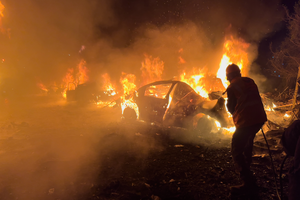
FG: I have been researching, writing, and teaching on the Middle East for more than 35 years. I have never seen the Middle East as chaotic and dangerous, as spiraling out of control as it is today. People say the "Iran crisis" or the "Iran War"; this is no longer an Iran war. This is a region-wide war.
The war has spread to the Gulf, Iraq, Lebanon, Yemen, and, in fact, the bigger picture is that what we are witnessing today is a graver strategic miscalculation than the American invasion and occupation of Iraq in 2003.
LV: The perspective that you're giving to today's war is deeply extraordinary. There are a lot of people here who are arguing, in various corridors, that President Trump followed Israel into a war that it wanted to continue after the 12-day war that took place last June.
They believe this is a president who didn't have a clear goal, didn't know what he wanted to do, wasn't entirely convinced, but sort of went along for the ride. Is that your interpretation?
FG: You are absolutely correct, but I go beyond that because Iran is not Iraq. Iran is a nation of 92 million people; it's a civilization. Iran is a multilayered theocracy. It's a house of many mansions with an ironclad ideology.
With what has happened in the past four weeks, the Middle East will never be the same. Why? Now Iran is asserting its control over the Strait of Hormuz, so even if the war ends today, how will you establish a new security architecture in the Gulf?
The Strait of Hormuz has emerged as one of the most potent deterrent weapons in Iran's arsenal. Strategically, Iran now has a stranglehold on the Strait of Hormuz, through which 21 million barrels of oil flow every day, along with similar quantities of gas, fertilizers, and chemicals.
The health entry is in Yemen. Iran is signaling to the United States that if you carry out grant operations, we have the capacity to block the Bab el-Mandeb straits. Again, almost 10 million barrels of oil pass through the Bab el-Mandeb, the Red Sea, and commercial shipping. Imagine what could happen to the world economy. During the Gaza War for two years, they impeded, hampered, and blocked Bab el-Mandeb, so this could be a double shock to the world economy.
The reality is also what this war has exposed. It's not about politics for me; I'm talking as a historian. President Trump has weaponized diplomacy. How do you take the words of the president seriously any longer? Does he have any credibility? He engages in frequent falsehoods, American deterrence. Of course, this is a moving target, so it's not yet over. Many things could happen. But what I'm talking about is the overarching strategic implications of this war that will not only haunt the Middle East but also the international system, the world economy, and the United States in the future.
LV: Let me unpack some of that. When I was in India listening to the Israeli Foreign Minister just a few days after the initial attacks, we heard President Trump say it was this idea that the Iranian people were going to rise up. After these strikes, they were going to rise up, leading to some sort of transformation within Iran.
But we've seen the reverse of that. Yes, a new leader, the son of the Ayatollah, has taken over, but hardly a regime transition.
What has been the reality for the Iranian people since these 32 days of strikes began?
FG: Iran was vulnerable. Iran was weak. Iran was on its knees. All you had to do was basically strike a fatal blow against the top leaders—the supreme leader and the defense minister. Once you kill the top leaders, basically, you're going to have a revolt.
That particular point was articulated on the first day of the war by President Trump, who called on the Iranian people to rise up and take ownership of their government. Israeli Prime Minister Benjamin Netanyahu made it very clear that we are "creating the conditions that will allow the Iranian people to take over the government."
Now we know, based on leaks from the White House, that it was really Netanyahu and the Mossad who convinced President Trump that this was going to be an easy, quick, and clean war. Coming after the easy, quick, and clean war in Venezuela, President Trump bought the idea because he wanted to go down in history as one of the greatest presidents who toppled theocracy in Iran.
Even if the Israeli Prime Minister convinces President Trump, the responsibility falls on President Trump. There is no conspiracy here. Trump is responsible for carrying out this war in Iran. Why? What we know now is that we have a personalized decision-making process. The American institutions, the State Department, the National Security Council, or the Defense Department, have been hollowed out, and that's why President Trump surrounds himself with political loyalists.
So in fact, the war has had the opposite of the intended consequences. The war has strengthened the regime, and many Iranians are reluctant, not because of the fear—absolutely there's a great deal of fear—but people realize this war is no longer about the Islamic Republic. This is a war against Iran itself, as a nation, and Iranians are very proud, patriotic people.
LV: You've made the case very powerfully that President Trump isn't going to settle. Which takes us to where we are right now. There is a conversation we heard recently that the Iranians would like guarantees, and maybe the Chinese are the only people who could provide them, were there to be some sort of deal. We've heard all sorts of things.
But from your perspective, where do you see this going? Do you think there is any prospect that there will be some negotiation that would lead Iran, Israel, and the United States all to go quiet when it comes to the use of force?
FG: There is no clarity. No one knows. I don't think even President Trump's closest advisors know, because there is no endgame. There is no strategic blueprint. And the Iranians have turned their weak hand into a stronger hand. Now they have President Trump exactly where they want him, because they are increasing the economic pain.
Let me put myself in Teran. After June, they accepted the cease-fire, and look what happened. The Iranians want an enduring war rather than a cease-fire. They do not take the word of the president seriously, and again, they want guarantees. The question is, who will give them guarantees? Who could really offer guarantees?
The point I really want to draw the attention of your listeners to is that after the meeting in Pakistan on Sunday and Monday, the key regional states are Turkey, Egypt, Saudi Arabia, and Pakistan. I was a bit surprised that Pakistan's foreign minister flew right away to China afterward. My take on it: I think the Iranians will probably insist that any guarantees come from a power they respect—China.
The Chinese, in fact, are happy to be where they are because the United States is digging deeper and deeper. The President is doubling down, and there is a widespread perception all over the world that China will ultimately be the winner. It was during the American invasion and the occupation of Iraq. It's sanity versus insanity, madness versus reflection, and Europe has buried its head in the sand.
They're terrified to challenge or stand up against President Trump. So Europe really is absent now. There's a vacuum of power. There's only the United States and the rest, and that's why I don't see a glimmer of hope. In fact, we are on an escalation ladder rather than a de-escalation ladder.
LV: When you think of the escalation ladder, the dark scenario is continued attacks, potentially. President Trump has threatened to attack power plants, but what does that escalation ladder look like in your mind?
FG: The reason why there's no clarity is that there is no clarity on President Trump. He tells us conflicting, shifting positions on a daily basis—diplomacy versus threat. The reason I see more escalation than de-escalation is that the president is in a strategic bind. He wants to extract himself from what he calls "the operation." That's why it seems to me the deployment of almost 10,000 commanders and special operations forces is one sign, one signal.
And our history is a lesson. President Trump tends to deploy forces, when he has them, at his own disposal. The worst-case scenario is two case scenarios. Ground forces, anywhere in Iran, would be a nuclear option. And another nuclear option is to destroy the power plants—the grid and the energy.
That means Iran will destroy the entire energy infrastructure in the Gulf. Imagine the implications, consequences, and repercussions for the world economy. It'll take 20 to 30 years to repair the damage, and this will be the greatest economic shock.
That's why President Trump has boxed himself in. No president should say there's a 48-hour ultimatum and then say it's 10 days. A president shouldn't do that. This is just childish, I'm sorry. It's really childish.
LV: There's no doubt there's a very grave problem.
But I want to ask you, as you are in London and within the European debate, you're also deeply engaged in your networks across the region. We've seen Israel move into Lebanon. What is Israel trying to achieve in Lebanon? What is the endgame, both in the wider war and in Lebanon?
FG: The overarching strategic aim of Israel, not just in Lebanon but also in Gaza and the West Bank and in Syria and Iran, is absolute security. I teach international relations. There is no absolute security in either human or international relations.
From what Israel has been since October seven, three years ago, it's no longer really subscribed to deterrence. It's offensive realism. Israel is only offensive, and Israel wants to create security buffer zones in Syria, Gaza, the West Bank, Lebanon, and even Iran, if it could.
Israel is trying to occupy a huge chunk of southern Lebanon, and they've said, "It's not my word." The Secretary of Defense said, "We will erase entire villages in South Lebanon as we did in Rafa, and Beit Hanoun in Gaza," and he said the 600,000 people who live in South Lebanon will not return.
Israel is erasing schools, villages, olive groves, and forests—destroying the habitat. At the end of the day, Israel plans for a long-term occupation of Southern Lebanon. It wants to create a security zone to eliminate Hezbollah. By forcing 600,000 people from South Lebanon, Israel could create a Gaza model that is "no-citizen-no-inhabitants" security.
Here is the problem. First of all, in order for Israel to have absolute security, it has to occupy all of Lebanon, not just the South. Hezbollah will be able to target Israel from many parts of Lebanon. And Hezbollah cannot be eliminated. And thirdly, Israel has not learned the lessons of its previous occupations of Lebanon from the late 1970s up to 2000.
It was Israel's invasion of Lebanon in 1982, an occupation of Beirut, that gave birth to Hezbollah. Hezbollah had not existed in Lebanon before the Israeli invasion of Lebanon in 1982 because Israel invaded Lebanon in order to destroy the Palestinian national movement. Israel replaced the PLO with Hezbollah in Southern Lebanon. And my take on it, if Israel does occupy South Lebanon, Hezbollah will become stronger, like the Iranians. Wars change the political psychology of people. Even though there's a great deal of opposition to Hezbollah in Lebanon now, a great deal, there is a widespread belief that Hezbollah has triggered or has given Israel a justification to launch another war in Southern Lebanon.
LV: The search for its security on the part of Israel leads to greater insecurity for all parties. If you take your analysis to its logical conclusion, it invites more resistance.
FG: It's very simple. The premise should be security for all. We know what needs to be done. It's a common-sensical thing. Israel could have security, but its neighbors also need security.
LV: A difficult-to-achieve common sense in international politics across the board.
I also want to ask you about the humanitarian consequences. You talked about the number of displaced people. Is there an architecture of any kind that is working to address the humanitarian crisis that is now taking place in Lebanon and in the region?
FG: No, there is not. What you have in Lebanon is a catastrophic humanitarian situation. Israel's blanket evacuation orders have displaced 1.2 million people. This is a country of five or six million people, and 20% of the population has been displaced.
State capacity has been degraded for the past 10 years. There's hardly any economy, and what you have now is that more than 1,200 Lebanese have been killed, including at least 120 children, including 51, at least, medical staff and journalists. Israel no longer distinguishes between civilian and combatant. Israel now engages in what they call a collective punishment policy of the entire population of Lebanon. The Lebanese government has been appealing to the United States and the international community in recent months since the ceasefire was signed between Lebanon and Israel after the 13-month war in 2024.
Israel attacked Lebanon on a daily basis. More than 500 Lebanese were killed, and more than 1,000 during the ceasefire. Let me be direct: if I were Benjamin Netanyahu, I would do exactly what I'm doing. Benjamin Netanyahu has a green light from President Trump to do whatever he wants. This is for Benjamin Netanyahu. He wants to basically change the face of the Middle East. He wants to expand, make Israel greater Israel. So while the rest of the world thinks about it as the Iran War, we're not really focusing on Lebanon.
I could see a scenario where the state collapses in Lebanon. I could see a scenario where you have civil strife in Lebanon, because Israel is really exerting a great deal of pressure on the Lebanese government to take on Hezbollah, knowing full well any kind of fighting between the degraded Lebanese state and Hezbollah would trigger civil strife.
So we are without intervention by the United States. That's why the global vacuum American leadership, the absence of American leadership, that's why it's in an age of disruption and chaos.
LV: You've outlined the problem, which I don't disagree with, but it is phenomenally grim. The United States is not playing a productive leadership role. The UN seems to be lacking the capability. We've had months of a narrative that was about middle powers playing their part, working around or without the US and China necessarily leading. We've heard many people saying China's going to step up and do more.
So if you can fast-forward three months, six months ahead. You've said it's very difficult to predict, but maybe you could find some sort of possible solutions, either to the humanitarian crisis or to the war. Given where we are now, what would you be pushing for?
FG: You really put your finger on the pulse of the problem. There is no other great power willing to stand up. China is focusing on China, on domestic development, technology, and building its army. Russia is very much preoccupied with Ukraine and trying to be on good terms with the United States. Europe has basically canceled itself out, literally. Europe is nowhere to be seen.
The two reasons I am terribly concerned are that, first, the United States remains the most powerful nation in the world. And I'm very concerned because American institutions have been hollowed out, and now we have a president who could take us to war based on his instinct.
He was asked about this, and you know what he said? "It's all based on my instinct. I don't care about the world, about international law." The fact that the American president says I'm going to destroy the power grid in Iran and the water system, which are considered war crimes, he does not even take into account.
Thirdly, the reason I'm worried about the region, the West Bank, Gaza, Lebanon, and Syria, is that Israel listens to one man, only one man, and that's Donald Trump. Benjamin Netanyahu has Donald Trump's ear, without any checks and balances. As a historian of the world, I think this is the most dangerous moment in world history since the end of World War II in 1945. Not one of the most, the most dangerous moment.
No red lines, no limits to power. The United States used to be the guarantor; it built the system after 1945. The United States is now disrupting the very system that it built in 1945.
And this is not just a personal opinion. There's a relative consensus among historians and students of international relations that this is really the most dangerous moment in world history. I could easily imagine a scenario where the United States and China find themselves at war. I really could.
LV: I want to end with one last question because I think it's important. The thing that's gotten lost in all of this is that there's no longer any credibility for a US leader to communicate the importance of democracy, freedom, or finding a better path for people who live in countries subject to authoritarian leaders. You've written about the myth of authoritarian stability. We all know that Iran hasn't been a good place for the millions of people who would like to have freedom, who would like to be able to protest on the streets without being shot, who would like to have free education, and who would like to live their lives as they choose, not as they're told.
In this war, there was never a case made. We've now been caught in a deadly war that's escalated. Many people are fixated on the critique of the US president, and the entire question of Iran's repressive regime has been lost. The very powerful, very important, and very legitimate critique of that regime is now very much in the rearview, so it feels.
FG: President Trump, in the past few days, has wanted a way out. He wants a similar regime to that of Venezuela's Rodriguez. He said, I just need somebody to talk to, to take orders from me. He's willing to live with an authoritarian regime.
I want to end on a happy note. My most recent book is called The Great Betrayal: The Struggle for Freedom and Democracy in the Middle East. In my last few lines in the conclusion, I say that the future of the Middle East, whether it's in Iran or in Egypt or in Turkey, the future of the Middle East will not be determined by the autocrats who reclaim the state for life, but by young Arabs and Muslims who dream and aspire for freedom, democracy, and justice.
Let me apply that to the United States. Despite the grim situation in the United States, I have no doubt that an overwhelming majority of young Americans will write a new chapter in the American story.
Both in America and the Middle East, I have no doubts in my mind, based on facts, that young Americans and young Arabs, Iranians, Turks, and young Israelis, I hope, will write a new chapter. A chapter of decency, of justice, of equal security, and dignity for all.
LV: That was Fawaz Gerges, professor at the London School of Economics and Political Science. Thank you so much for listening.
Deep Dish is a production of the Chicago Council on Global Affairs. If you enjoyed today's episode, make sure to follow Deep Dish on Global Affairs wherever you get your podcasts. And if someone you know might find it interesting, send it their way.
As a reminder, the opinions you heard belonged to the people who expressed them, and not to the Chicago Council on Global Affairs. This episode is produced by Tria Raimundo and Jessica Brzeski, with support from Marty O'Connell and Lizzie Sokolich. Thank you for listening.
Watch the Video


Related Content
 Global Politics
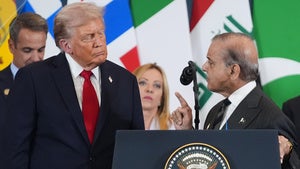
Thinking about Pakistan as a South Asian power misses the fact that it has regional connections to the Middle East—and global power connections it can leverage.
 Global Politics
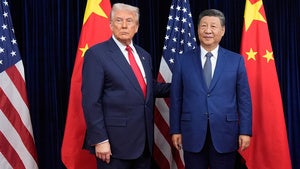
The Iran war is presenting the greatest test yet of the limits of America's power in an increasingly multipolar world.
 Food Security & Sustainability
Catherine Bertini and Michael Werz explain how the Iran war could ripple from energy markets into global food systems, driving prices higher and worsening global food security.