From Munich to the Board of Peace, the Trump Administration Struggles to Reassure its Transatlantic Partners; The Supreme Court Pushes Back

The United States and Europe are scrambling to reform their partnership. It is an open question as to whether the transatlantic partnership can continue to be an anchor for international order as the rest of the world presses rapidly ahead.
The day before the official opening of the Munich Security Conference, I participated in a crisis simulation that set out a competition between a China-led “axis of disruptors” and the United States and its allies in the age of artificial intelligence.
As part of the interactive simulation led by Foreign Policy magazine and the Special Competitive Studies Project (SCSP), we were asked to agree on a response to the deployment of key innovations by China across a range of critical sectors, including technology and public health, to gain an advantage across the Global South. These deployments were timely and enabled China to capture data, accrue geopolitical advantages, and potentially create a permanent shift in the balance of power against the United States and its allies.
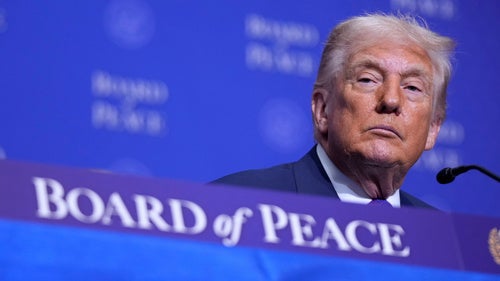
While the organizers cast the United States and its allies in opposition to China, they explicitly refrained from defining who the US allies were. In fact, it was often unclear if Europe was internally aligned or on the same side as the United States—a fitting prelude to the high-level conference that followed and yesterday's first meeting of US President Donald Trump’s “Board of Peace.”
Such recent events have made clear that the West is scrambling to innovate and reform as it clings to a framework for international cooperation that some of its members believe is stuck in the past. It is an open question as to whether the West will hold together and can remain relevant at a time of rapid technological and geopolitical change—and when the momentum is in Asia, which now accounts for 55 percent of the world's population.
Recent events have made clear that the West is scrambling to innovate and reform as it clings to a framework for international cooperation that some of its members believe is stuck in the past.
In Munich, US Ambassador to the United Nations Michael Waltz described the United Nations as a “failed 80-year relic” that the United States has decided to reform. His presentation of a blue-and-white hat reading “MAKE THE UN GREAT AGAIN” was a signal that the United States has no intention of abandoning the institution of the post-war international order—and an implicit recognition that even the Trump administration agrees the United Nations was once great. Ngozi Okonjo-Iweala, director-general of the World Trade Organization (WTO), made a compelling case for the need to retain the major post-war multilateral order, referring to it as critical for the future and reminding the audience that 72 percent of international trade still flows according to WTO rules.
But it was the US agenda of tough-love reform that echoed throughout the conference. US Under Secretary of War for Policy Elbridge Colby remarked that since 1989, Washington has over-assured its European partners and now seeks to provide “partnership, not dependency” and provoke “anxiety,” seemingly agreeing with discussion moderator Mark Leonard, director of the European Council on Foreign Relations, who said “but not panic.” Colby affirmed the US extended nuclear commitment and recognized the United Kingdom and France’s nuclear forces as a core contribution to NATO, though not as an independent nuclear force. America's tough love for Europe stood in stark contrast to its words for its peer competitor, with Colby stressing the US intention to treat China with respect.
Canadian Prime Minister Mark Carney’s rousing Davos speech had little impact in Munich, where even the recent major trade deals between the European Union (EU) and India could not avoid middle-power cooperation being relegated to side events. The mainstage high-level security conference was nearly singularly focused on the American commitment to Europe, and especially on deliberations among Europeans—including the call by some for a deepening of the single market and for reforms able to attract greater investment. In an attempt to ward off pressure from the Trump administration, Poland's Deputy Prime Minister Radosław Sikorski doubled down on the need for Europe to embrace its core values and commitment to balancing responsibility with freedom in communication technologies. And in a hard-nosed recognition of the urgency of the moment, proposals for a two-track Europe gained traction.
If the Trump administration traveled to Munich to deliver Europe a message, Europeans turned up in a far more self-critical and reflective mode that was marked by urgency. A few US Democrats tried to reassure Europe that the United States would soon enough be back, but this year’s conference revealed a different tenor—one suggesting that Europe may be trying to hold off a radical US departure but is no longer waiting for an earlier version of America to return.
US Secretary of State Marco Rubio received a standing ovation in the mainstage room, but the skepticism in the overflow rooms and on the margins of the conference was palpable. Some were critical of Rubio's trumpeting of a civilizational narrative and assumed that the speech was clearly delivered with Washington, not Munich, in mind. Indeed, it was once again the Chinese foreign minister who delivered a speech that embraced international order and the UN framework. After Ukrainian President Volodymyr Zelenskyy spoke, most European leaders departed the main hall, leaving India's External Affairs Minister S. Jaishankar to take the stage in a comparatively empty room.
Jaishankar stressed India's embrace of strategic autonomy and took a position of one-foot-in-and-one-foot-out, pursuing a dual agenda of reform and innovation. He reaffirmed that middle powers may need to be prepared for a world without US or Chinese leadership. In this and a later session, he argued that middle powers may also need to prepare for a world without G2 leadership. And on the sidelines, India, Germany, Japan, and Brazil—all middle-power democracies—convened their own discussions. These middle-power conversations, sidelined at Munich, will rerun on the center stage under India’s leadership at next month’s Raisina Dialogue Forum in New Delhi, where the tenor will likely strike a very different chord.
The real story of Munich took place after the conference formally concluded, as Rubio traveled to Hungary to meet Prime Minister Viktor Orbán—Russia’s closest partner in the EU—and Slovakia. It continued Thursday in Washington, DC, where the identity of America’s true allies remained unclear as Trump convened the Board of Peace for the first time. Originally conceived as a framework for rebuilding Gaza, the organization’s mandate has mushroomed to include conflict resolution across many corners of the globe. Representatives from more than 40 countries were in attendance, but major US allies have not accepted Trump’s invitation to join the board—including France, Germany, the United Kingdom, Spain, and Ukraine. Earlier this week, the Vatican’s top diplomatic office said that the Holy See would not be joining as it believes “it should be the UN that manages these crisis situations.” France voiced that it was surprised the European Commission sent a representative to observe the meeting.
The US Supreme Court’s ruling against most of Trump’s tariffs is a sign that the system may yet prove resilient.
The US Supreme Court’s ruling against most of Trump’s tariffs is a sign that the system may yet prove resilient. A robust contestation over what America is and what it should be—especially on the global stage—will continue in full force, but much of this contest will take place inside the United States.
The opening to the 2026 Munich Security Report states “the world has entered a period of wrecking-ball politics.” While this may indeed be true, this year’s conference offered something surprising amid the “sweeping destruction”: hope. Sunday’s final panel—titled, “Under Reconstruction: A World Order for the Next Generation”—was delivered by four women in front of a packed hall. It was a reminder that despite the rhetoric of presidents, prime ministers, and the like, the transatlantic relationship and the international order are sustained by people, relationships, culture, education, and history.
World leaders will reconvene in Munich in a year. There were early signs at the 2026 conference for what may come next, with Michigan Governor Gretchen Whitmer, US Representative Alexandria Ocasio-Cortez, and California Governor Gavin Newsom each presenting different interpretations of America.
But how America will show up to the 2027 gathering is far from obvious.
The Chicago Council on Global Affairs is an independent, nonpartisan organization and does not take institutional positions. The views and opinions expressed in this commentary are solely those of the author.