"If they work through the trade deal and get something signed, I think that would be a sign of real progress," Council Director of Public Opinion and Foreign Policy Craig Kafura tells India Today.
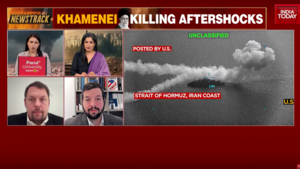
Director of Public Opinion and Foreign Policy Craig Kafura joins India Today to discuss the ongoing tensions between the US and Iran in the Strait of Hormuz.
"Democrats are strongly opposed to the war, Independents tend to oppose the war, and even among Republicans a lot say they don't know," Council Director of Public Opinion and Foreign Policy Craig Kafura says, drawing on recent polling.
With her party now holding a majority in the Lower House, Prime Minister Sanae Takaichi turns to managing Japan's relationships with the United States, China, and Korea.
"In the last decade, Democrats and Republicans have started to drift apart on the things that they consider most important," says Director of Public Opinion and Foreign Policy Craig Kafura, drawing on Council survey results.
"America has had military bases in Greenland for decades,” says Council Director of Public Opinion and Foreign Policy Craig Kafura. "The idea of needing to conquer Greenland, needing Greenland to be part of the United States for U.S. national security just isn't true."
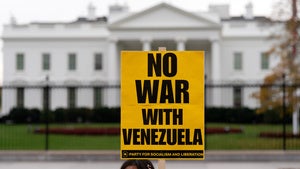
The US capture of Venezuela’s Maduro echoed intents outlined by Trump in the 2025 National Security Strategy. While the action might have appealed to his Republican base, the strategy’s principles are mostly out of step with US public opinion on America’s engagement in the world.
"Beijing’s efforts to strike a nationalist chord among Chinese citizens regarding Taiwanese unification might not be easily transmitted," the Council's Dina Smeltz and Craig Kafura write.