What Takaichi's Win Means for Japan's Foreign Policy Priorities

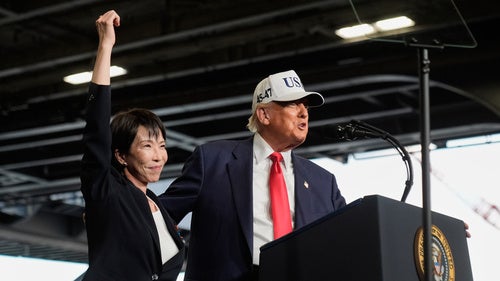
With her party now holding a majority in the Lower House, Prime Minister Sanae Takaichi turns to managing Japan's relationships with the United States, China, and Korea.
Japanese voters went to the polls on February 8 and handed Prime Minister Sanae Takaichi and her conservative Liberal Democratic Party (LDP) a massive victory.
Takaichi’s decision to call a snap election just three months after becoming Japan’s first female prime minister was a gamble. Though Takaichi herself has been very popular in her short tenure (witness the “Takaichi oshi” phenomenon), her party has been mired in scandal and lost its longtime coalition partner Komeito in late 2025. Nevertheless, Takaichi managed to convert her personal popularity into the largest LDP victory in the party’s postwar history.
The LDP gained 118 seats in the Lower House through the election. With 316 of the Lower House’s 465 total seats, Takaichi’s party now holds a two-thirds supermajority—which gives them the ability to override the Upper House of the Diet, where the LDP is in the minority. This will give the LDP the ability to push forward their agenda, which includes investing domestically to spur economic growth, reducing or suspending the tax on food, and strengthening Japan’s defense capabilities.
How dominant—and unexpected—was this surge? In Japan, the Lower House is elected through a combination of single-member districts (SMDs) and proportional representation seats (PRs). It’s common for candidates to run in both, so that those who fall short in their district can be resurrected through the PR list. But this time around, the LDP did so well in its SMDs that it did not have enough remaining candidates on the PR lists; they won 14 more seats than they had candidates.
Of course, it takes two to win and lose an election by such margins. The pre-election decision to merge the opposition parties—the Constitutional Democratic Party of Japan and Komeito—to form the ‘Centrist Reform Alliance’ (CRA) now looks like a terrible blunder that cost them more than two-thirds of the 167 seats they previously held. Many longtime opposition leaders also lost their seats in the Diet, and the party now must find new leadership at a time when it will be very, very far in the minority.
Now holding the reins of power in Japan, Takaichi will tackle the first item on her international agenda: managing the Japan-US alliance. The scale of Takaichi’s win strengthens her position going into her March 19 official visit to the United States and meetings with US President Donald Trump, who notably endorsed Takaichi ahead of the election. While Trump has griped about the slow pace of Japan’s pledged $550 billion investment in the United States, Japan’s Minister of Economy, Trade, and Industry Ryosei Akazawa is in DC this week for talks with US Commerce Secretary Howard Lutnick, and Takaichi now has the power to make good on any deal she strikes. And of course, Trump loves a winner—and Takaichi certainly is that.
The scale of Takaichi’s win strengthens her position going into her March 19 official visit to the United States and meetings with US President Donald Trump, who notably endorsed Takaichi ahead of the election.
Takaichi and Trump are also aligned on Japan’s need to strengthen its defense capabilities, and she has said that she plans to revise the country’s “Three Documents” that outline its security and defense policy. It is also possible that Takaichi will pursue constitutional revision to further this effort. Article 9 of Japan’s 1947 Peace Constitution famously restricts Japan’s military capabilities and, as currently interpreted, limits Japan’s ability to militarily respond to crises not directly threatening Japan’s survival. In November 2025, Takaichi remarked that a Taiwan crisis could constitute a “survival-threatening situation,” sparking a firestorm as such a determination would permit the mobilization of Japan’s Self-Defense Forces.
China’s diplomatic outrage and subsequent economic sanctions led to a chill in Japan-China bilateral relations. In the run-up to the election, there were concerns in some corners that a loss by Takaichi would give Beijing confidence in its ability to affect Japanese domestic politics. But the incredibly dominant win by Takaichi’s LDP suggests the opposite—and public opinion polling indicates the Japanese public has no desire to see Takaichi back down in the face of such pressure.
Also on Takaichi’s foreign policy agenda: maintaining momentum in the Japan-Korea relationship. Takaichi hosted Korean President Lee Jae-myung in her home city of Nara in January, showing off her skills at personal diplomacy (and drumming). Lee plans to return the favor and host Takaichi in his own hometown of Andong this year. However, the right wing of the LDP—potentially emboldened by such a dominant electoral performance—could throw a wrench into the relationship if it pushes for an official visit to Yasukuni Shrine or inserts historical and territorial disputes into the agenda.
Of course, support will primarily rise and fall in response to how Takaichi handles Japan’s domestic problems. Japan is, for the first time in a long time, dealing with inflationary problems. Households are feeling the pinch, particularly with the cost of rice on the rise. One option would be to suspend or eliminate the tax on food, but this would cut revenue at a time when the government needs the funds to achieve other priorities—in defense, economic security, and industrial investments. Markets have so far welcomed Takaichi’s victory, but there could be conflicts on the horizon between the government’s desire for expansionary spending and monetary easing, and the Bank of Japan’s desire to raise rates further.
Clearly, the path ahead for Takaichi will not be an easy one. Will Beijing and Tokyo be able to find a path back to less contentious relations? Will Takaichi find a way to satisfy her mercurial American ally without looking like a sellout at home? Will she end up fighting the bond market and the central bank?
Indeed, most of the problems Takaichi faces are not questions to be solved but ongoing problems to be managed, with intermittent crises sure to arise. Takaichi went to Japanese voters and asked them for the power to do what she believes needs to be done to secure the country against a range of threats. Now, she must “work, work, work, work, work.”
The Chicago Council on Global Affairs is an independent, nonpartisan organization and does not take institutional positions. The views and opinions expressed in this commentary are solely those of the author.
Related Content
 Global Politics