Geography, Choice, and Power Will Define America's Future

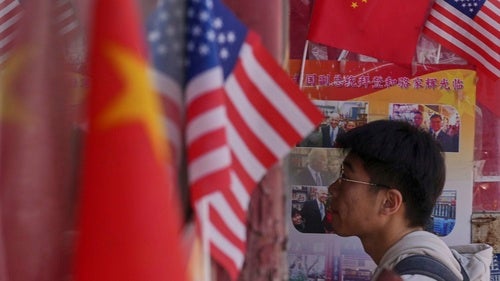
As it enters its 250th year, the United States faces an international political system it can neither dominate nor disregard. American leaders will have to do something they have long resisted: learn how to actually play the game.
It’s difficult to predict how the world will change in the next five years, let alone the next 250. But as America prepares to recognize its 250th anniversary, three major factors that influenced its first quarter-millennium will impact the nation much differently in its future.
The first is geography. The United States was born from a European colonial empire and has been bound tightly to Europe—despite its ups and downs—for the past 250 years. But Europe is unlikely to be the center of world economic and military power in the next 250 years. The geopolitical and geoeconomic center of the world will be Asia—and not just East Asia, but the broader Indo-Pacific region defined by those two great oceans. While Washington has struggled to follow through on former US President Barack Obama’s call to “pivot to Asia,” in its second quarter-millennium, the United States will have little choice but to embrace an Asian future.
The second is choice. In its infancy, the United States was weak and wanted nothing more than to be left out of Europe’s wars. In his farewell address to the nation, President George Washington noted that America’s “detached and distant situation” allowed the young nation to avoid European power politics and place its focus instead on trade and growth.
American ambitions grew alongside American power. From the Monroe Doctrine to Manifest Destiny to the Roosevelt Corollary, the United States steadily claimed more influence, more land, and more power in the Americas. At the dawn of the 20th century, possessing the world’s most powerful economy, the United States looked abroad to the Philippines, Puerto Rico, and Guam.
"For the first time in a very long time, American leaders will have to learn how to operate in an international political system that it does not and cannot easily dominate."
After its engagement in World War I, however, the United States pulled back as if it had touched a hot stove. But American economic and political security, then and now, is intertwined with the fate of other nations. America cannot hide behind its great ocean barriers and escape the world’s problems. And no international system can operate with the United States’ economic power and military potential sitting on the sideline, waiting to tilt any coalition of states. The world will pull us in, whether we like it or not.
The third is power. Since the 1940s, the United States has been, in the words of British economist Barbara Ward, the “leader of the free world.” And after the Cold War came to an end, it became the unipole in a unipolar system. This has allowed the United States to spend the past two and a half decades kicking around far weaker states and feeling strong.
But as it prepares to enter its 250th year, the United States is coming up against actual competition for international power. It is discovering that it’s not necessarily alone on the commanding heights of the global economy or at the leading edge of every in-demand technology. For the first time in a very long time, American leaders will have to learn how to operate in an international political system that it does not and cannot easily dominate. As a result, they will have to do something they have long resisted: learn how to actually play the game of international power politics. And they must do so not as the leaders of the “indispensable nation” former US Secretary of State Madeleine Albright referred to, but with an understanding of the United States as one member of a global community of nations.


America at 250: The Arc of Global Influence
This content is part of the Council’s America at 250 initiative, a series of high-level dialogues, expert perspectives, public and private programs, and a signature conference focused on the critical questions that will define America’s future.