Virtual Roundtable: Post-Election Analysis

About This Event
The election results are in, and the read-through matters. The 2026 midterms landed against a backdrop the Council's own public opinion surveys have been tracking for months, offering a data-driven view of where American sentiment on foreign policy actually stands. That sentiment shapes the policy environment companies plan around, and that environment is being tested in real time—an unresolved Iran war, an unsettled Israel-Palestine conflict, and growing tensions with Western allies are reshaping the global perception of the United States. Join Council Senior Nonresident Fellows for Public Opinion and Foreign Policy Dan Drezner and Bruce Jentleson, Council President and CEO Leslie Vinjamuri, and Council Vice President of Research Ariane Tabatabai as they assess what the midterms indicate and what you should be watching next.
This hour-long discussion and Q&A will focus on what the midterm results mean for US foreign policy, and on the trajectory of the Iran war, the unsettled Israel-Palestine conflict, and growing tensions with Western allies.
This transcript was generated using automated transcription tools. While we strive for high accuracy, automated transcripts may contain errors, omissions, misspellings, or misinterpretations of names, technical terms, and dialogue. It has been edited for clarity.
Ariane Tabatabai: Hello and welcome to this Chicago Council on Global Affairs virtual program, The Global Stakes of America's Midterms. I'm Ariane Tabatabai, vice president of research here at the Council, and today we're deciphering last night's election results and what they might mean for America's role in the world.
Folks around the world have been watching the US midterms to see what it might mean for them. Although we don't have all of the results yet, we have enough to know that the Dems have won the Senate and the House and made major gains across the country in governors' races. As a quick recap, last night Democrats won back the US Senate, flipping back seven seats, including in our neighboring Michigan and Iowa, as well as Ohio, North Carolina, Georgia, and big surprises in South Carolina and Texas.
The deep red Mississippi race remains too close to be called, and there are about three or so dozen votes that are making the difference between a Republican or a Democrat winning the seat. This is not a filibuster-proof majority, though, but it is an important one, with 54% of seats for the Democrats and 44 for Republicans right now on the House side; Democrats regained the majority, flipping a number of very hard districts.
229 seats for the Democrats with 26 flipped, 139 for Republicans. And finally, in terms of the governor's races across the country, Democrats made some gains, five governor's mansions, including in Texas and Ohio. And all of this with major foreign policy issues, including the Iran war and trade wars, providing the backdrop for the midterms.
President Trump, in his own admission last night to Fox News, noted that the Iran war had played a major role in shaping the outcome of the elections. So what can we expect now, in the lame-duck period between now and January 3rd, when a new Congress is inaugurated, and then after that, all the way up until 2029, when a new administration would be coming in?
To make sense of all of this, I am joined today by three of my esteemed council colleagues. Dr. Daniel Drezner is senior non-resident fellow of public opinion and foreign policy here at the council. He is also a professor of International Politics at the Fletcher School of Law and Diplomacy at Tufts University.
Dr. Bruce Jentleson is a Senior Non-Resident Fellow of Public Opinion and Foreign Policy at the council, and a professor of Public Policy and Political Science at Duke University. And last but certainly not least, our president and CEO, who needs no introduction, but I will introduce her anyway, Dr. Leslie Vinjamuri, who joined the Council last year, and prior to which she had served at the Royal Institute of International Affairs, known as Chatham House in London.
I'll be taking your questions after we do a couple of rounds here amongst ourselves. All right. Before we start to talk about the specifics of foreign policy, I want to do a quick round robin here, big picture, and get your initial thoughts on the midterms.
Tell us a little bit about what the results tell us about what Americans want from their government. And what do you make of the election results? Bruce, let's start with you.
Bruce W. Jentleson: Yeah, first of all, thanks very much for the invitation. And I just want to say as someone who's been involved with the Council for many years, what President Leslie Vinjamuri and your team are doing is really great.
There's just an enormous amount of dynamism going on, and I know many of you in Chicago are benefiting from that. I guess I should also mention my Duke connection: another link to your state is that your Governor Pritzker is a Duke alum. He was a student here before I was a professor, but I did get to know him when I was running our policy institute, him and his family.
So a couple of links there to the Council. It started being called the Blue Wave, then it was Blue Tsunami. I saw a version of that just before called Blunami, making it even more. And in addition to what Ari said, I think the ways that it penetrated down-ballot is extremely interesting.
Here in North Carolina, Democrats are probably gonna win nine of the fourteen congressional seats. Democrats had about four before this, and in the state legislature the same. Governor Cooper was elected senator. That was pretty much a given. He was projected to win by a, and he won by a long shot. Having said that, I think for Democrats, it's a great night and a great week, but there's gonna be work to do.
This was more anti-Trump than pro-Democrat. Some of the candidates Democrats had were enormously attractive to people. James Talarico in Texas, Adam Hamilton in Kansas. It's a really very different kind of Democratic candidate, which really helped. but I think if you looked at some of the polling that, the Council's done and also The New York Times and Siena, when they were polled on questions about the generic name, do you favor a Democrat or Republican for governor, for Senate, for House?
All of those came out favoring a Democrat. But in the same poll, they asked, excuse me, in general, are you satisfied with the Democratic Party? Twenty-eight percent yes, seventy percent no, right? So Democrats still have a brand that they're gonna have to build on. They won, I think, partly because people are getting some more confidence in them.
Foreign policy is a part of that. The Council, in its most recent polling, asked the question of, "Did you vote on the Iran war?" And not that many people said yes. But then people were asked, "Do you feel that the Iran war contributed to the economic problems?" And people said yes to that.
So it's what in polling as a bank shot strategy. Basketball metaphor for a Duke guy, but foreign policy comes through always in an indirect way. So there's a lot of good results here for Democrats and very surprising for many people. But I think the fact that it's anti-Trump on corruption, on the economy, on sort of his personal style of all these projects in Washington that, you know, having a Halloween ball at Mar-a-Lago when some people couldn't even afford candy to give out to their trick-or-treaters. It's a two-part message, and I think Democrats have to see both parts.
AT: Dan, let me come to you and ask you the same question. What do you make of the results we've seen so far? What does it tell us about how Americans are feeling?
Daniel W. Drezner: What they're feeling is that, whatever Donald Trump has been doing for the last two years, they want to see the opposite of it.
I'm a little more optimistic than Bruce, but I think the key thing for Democrats is that you have to step back and appreciate just the magnitude of what's going on. Prior to the election, you had, sort of, forecasters saying, if the Democrats have a good night, they'll get to maybe 52 or 53 seats in the Senate and 235 seats in the House."
It's becoming increasingly clear that they're gonna get close to 260 in the House, and they can get up to 56 in the Senate. Every state election in Texas went for Democrats. So this is not just a question of Talarico being a good candidate. Greg Abbott, who was the three-term incumbent governor in Texas, went down as a result of this.
Democrats won a Senate seat in South Carolina. They might win in Mississippi. These are not states that anyone thought were gonna be on any remotely competitive map, two years ago. Bruce is absolutely right in terms of the sort of p- favorability rating of the Democratic Party in general.
I do think that's a deceptive figure though because the reason it's that low is in part 'cause Republicans obviously don't like Democrats, but also Democrats unsurprisingly had a lot of infighting, and there's genuinely ... There is gonna be an interesting debate going forward, particularly on foreign policy, I would add, but basically what is it that, what should the Democratic Party stand for rather than against?
And I think we're gonna see that play out over the next two years, particularly with res- And I think the presidential primary will also be a clue there. The one thing that makes me think this is gonna be less of a real, of, an intraparty,civil war th- than anything else is that anti-corruption is one of those things that progressives are on board with and centrists are on board with.
It is an easy winning message to make, and it's become increasingly clear that was the other thing that voters were responding to: they did not like what was perceived as widespread corruption among the administration. By the way, I just want to make sure that you guys are gonna top off my Amex card once we're done with this.
That was the deal, right? That was the arrangement. I'm sorry. But things like that are easily understandable to Americans, and they are not happy about that. So I strongly suspect that if Congress focuses on dealing with corruption and rule of law, that's gonna be a unifying issue for Democrats.
AT: Leslie, I'm assuming we're not gonna top up his Amex card. But do you have any reactions to what you've heard so far from Bruce and Dan?
Leslie Vinjamuri: I agree with much of it. I see it as, first of all, a good news story, not because it's about Democrats or Republicans, but because I think that the broad view of the American public that the country's not being governed well and heading in the right direction aligns with my own individual view, and I would feel the same whether it was a Democrat running it or the country or a Republican.
I think that, clearly, people are very aware of the foreign policy issues, whether it's war in Iran or tariffs, and polling shows that those things matter; but they matter through people's pocketbooks. And I will tell you, everybody on this call, and probably everybody listening, is in a very privileged position, and yet on my return to the United States a year ago, I was shocked at how expensive this country has become.
Food. We talk about the price of gas. Food is extremely expensive, so I think, for many Americans, it's just simply unsustainable, and when you add the cost of everyday life, the hurdles to kinda getting things done, when you add onto that the sense that Washington is chaotic, it's disruptive, it appears to be dysfunctional.
People in the rural states and the Midwestern states have never especially liked Washington, but for different reasons, and I think there are plenty of reasons that they didn't like the Democrats, and there are other reasons that they haven't liked this administration. So that kind of anti-vote I think makes sense.
I was definitely surprised to see all those flyover states that went-- that fielded many Democratic successes. That's just not what we expect to see. I spent last weekend in Nebraska. I came back thinking, "This is not a state that's gonna go Democrat," but the blue dot, NE-2, is sending a Democrat to the House of Representatives.
Of course, the sitting senator, Pete Ricketts, did not lose his seat, but it was closer than you would expect it to be. And so I think the other thing to note is, as those people who are experts on, who turned out and which way they voted, a couple of things. One is even where Republicans won, I think they were less successful in rural areas than you would expect, and again, I think that's a cost of living thing.
Anybody who's driven across the United States knows it's not a small thing. I think sometimes globally people look at America, and they think all you care about is your driving, but driving to work is how people survive. It's how they make their money and feed their families, and so the cost of gas is a huge thing, and of course, the tariffs and the impact on local folks.
And then finally, on the turnout, very interesting- it will be very interesting to get more analysis on how much of this was a shift and how much of this was turnout. Young Black men apparently turned out more for Democrats. Latinos swung back to Democrats. Those are very significant results in contrast to the last major election.
So, like, very interesting things here. My takeaway is it's so great that people have a choice and they exercise their view on the United States and where things are going at the ballot box. We couldn't be luckier, and so far as I've seen, there hasn't been any major violence.
AT: That's a great way to start this.
Now, let's dig into what we do, which is the foreign policy piece of it, more specifically. Bruce, let me start with you here and ask you to talk a little bit about how the public's attitude toward fore- foreign policy seems to have changed over the past 18 or so months. We've all mentioned the Iran war and tariffs as two of the major issues.
The general kind of view has typically been that foreign policy doesn't really affect elections. This seems to have been a bit of a twist, although even though people m- may not necessarily directly connect their vote to foreign policy issues, they're certainly connecting it via maybe one degree of separation.
So can you talk a little bit about how the public attitude seems to have changed, and how, responsive do you anticipate the new Congress to be to this shift?
Yeah, that's a good question. It's rare that foreign policy is a really major issue, right? In presidential elections since World War II, it was in 1952, the middle of the Korean War.
It was in 1968, '72, in the middle of the Vietnam War. To a certain extent, it was in 1980 with Reagan and the Iranian hostages, the Soviet invasion of Afghanistan, but it was mixed in with 18% inflation, right? And then the Iraq War actually played into the other, to the 2006 major swing in a midterm where Bush really played.
And in some ways, that's very normal, right? Especially in midterms. People care about what's at home. But like we were saying before, in the Cold War, you'd see it in the same sort of bank shot strategy where people say, "What am I voting on? I want American leadership." How do you measure leadership?
I measure in foreign policy, so it really would seep through in those ways. But what's interesting here, I think, is that if Trump's America First, every president has looked for a post-George Kennan containment bumper sticker, right? Bill Clinton had engagement and enlargement.
I was actually in the Clinton administration when we thought that was a really cool phrase. It came and went. We spent a lot of time writing it and litigating it. George Bush was the freedom agenda. Obama was America's leadership. And Trump's has been Make America Great Again.
Joe Biden's was America is Back. None of those had any staying power, but America First has. We have defined our foreign policy debate for 10 years now around America First. And as the council has shown in one survey after another, the issue positions are at right angles to the belief in that overarching narrative and concept: support for NATO, the Paris Climate Accord back in the day, more or less free trade.
And but I think now what happened was people are seeing they like the narrative, right? Is it a sense of America's role in the world that was different than leader of the free world or American exceptionalism? But now they're seeing the costs and the flaws of those policies, right?
Immigration: Trump's polls were underwater on most aspects of immigration other than a secure border. On trade, on the economy, his supposed superpower, as you said, tariffs. And so I think in some ways we're seeing that people like the idea, but when Trump's in power, you see the consequences of his policies on these foreign policies.
Iran war, the polls in the first week when there was still a lot of, you know, hitting targets, a lot of, you know, bang 'em up. The initial polls were thirty-one percent support, the lowest for any major military action ever in its first period. So people just felt this doesn't make sense, and they felt that even more over time, particularly as gas prices kicked in.
So in some ways, I think the challenge is going to be how Democrats in Congress try to restrain Trump on some of these policies. I'll turn it over to Dan now because Dan had a good point in his article that, you'll make, but about the consequence may be if Trump may double down and get crazier out there, right?
But I think for Democrats still, it's going to be: what's the concept, what's the narrative? Not some fancy ism that we academics deal with. But what's the American sense of who we are in the world that can help be the whole that's greater than the sum of its parts for all these scattered issue positions?
And that's relevant to 2028 more than it was relevant in 2026.
AT: Let me actually pair your comment with a question and pose it to you, Dan, which is that America First has been the kind of, you know, overarching philosophy for the administration's foreign policy, which is based on transactionalism to advance the national interest on paper.
In reality, though, what we've seen is that President Trump has had this personalist approach to foreign policy that has often been centered around personal gain versus the national interest. So to what extent has this approach and this difference between what the promise was and the philosophy was supposed to be versus what has actually transpired shifted the conversation?
How much has it actually contributed to what we're seeing today?
DD: I think it's contributed a fair amount. The actual US foreign policy we've seen for the last two years, I think the term that best char- characterizes it is one that my colleagues Abraham Newman and Stacie Goddard coined, which is neo-royalism.
That, rather than claiming this as some sort of realpolitik or return to great power politics, what it really is was Trump cutting deals with elites in other countries as well as tech bros, for lack of a better way of putting it, or plutocrats, that allowed for some sort of corrupt bargain.
And that, again, is the thing that a lot of Americans rejected: that this was perceived as American foreign policy, not in terms of any sort of idealism nor any pursuit of even a narrow national interest. It was rather the pursuit of the personal interest of the president, his family, and his cronies.
And so I think that is the thing that probably got the most repudiation from the election results last night. The idea that someone like Jared Kushner should be entrusted with, or Steve Witkoff, for that matter, should be entrusted with sort of high-level negotiations with anyone is, if you think about it, insane given the degree to which they are compromised by who is investing in their funds and a whole variety of other things.
So the conflicts of interest among Trump's coterie, in terms of foreign policy, are massive, and this is an area with congressional oversight where I do think you're going to start seeing some, a, a flashlight or rather a very strong, halogen light being pointed at.
AT: I want to come back to the topic of oversight, oversight in a few minutes because it's going to be obviously a, a big one.
But before that, Leslie, let's... We've talked big picture about how foreign policy has shaped the outcome of the midterms. I want to talk more specifically about some of the issue areas that are ongoing, and that's obviously the ongoing war with Iran, Israel policy, relations with China, the ongoing Russian war in Ukraine.
What do you anticipate a new Congress will do to try to tackle these different conflicts and rela- important relationships? And where are the limits that the new Congress faces in pursuing its agenda?
LV: It is the question to ask, and I think it's really hard to answer. Clearly, there are trade-offs in how you spend your time if you're a member of Congress, and investigations and oversight and doubling down on allegations of corruption, even if they're popular, are incredibly time-consuming.
And so I'm not persuaded that we've yet seen a clear reckoning with the reality of setting your priorities, sequencing your objectives, and making tough trade-offs. and, I guess I'm of the view that if Donald Trump had delivered a deal, on the war in Ukraine that was seen to be somewhat palatable and acceptable and deliver, good results for the American people, certainly in terms of, the spillover costs, if he hadn't gotten into the war, if he'd gotten into the war and ended it quickly with Iran, that they might actually forgive him for a fair amount of corruption if their own daily life wasn't immediately impacted by tariffs, by the cost of gas, that I think corruption might not be as high on the list.
And if that is true, and of course, I don't have the evidence that's true, but if it is true, then it suggests that the top priority should be getting to a more stable landing place when it comes to the domestic economy, which is integrally linked to tariff policy and to the war in Iran.
So what they will do is a big question. What they should do, I think, is to really address those conc- those concerns. I think we're gonna see a lot of effort to try and get some sort of war powers authority. We've seen that already with Jason Crow and others, and I think there will be more that now are-- have been elected who will join that effort to restrain the president.
The big question for me is what President Trump will do, actually. And I know that many people, I think the line on the street amongst many experts and analysts has been that he has more executive authority when it comes to foreign policy. He's gonna double down, et cetera. But I don't think that's a given.
He also is somebody who I think will care about legacy. Like every US president, he will want to be able to actually claim some wins. I would imagine that he will try quite hard to come up with a deal when it comes to the war in Ukraine. That's obviously gonna be very tricky, and there's a big question mark about who's around the table, which will create a lot of divisions domestically and obviously in Europe.
And then the bigger question is what he does when it comes to Iran, and whether he follows through on this very random, seemingly random claim that he's, that America's not gonna be supporting military, giving military assistance to I- to Israel. So I think those are really tough questions. I guess I tend to think that he's gonna, if he can, back off of any intense military action.
There's a lot of divided views on this, and obviously we don't know. But I don't think-- I actually think President Trump likes winners. This wasn't a marginal victory on the part of the Democrats. I think he might sell a number of his own folks down the river and lean into those who he thinks are very strong.
And we might see some things that we don't anticipate in terms of President Trump's alignments with folks in Congress that are newly powerful
AT: Dan, I want to come to you and see if you have any kind of additions to or reactions to what Leslie said. But also I want to add something else, which is to ask you to think a little bit, and talk a bit more about the trade piece of it all.
We've talked about Iran, which is one of the big drivers of the affordability crisis that has shaped the midterm outcome, but trade is probably the other one. So what can a new Congress do to reshape the policies, and the relation- the trade relations that we have, especially with close allies like Canada, like the Europeans, some Asian allies, et cetera?
DD: I think it's interesting that even Republican sort of commentators over the last twenty-four hours have basically acknowledged that the Iran-- they obviously have said the Iran war was a problem, but a lot of them have also talked about the problem with the tariffs. and, particularly the trade war with Canada, Maine, New Hampshire, Ohio, Michigan, Minnesota, Kansas, these were all, key Senate battleground states where the, the Canada tariffs directly and negatively affected, voters in those states.
I think the pivotal moment in Maine might have actually been the debate between Troy Jackson and Susan Collins, where Susan Collins bragged about the fact that she'd gotten an exemption for rock salt, I think, from the tariffs. And Troy Jackson said, "You can't eat rock salt," and that was an interesting moment.
The interesting question is going to be the thing that's worth noting is that Trump has, after originally attempting to impose a lot of these sort of liberation day tariffs through something called IEEPA, which is the International Emergency Economic Powers Act, the Supreme Court shot that down. He has found other legal means of implementing the tariffs he wants to implement.
I do think some of those reasons that he's done so are risible. I think he's, among other reasons —things, sanctions —imposing tariffs on Canada essentially because there are labor abuses there. Hopefully that'll get litigated and thrown out of court. But I think the other thing that you need to bear in mind here is there's not a lot of veto-proof majorities in Congress for anything.
Tariffs might actually be something where, or at least this sort of Trump 2.0 tariffs, I could actually see there being a chance that you could get a veto-proof margin there. Democrats obviously campaigned on this, but a lot of Republicans were not thrilled about the tariffs, and it was just that they had to deal with the fact that the leadership in Congress, the Republican leadership in Congress, didn't wanna, vote on it.
It'll be very interesting to see whether you can get veto-proof margins on this, which will then force Trump's hand in terms of dealing with the tariffs. The other thing, obviously, the Democrats can do is tie tariffs to affordability. Democrats were hammering, kitchen table issues, and it is very easy to say, "One of the things we're gonna do is lower your taxes on things that actually matter," meaning food, stuff that, occasionally gets imported.
And that I do think is a message that will, again, also unite progressives and centrists, frankly.
BJ: That's right.
AT: Let me ask you a follow-up question, which is: say Democrats are able to do the things that you outlined. Does that help the Republicans in 2028?
DD: I think it changes the conversation for Republicans in 2028.
In the same way-- I think the biggest surprise was that everyone expected Democrats to do pretty well last night. They did far better than that, as the sort of blue NAMI or whatever neologism we can come up with. And I think the reason that matters is that it makes the 2028 primary for Republicans as wide open as it does for Democrats.
It's worth remembering that a political science colleague of mine, Seth Masket, pointed out that if you look at Trump's popularity among Republicans, the low point he suffered —you know, over the last 10 years —wasn't after January 6th. It was after Election Day 2022. And the reason was that a lot of Trump's preferred candidates in those midterms lost races that frankly the Republicans should have won, given the degree of anger against Biden.
You can tell that same story now. Trump's preferred candidates in places like Texas and South Carolina lost in the Senate. The reason... Roy Cooper probably would have won anyway, but Thom Tillis was a popular incumbent, and Trump forced him to basically say he wasn't gonna run again.
There is gonna be a lot of anger at Trump. You've already seen J.D. Vance sort of back away from the war in Iran. You've seen Ron DeSantis already issue statements indicating we need to change what we're gonna do. I think the idea of J.D. Vance being the sort of titular front-runner is gonna be genuinely questioned now.
And yeah, I think there's gonna be a Republican debate about what is the future of our party and what does the future of our party's foreign policy look like given this kind of shellacking?
AT: So let's come back to the topic of what a Republican foreign policy might look like. This is an interesting one, so I'm gonna add this at the end for all of you to think about.
But Bruce, let me turn to you and bring in the question of oversight here. So in my mind, Democrats have a twofold challenge. One is that, as Leslie was mentioning, they're gonna have to balance two sets of objectives that may be in a bit of a conflict with one another. One is delivering for the American people, so that's a positive agenda, legislation, et cetera, that actually addresses the affordability challenges that drove so many people to the polls.
And then the second is holding the administration accountable for cor- the corruption and all of the other challenges we've talked about, and some of which we have not, and that's the oversight piece of things. So there's that challenge. Then there's gonna be the challenge of how do you talk about that to your constituents so that they don't think you're spending your days sending grumpy letters to various cabinet secretaries, but actually doing things.
Talk to us about how you think, first of all, whether you think this is actually achievable, and second, how would Democrats go about doing that? How should they go about doing that?
BJ: Yeah, that's a really good question, I think, and I think it's where the sc- discussion's gonna go in the next week after everybody gets over the, "Oh my God, this is unbelievable, this bluenami," or whatever.
On the corruption issue, I think that's still ripe for Democrats in a certain way. As both Leslie and Dan said, it wasn't an abstract issue like Kamala Harris tried to make in 2020. People could see a relationship between what was going on in those pockets and not going on in theirs, and I think Jon Ossoff did that extremely well in Georgia. That is somewhat analogous to what brought down in Hungary and also in Serbia, right?
The corruption issue was a big issue because people felt it was affecting them. Not just that, Elon Musk is really rich, and I'm not, so I think they're gonna wanna link that to the affordability. And for that kind of oversight, in the House, the Judiciary Committee is gonna be chaired by Congressman Jamie Raskin, who was a constitutional law professor at American University before he became a congressman.
And very talented here. And I think you go off, I don't know, let's call it the lower-hanging fruit. You're not gonna impeach Trump. That's not what you wanna do. But the Jared Kushners of the world and the Steve Witkoffs, and maybe the Don Jr. getting his, post-wedding, not wedding, post-wedding party paid for by a Russian oligarch.
There are things you can do there that I think you can do. At the same time, Hakeem Jeffries, who will be the speaker, had a little ditty this morning on TV. He said, "Voters don't want us to just get even. They want us to get things done." In fact, Roy Cooper here in North Carolina had the best campaign slogan, "Make stuff cost less," right?
Now, it's not necessarily within your power as a senator to do that, but it gets something. So I think they'll, they can do both strategies. I actually think it's very hard to constrain a president in foreign policy. If we look at it, Congress has not often been able to stop presidents from doing what they want to do.
In the Vietnam War, finally, after many years, the defense budget was cut for the troops. They had to bring them home in 1975. In the Reagan years, there was, nine- it was 1980, I would argue about your- there was a bipartisan bill that put sanctions on South Africa when Mandela was the hero.
Reagan vetoed it. The veto was overridden because you had Richard Lugar, chairman of the committee or ranking member at that point, Republican, working with others, right? But those are very rare where you actually say you can't do X. I'm skeptical about the War Powers Resolution, having written lots of articles on its scope and limits.
I think what you can do is bring the debate and put the political pressure on Trump about this. And there it goes back to what Leslie was saying. He is so unpredictable. I had a former student of mine who's in the military. He had a couple of years to serve, came to my office the other day, and he's trying to figure out his own career.
It's just that he's on the wrong side of Pete Hegseth. And I said to him, "I don't know what to tell you." He could fire Hegseth as a sacrificial lamb, or he could double down, right? Both are part of Trump. That unpredictability is there. So he could say, "I don't want any more problems. I'm thinking about my legacy." But the version of winners that he likes are the winners that are all about him, right? I'm on the ballot, or we would have won if I was on the ballot. So I still worry about his unpredictability on Iran. Last thing I'll say, if you go back to Trump's first term when he got out of the nuclear non-proliferation agreement, the JCPOA, at that time, Prime Minister Netanyahu was saying, "Do it."
Most of the Israeli sharp, former heads of Mossad, former chiefs of staff are saying, "It ain't perfect, but stay with it." And their other smart strategy would have been, "I'm Donald Trump, I'm a little crazy. Let's get a better deal now, and I can say it's better than Obama." The eve before this war, the Omani foreign minister, who was a mediator, came to the United States with a deal that, or at least the makings of, a deal that could have allowed Trump to say it was better than Obama.
So I can't predict where he's gonna go, and I think Congress's ability- they can put pressure on him, but their ability to stay, say, no, you can't do X, I think is historically really limited.
AT: And Leslie, I want to give you both a chance to actually say a couple of words on oversight versus advancing the sort of affordability agenda if you want to, because this is obviously an important one. Dan, do you have anything?
DD: I would say-- I apologize for saying this. Anyone who's listening to us obviously has an interest in foreign policy, and I'm here to break the news to you that you are all weird, relative to the rest of America. A lot of people think America First works because Americans are fundamentally isolationist.
I've said this before, and I will say it again. Americans are not fundamentally isolationist. Americans fundamentally do not care about foreign policy unless it affects their bottom line. So as a result, Democrats are highly incentivized to focus on the affordability elements of foreign policy, which means probably trying to rein in the president on the war with Iran or push him towards some sort of resolution of that and the tariffs.
Beyond that, I do think it's gonna be mostly oversight because, as Bruce said, the president still possesses-- and this is an argument I made in a piece for Foreign Affairs that was published today with my colleague Elizabeth Saunders. The president still retains considerable foreign policy powers, which is how the system was designed, basically.
Congress can engage in oversight. They control the power of the purse, and I think the power of the purse is gonna be underestimated because I don't think, in contrast-- the historical analogy I would make is that there are two previous elections that bear resemblance to what we're dealing with now.
The first was the 2006 election, where Democrats came roaring back into power, got majorities in both houses of Congress, but in the end, fundamentally did not constrain the Bush administration on foreign policy. Bush implemented the surge after foreign po- that, that drubbing. But the other analogy would be 1974, where in the wake of Watergate and Vietnam, Democrats had a massive wave roll in, and that Congress did actually impose significant constraints on the executive.
In fact, you can argue that was the high-water mark of congressional control over foreign policy. And my hunch is that this election is gonna split the difference between the two. I don't think you're gonna have Congress roll over in terms of funding the Defense Department. That is not something they are gonna do.
In fact, I think the first thing they're gonna try to do is impeach Pete Hegseth. So I think they're gonna try to impose more constraints, but I don't know if they're gonna be quite as ambitious as the 1974 class
LV: Yeah. So one thing we haven't talked about is artificial intelligence and data centers. And we know that data centers are going to be a top, if not the top, two or three issues for many voters that matter a huge amount in the next elections. And it's-- people aren't going to wait until twenty twenty-eight for some sort of action, engagement, discussion of this.
So I think, again, of course, oversight's important. I hope that the Democrats focus in the current moment and forward when they're thinking about oversight rather than going backward, at a time when the here and the now and the prices and the stability and the data centers, and you name the issues, have got to be dealt with.
That's different from saying what they will do. But I think, if you're looking at an election in the eye two years from now, don't spend all your time going back. Focus here, and focus forward. And tackle the question not of AI regulation, although that is a very serious issue.
The thing that people care about is these data centers, and I-- that is a serious issue that must be addressed. The other thing I would just say quickly is, affordability is not a theoretical concept. You can link corruption to affordability as much as you want. If you do not deliver lower food prices, better housing costs, and lower gas prices, nobody's gonna care about the fact that you've got a successful investigation into corruption.
BJ: Can I just make a point on the data center? I think, 'cause it's good. I think the strategy, both of Trump and others, has been to China-hawk it. If we don't do X, China's gonna get ahead of us." And in fact, China hawking is very bipartisan, and has been for quite a while, right?
Everybody tries to... But I think some of the polling you guys have done, and others show that Americans are not buying that as much anymore, generally. They understand the problem with China, but they're in that, try to work together when you can rather than define everything as a China problem.
And, the data center issue rose almost organically more than any other issue I've seen in a long time. Republicans and Democrats have this local-level thing of my utility bills and my water supply, which may or may not have been true; some experts say it's not true, but anyway, that's how people perceived it, and then the danger thing, right?
And so I think how to deal with that in ways that aren't anti-technology, but deal with the sense that this was very organic, and it was farmers, it-- some people are getting jobs created by building these things, but it came from all sorts of people. And figuring out where both makes political and policy sense on that, I think, is really important.
And resorting to the, we gotta do everything 'cause China's gonna beat us," I don't think that sells as much as some, some of the politicians think it does.
AT: I have you, Bruce. So we've talked a lot about what happens once a new Congress is inaugurated on January 3rd, but there's a couple of months to go before then where we have a lame duck president with a compliant Congress. What should we expect between now and then?
BJ: Hard to say. I think there's still a question whether Trump said he's going to abide by the results. He's going to find reasons to make an issue of ceding some of these people on whatever issue he can find. The Democrats I think are trying, to, to...
They've elected very different candidates. Just like in 2025, they elected Mondame, a DSA guy in New York, and Abigail Spanberger, a moderate in Virginia. And I don't think it's a fight between the two. I think what the Democrats should try to do is what someone else has written a book on this- not me- called Heterodoxy, right?
Understand that you have to be in a coalition with somebody who's pro-guns but also pro-better healthcare, rather than all these purity tests, and that's the battle we're gonna see, I think. Can Democrats really understand that? And in some ways, these election results help them. You're having a DSA person probably gonna be the new mayor of Los Angeles, and then you're having the Talarico, who campaigned on he still believes in oil drilling, right?
And Roy Cooper here, and all of that. So I think the Democrats are gonna d- they need to get this heterodoxy going and sort of the Venn diagram, what are the overlapping areas, and emphasize those. If they're sending signals they can't do that, then it's bad. But other than that, I don't really have a good sense, maybe somebody else does, about the next two months.
AT: Let me maybe refine that a little bit and pose it to Dan here, which is that there's been a lot of chatter, including from the administration, about the war in Iran specifically. What do you anticipate over the next couple of months, with regard to the war in Iran specifically?
DD: We know there's been reporting that Trump had toyed with the idea of escalating, launching renewed airstrikes prior to the midterms. I think probably his political consultants talked him out of that, but it might very well happen this week, frankly. Again, I don't think those airstrikes are gonna accomplish anything.
In fact, this is one area where the midterm outcome is gonna embolden Iran even more to just hang tough. And indeed, I believe Iran has been taunting Trump on social media since the result of the midterms. So I would expect to see a renewed flurry of fighting it, and then Trump probably trying to find some way of getting out of it.
I do think there might be a deal that could be made because I think the one thing Iran has learned from this is that maybe they don't need nuclear weapons because they have control over the Strait of Hormuz. That's their nuclear weapon. And so if there could be some deal where Iran actually really does open up their nuclear facilities for inspection, but they are also given some sort of prerogative over the Strait of Hormuz, that would be bad for, frankly, global trade, and I don't know if Trump would go for it.
But I could see him going for it because he would actually be able to claim a clear win out of that. As I said, I think the other thing he's gonna do is start moving on Cuba. Cuba is the other area where I think he thinks it's an easy win. Of course, he thought Iran was an easy win as well, but I think with Cuba, he's gonna have Marco Rubio whispering in his ear, "Do it."
And to be fair, Cuba is a situation where they've been under an effective embargo for most of this calendar year. They probably would not put up as much of a fight as Iran would. On the other hand, I think the host of second and third-order issues an, a attack on Cuba would create are wildly underestimated by this administration.
So I don't think it would necessarily go well either. But that's the, the other priority that I would imagine that Trump would care about. in terms of the rest of what would Congress do, it's worth bearing in mind they've got to fund the government. I believe the budget is due to run out, essentially, or the government will shut down if they don't re-renew a spending bill; I think I want to say December twelfth.
The other thing to bear in mind is that, yes, right now Trump has a fifty-three, forty-seven edge in terms of the GOP. Two things to remember. The first is that Sherrod Brown's gonna be seated in December and not January, 'cause it was a special election, so he'll get seated early. So that cuts the margin down by one.
The other thing is, there are a lot of Republican senators right now that don't have a lot of fondness for Donald Trump. John Cornyn has been pretty damn pleased with how things have gone over the last couple of months. Thom Tillis has been willing to talk smack about Trump. Bill Cassidy is doing the same thing.
Lisa Murkowski wants to have a career. I'm not sure Susan Collins is gonna be a big fan of Trump right now. And at least in foreign policy, Rand Paul isn't either. So I'm not sure Trump can get the majority votes he would need on something like, among other things-- I would imagine the top priority is actually whether Alito and Thomas resign from the Supreme Court, and can he rush through successors.
I'm skeptical that he can actually do that, in the time allotted, but we'll see what happens.
AT: All right, who wants to take Dan's the future of the GOP's foreign policy question before I move on to some of the questions that came to us from ccga.live?
LV: I'll take a stab at that. I think some of what's there will remain, okay?
Not being supportive of the major multilaterals, focusing very much on bilateralism. The America First agenda in its sort of sparse form: free trade doesn't work, especially multilateral free trade. We know that that first part is common across the parties. Expect that to remain. Expect transactionalism, I think, to remain core rather than a return to a Republican values-first agenda, although it's certainly not beyond question.
If Marco Rubio were to really become the next person, I think we'd then see more of a values conversation. But I don't suspect that will be there. But I think in its raw form, Ameri- the America First agenda, is appealing to many people, depending on how it's articulated. It's- and the anti-war agenda.
Remember, go back to the inauguration. President Trump was going to get America out of wars and stop getting America into wars, and I think that will remain right at the heart of the foreign policy agenda, hopefully with more investment in the future of war, such as it is currently in deterrence.
And I guess one question is to what extent the white working-class man remains at the center of the Republican Party as they have been, and that now seems to be, once again, maybe up for grabs. Will they lose it? And if so, will they campaign to it, or will the campaign go somewhere else?
It's hard to see where else it could go, but that-- I think that's gonna be a real question. And that, that's a domestic question, but it is a foreign economic policy agenda. And on AI, it's very hard to see where the policy goes.
AT: All right, so we have a few questions. The first one I want to pose to whoever would like to take it is about affordability and the fact that for months, essentially, voters had been signaling to the administration that affordability was going to be a huge concern, that the Iran war, the tariffs, and all of the other factors that we've discussed were contributing to that crisis.
Why did the administration not take tho- those warnings seriously as poll after poll showed that this was going to be a huge concern?
DD: So a couple thoughts. First, it's always worth remembering they didn't think the Iran war was gonna last this long.
They thought it would- you know, their analogy was to Venezuela. They thought it was gonna take a week, and it would be quick. And it's worth noting the administration did try to resolve the war. That was the whole Islamabad Memorandum of Understanding that was supposed to settle these things. that said, I think that was viewed as such an abject defeat by the, for the Trump administration that Trump winds up backing away from it, because he doesn't want to be seen as a loser.
So that, that's part of the problem. The other part of the problem, and this is the truly baffling part, the Canada trade war made no sense in terms of timing. It was guaranteed to just really screw over all of those Senate hopefuls and all, and other races, in places where they were affected by Canada.
And I think, again, the answer is that Trump's theory of power is that if I really try to curb-stomp my opponent, they will just give in, and that will be that. And Trump basically is someone who, in terms of his foreign policy worldview, sees the leaders of great powers and does-- has blind spots about everyone else.
And I think he saw Canada as not a country that held the cards and not realizing that no matter how much he tried, he was not gonna make Canada-- he was not gonna make Americans dislike Canada. That is a bad sales pitch- like, that is a sales pitch that is never going to work. And you've seen this in public opinion polling, including the Chicago Council.
The problem is that he was pursuing policies that were guaranteed to reduce affordability. But I think he thought that maybe this would happen in the short term, but it would lead to wins in the long term, and he was clearly wrong about them.
BJ: Following on Dan and to the questioner, Joe Biden failed to deal with the economic problems.
And while they were related to his policies, whether inflationary during the COVID recovery, this time, the economic problems people felt, they could really draw a pretty direct line to Trump policies called Iran and tariffs, right?
DD: Yeah.
BJ: So to take affordability seriously, you had to take responsibility for those policies.
People are feeling very different this morning, but people did not want to cross Donald Trump. They saw what happened to John Cornyn. They saw what happened to Thom Tillis. They still felt, all the talk, you go in the Senate closed room, and they say that the man's crazy. So I think that direct link was there.
The other part of it, though- so I think one thing Democrats can do is try to, you know, tamp down the tariffs and try to demonstrate how that is affecting prices, but it's a much deeper problem. It's really about housing and university education and healthcare. Here at Duke, our premiums are going up by a huge percentage this year, and we're a pretty good employer here.
So you can imagine what it's like in the Obamacare marketplace. Give you one example. Outside of, on the Maryland side of DC, Takoma Park, which is a little community, very liberal, makes Berkeley probably look conservative. The mayor- I was there; my son lives there. I was there last week.
The two people running for mayor, one was very NIMBY, right? No more housing around here, no more multi-use housing. We're all liberals, but not in my backyard. And the other was, "Let's do this as well as the other." And I actually haven't looked up who won, but it was a huge debate in that community.
Democrats and others are gonna have to figure out how to deal with that, whether it's in the Bay Area or it's in Chicago or it's in DC or even here in North Carolina. Affordability runs deeper, and I think now Democrats have to be careful about expectations, right? They gotta show some progress, gas prices, produce prices maybe.
But it really is much more fundamental, and it links to our housing policies, our education policies, and our healthcare policies.
LV: Let me add one thing on that, Ari, which is, there is a fundamental problem within the current Republican Party, which, of course, is this concern for working-class folks, is also combined with a deep connection and commitment to deregulation and low taxes and big tech.
And that has to, that's not gonna get resolved in the short term, but there's gonna have to be some sort of reconciliation of those things, I think, if the affordability problem is gonna be tackled in a more long-term way
DD: Just a quick thing. I'm sorry. I did want to add, one of the other drivers in terms of affordability has actually been AI and the Trump's administration's position of let a thousand data centers bloom and let legally, AI Hoover up an awful lot of investment capital, which is one of the things that has made housing more unaffordable and has also jacked up interest rates.
AT: Exactly.
BJ: I think one of the things that's driving Trump crazy this morning is the stock market, at least when I checked an hour ago- it was up 1,500 points.
DD: Yeah.
BJ: Yeah. That's gonna drive him crazy.
DD: Oh, that will do. Yes, that will.
AT: We have about half of our questions that are some, you know, Israel-adjacent. So I'm going to do a little Frankenstein of these questions and ask you a two-part question, which is that...
So we've talked obviously about the US elections, here, but we just had Israel, Israel just had elections a week or so ago as well. How might the combination of these two outcomes shape the future of the Iran war? And relatedly, one of the key points of tension within, especially the Democratic Party, is Israel policy.
And I encourage folks to read our recent survey findings on Americans' attitudes toward Israel. It is shifting. That is obvious to anyone who's been paying attention, of course. the question that was posed is, there is a dis- there is a disconnect between the leadership on the Democratic side and what, the public attitude, the direction the public attitude seems to be traveling.
If those two sides don't come together, is there a risk of fracturing within the party? You could probably talk about that on the Republican side a little bit as well, but it's less pronounced. So let's see. Bruce, do you wanna start this?
BJ: Yeah. I'll be real quick in the interest of time. One, Trump is not gonna let Bibi get him as his next phase of the war.
Like, Bibi didn't do it to him, but he was a contributing factor. Now, he- Trump may still wanna do it- but he's not gonna do it 'cause it's in Netanyahu's interest. He has to determine whether it's in his interest. Second, I think, what's interesting about the, the whole-- And you're right, the polling is dramatic.
It is also in the Republican Party. It's particularly in the 18- to 29-year-old generation across the board, Democrats, Republicans, Independents. The left on the Democratic Party tends to be more anti-Israel. Frankly, the right in the Republican Party tends to be more anti-Semitic than these-- within this country.
There was a group of Democratic moderate senators, Chris Van Hollen from Maryland, Chris Murphy from Connecticut, that all were starting to try to get at conditioning certain more than just token aid to Israel, right? And Leslie said Trump made this crazy announcement the other day. I still don't understand it, what he really meant.
And so I think that Abdul El-Sayed and others in the party, I think it's gonna be there. But I actually think that Democrats may have suffered the worst of that already, in terms of the politics of it. And, and El-Sayed's gonna be a junior senator. He's gonna have to make decisions about how he plays the game once he's part of the, part of the establishment.
But I don't think... I think our relationship with Israel is changing, not just 'cause of the politics, but at least I would say as somebody who's worked on these issues a lot, the difference between our interest and their interest has gotten wider than it was in the war on terrorism, in the 1973 war, in the peace process in the 1990s.
So in some ways, I actually think the policy and the politics are pointing in both directions toward a very different kind of relationship. I don't see policy in one direction and politics in the other
AT: If nobody else has anything on Israel, let me get one final question in real quick, which is about immigration. We didn't actually touch immigration that much today, although it has obviously been very much in, the minds of folks as they've been, as they've been voting. One of the questions that we had was that exit polls suggest that immigration was one of the few issues where the GOP retained support from voters.
So how do you see Democrats responding? Are they going to double down on their current approach? And what do you define that approach to be? And if not, are they going to course-correct?
DD: I'll try to take a stab at this. I think there was support, in terms of the exit polls, probably for immigration enforcement at the border that, you know, made sure there weren't just open borders.
But I am pretty sure that the American public, and particularly the constituencies that swung dramatically from Trump to the Democrats over the last two years, did not want to see what ICE was doing, and they don't want to see the sort of American carceral state applied to folks who are hardworking immigrants here that maybe need to get their DACA status resolved or something else resolved, but otherwise are clearly contributing members of the economy.
This hurt Republicans in Texas, and it also hurt them in farm states, which, among others, employed a lot of this labor. So I do think there's room for Democrats to pursue an immigration policy where it's like, we do want to be tough at the border, but we also want to be fair for those who are inside our country and are obeying our laws and adding, by the way, to the US economy.
And also, it always struck me as insane that you'd ha- that you can succeed with this, with a very serious anti-immigration platform. One of America's superpowers is taking the best of the best from everywhere else, inviting them in, and making them incredibly enthusiastic Americans. No other country in the world can do that.
And the idea that it's somehow a threat or it'll change the character of America should have died when Sam Huntington did.
AT: Okay. That is a really great way to end this. This is unfortunately all the time we have for today, but you all just set the bar very high for post-election hot washes, so we'll be receiving invites going forward.
Leslie, I think I'm okay saying that. Thank you to Professors Vinjamuri, Dresner, and Jentleson for joining me. Thank you all for tuning in. We'll continue to unpack the election results and the topics we covered today in the weeks and months to come, so please continue to follow our work.




Related Content
 Public Opinion
Results and analysis of the Council's 2026 annual survey of American views on foreign policy.
 Public Opinion
As Russia’s war in Ukraine continues, the US public remains supportive of sending military and economic aid to Kyiv and in favor of boosting sanctions against Moscow.
 Public Opinion
Still, a majority of Americans overall continue to say the United States should not take a side in the Israel-Palestinian conflict.
 Public Opinion
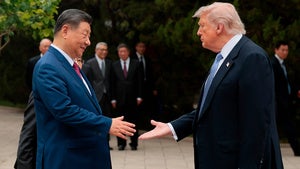
More than half of the US public supports a policy of cooperation and engagement with China, including a growing number of Republicans.