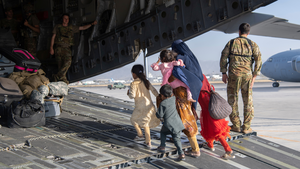
America’s war in Afghanistan may have ended, but its consequences still remain. Ambassador Ryan Crocker unpacks what the US withdrawal told allies and adversaries about American power.
"There are concrete steps that internationalist nations can take to staunch the erosion of global norms and set the stage for a stronger future," Council Lester Crown Senior Nonresident Fellow Suzanne Nossel writes.
The world's biggest geopolitical battles aren't fought with military force alone. Edward Fishman explains how everything from shipping lanes to the US dollar has become a source of strategic power.
Council Vice President of Research for Security and Defense Ariane Tabatabai joins the podcast to discuss how the short war illusion is playing out today and how it could play out in a future conflict between China and Taiwan.
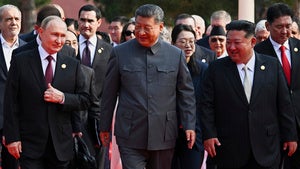
"Russian support for Iran in the war with the US was not a new development," Council Vice President of Research for Security and Defense Ariane Tabatabai and John Drennan write. "Russia, China, Iran, and North Korea had been deepening and widening their cooperation."
"I think President Trump had overestimated how much he could achieve militarily. And I think Iran might now be overestimating what it can achieve diplomatically based on the cycle that we're in," Council Vice President of Research for Security and Defense Ariane Tabatabai tells NPR.
Britain's new prime minister inherits an economy that has struggled to grow for years, with less room to maneuver in an increasingly competitive world. Financial Times columnist Gillian Tett explains what's holding Britain back and what it will take to get growth moving again.