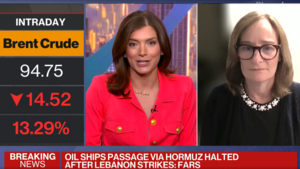
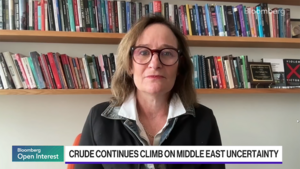
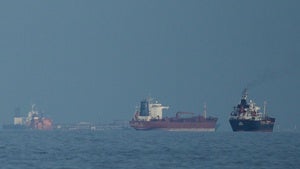
"A two-week ceasefire is going to be very unstable," Council Lester Crown Senior Nonresident Fellow Rachel Bronson says. "You need to have some stability for tankers to move in and out, so anything that threatens that will continue this crisis and keep energy prices high."
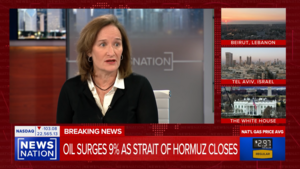
“It’s the transportation of the things that you buy, the production of the things that you buy, and the ingredients of the things that you buy,” says Council Nonresident Senior Fellow Cécile Shea.
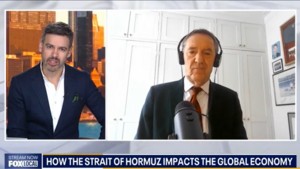
"What we're seeing, of course, is that the global economy runs on energy, and a significant shock like this will move through the system for years to come," Council Senior Nonresident Fellow Rachel Bronson tells Bloomberg Open Interest.
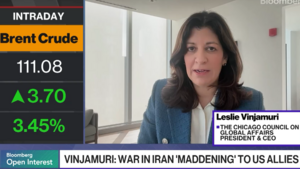
"Europe is clearly not happy. It's not a war that they were consulted about. It's not a war that they've chosen," says Council President and CEO Leslie Vinjamuri.
"A nuclear resurgence will bring hard questions, especially for the United States, which risks ceding ground to Russia and China if it fails to act," Council Senior Nonresident Fellow Rachel Bronson writes.
"With the sanctions against Russia, it adds to the concern about scarcity of oil," says Council Distinguished Nonresident Fellow Lord Jim O'Neill. "It's not surprising that the markets are freaked out about this."
"The markets can take it for a short amount of time," Council Senior Nonresident Fellow Rachel Bronson says. "Beyond that—very difficult. Prices will increase, [and] people will feel it at home."
Even before the Supreme Court’s decision to overturn most of US President Donald Trump’s tariffs, historic allies had begun actively exploring economic relationships with other nations.
Cécile Shea unpacks the Supreme Court's ruling against US President Donald Trump's sweeping tariffs and how businesses are bracing for the administration's next moves.