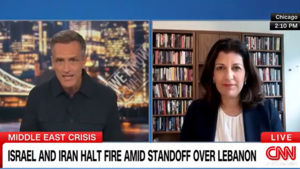
Senior Nonresident Fellow Alexander Cooley tells Axios that the Department of Education painting foreign funds to US colleges as a national security issue is "misleading."
"Leaders understand that they have a whole lot to gain from trying to manage the disruption," Council President and CEO Leslie Vinjamuri tells Bloomberg's Francine Lacqua.
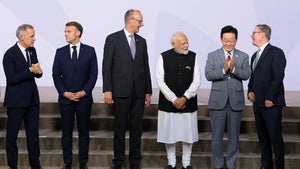
After months of punitive US tariffs, President Trump and Prime Minister Modi announced a trade deal between the world’s two largest democracies. But India has been following a now familiar pattern—building resilience in the face of a disruptive Washington.
The new strategy "suggests a very geographically grounded way of thinking about defense," former US Deputy Secretary of Defense Kathleen Hicks told the Council. She explains what it could mean for China, the war in Ukraine, and US alliances—and what comes next.
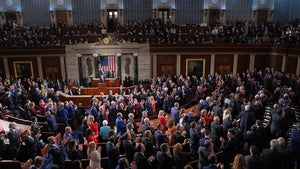
Council Senior Nonresident Fellow Jordan Tama explores the unraveling bipartisan consensus on US foreign policy, drawing on a new analysis of more than 50 years of Council survey data.
"In the last decade, Democrats and Republicans have started to drift apart on the things that they consider most important," says Director of Public Opinion and Foreign Policy Craig Kafura, drawing on Council survey results.
The Trump administration’s recently published strategic documents further the US’ drift away from its original meaning of the “one China” policy, Council Nonresident Senior Fellow Paul Heer writes.
At Davos, Martin Wolf and Sir Robin Niblett say the Greenland debacle exposed Europe's red line. Has the transatlantic relationship reached a turning point?
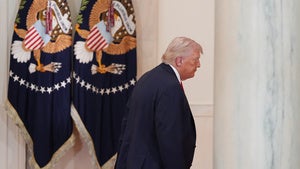
"In his attempt to secure the best deal possible or advance his policy ambitions, Trump rejects convention, diplomatic norms, and legal constraints," writes Council Council President and CEO Leslie Vinjamuri.