Can Europe Stand Without the US?
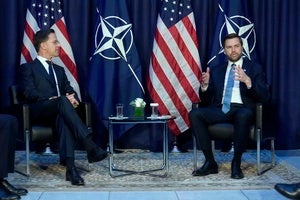 Play Podcast
About the Episode
Europe is rethinking its security as the US signals it may not always be a reliable partner. Ahead of the Munich Security Conference, countries are scrambling to rearm, diversify partnerships, and protect their interests. Can Europe stand on its own, or will it stay tied to the US? Georgina Wright from the German Marshall Fund and Sophia Besch from the Carnegie Endowment for International Peace break it down.
This transcript has been edited for clarity.
Leslie Vinjamuri: The United States is signaling that Europe is no longer its priority. For Europeans, the challenge is existential. A war in Ukraine. A United States that is no longer signaling its clear commitment to Europe at a time of low growth rates and many internal challenges. Longstanding assumptions about leadership, burden sharing, and collective defense are now up for debate.
This is forcing Europe to rethink its own defense, its commitments to security, and its ability to work together. One year ago, Vice President JD Vance made his now-famous speech at the Munich Security Conference.
So now, Europe and America are convening again in Munich. What should we be watching for? Is this a temporary strain or something more lasting?
To help us make sense of this moment, I sat down with Georgina Wright, senior fellow and special advisor to the president at the German Marshall Fund, and Sophia Besch, a senior fellow in the Europe program at the Carnegie Endowment for International Peace. I'm Leslie Vinjamuri, president and CEO of the Chicago Council on Global Affairs. Welcome to Deep Dish.
I want to get your general impressions of the past year. As we approach Munich, how would you capture the distance that has been traveled between last year's Munich Security Conference and the Munich Security Conference that is about to open? Sophia, I'll come to you first, and maybe you can talk from the vantage point of Europe.
Sophia Besch: Sure. We have been oscillating between a couple of polls on how Europeans perceive America in the transatlantic relationship. One of those was the one that Vance outlined last year, which is a very strong civilizational focus in the transatlantic relationship. The US did not leave NATO. The US still has not left NATO. The US has barely changed its forced posture in Europe, has barely withdrawn any troops, and remains engaged, for better or for worse, in the negotiations with Russia and Ukraine.
Then we had the Greenland episode, just recently, and Trump's Davos speech, which shows a very imperialist version of the US showing up in the transatlantic relationship. It is more illustrative of the fact that there are no certainties, as US foreign policy is no longer driven by US national interests. It's driven by whatever interests the president in the moment, and that will then determine how everybody else responds. From a European perspective, the Davos speech, in particular the Greenland episode, has shown for the first time how Europeans show up a little differently in the transatlantic relationship.
The Greenland episode clearly crossed a couple of red lines. Very subtly, I would say, but European leaders, certainly markets, showed the Americans that this is not such a one-sided relationship and that Europe does have some power to push back.
We have now arrived at two different transatlantic relationships. One is the one that you see when you speak to European capitals, even the formerly very Transatlanticist capitals in the North and the East that are deeply concerned about where this relationship is going. The other one is the version of the relationship that you get when you speak to NATO officials in Brussels, who will tell you that, in fact, things are merely ticking along, and the US is constructively engaged. The US ambassador to NATO is engaged, military corporation keeps going, and under this president, we will just have to expect an existential crisis every six months or so.
Some of the difficulty in characterizing the transatlantic relationship that we face today stems from the fact that we have these two different versions of it.
LV: I'm tempted to ask which one you think is right, but I think we'll have a sense of that by the time we get to the end of the discussion. Georgina Wright, you are sitting in London and you've spent a huge amount of time in Europe. How do you capture the last year? What's your broad brush, and maybe responding also to Sophia's characterization of these two different narratives?
Georgina Wright: The one thing that is maybe sometimes underappreciated in the United States is that during the US presidential campaign—certainly between the moment that we knew that Trump had been reelected and the moment he was actually going to enter office—there was a lot of work in Brussels and across Europe about engaging this administration.
We've experienced Trump 1. Is it going to be the same? A lot of people thought, oh, actually, it's just going to be the same as Trump 1, so we can use the same tactics. From JD Vance's speech in Munich, it became clear that Trump 2 was very different from Trump 1, and we needed to change how we engaged with this administration.
I think Sophia's right, it depends on who you talk to. Different people are going to have different ways of approaching the administration. Something flattering works, something that's actually threatening and clear that you are prepared to respond is going to work.
But I think Davos has been the tipping point in Brussels. The United States is, of course, an ally. There are things that we have to work on together. But this is the end of the transatlantic relationship as we've known it, and we need to get much smarter and much better about how we secure Europe, potentially, without the United States in the future, even if it's clear that at the moment they are still very much engaged in NATO.
They are still very much engaged in and care about European security. That could change. Looking at all the other elements of vulnerability independence that Europeans have on the United States, whether that's on US tech, some identify, or even the power of the US dollar, and how that could be weaponized at some point by the United States to put pressure on Europeans to change course. But I think Davos has really changed that.
In London, the reading is slightly different, which, of course, you've got the UK, which has a special relationship with the United States. Its military is incredibly integrated with the US military. They've got a very close intelligence corporation. It's kind of between a rock and a hard place, where it's trying to get closer to the EU, but it doesn't want to alienate the United States. At the same time, it wants to stay closer to the United States because it's highly dependent and has a strong relationship, without alienating the rest of Europe.
The attitude has not changed all year: we have problems. We stand up and say when we disagree, but ultimately, let's bring the pressure down, let's bring the heat out of the politics, and let's try to find ways that we can work more constructively together.
So things have changed, but they've changed perhaps faster in continental Europe, as we like to say here in the UK, than they have perhaps in London.
LV: The question I want to pose to you, Sophia, first is about Europe, and to what extent has this first year of Trump 2.0 led Europe to work together more efficiently and more effectively? In tangible and material ways, is Europe coming together and aligning more and integrating more in the face of this perceived challenge, if not threat, from the Trump administration?
SB: A couple of points. The frustration in the US with the number to call in Europe stems from the very specific version of Europe the US has had for decades within NATO. It's a version of Europe clustered around a Primus inter Pares, a de facto hegemon in the US, which has united and disciplined Europe for decades.
Europe has never been that. The EU is non-hegemonically organized. It's always a question of compromise after compromise after compromise. Has Europe become more organized, more effective, more united in the face of the threat from the Trump administration?
I'll answer that in two parts. I will first look at the military insecurity area, because that has been the most acute vulnerability for Europeans. And a lot has happened here. Europe is re-arming. Europe is spending huge amounts of money, both at the national level, and countries are making enormous strides. Germany is the most relevant because it has the biggest economy, but it matters a lot more if Germany spends 3.5% than if Portugal does, and Germany is spending the money.
At the EU level, too, we are seeing the EU break a bunch of preexisting taboos, getting much more involved in the defense industrial space, to organize this general European effort.
European rearmament to become more independent from the US is to give a clear answer, because when we look at Europe, it is not yet at a point where it is more independent. But partly, and this is more relevant, it is also because we are not yet doing this in a fashion that is coordinated to target the specific dependencies and vulnerabilities in the US. We risk ending up in a situation where, over the next 10 to 15 years, European countries will spend significant amounts of money and become less independent because we are spending it on things we do not depend on the US for.
Why is it happening that way? Because our capability targets—the plans that European procurement officials in the European Defense Ministries use to decide what kit they buy—are derived from NATO's regional plans. NATO's regional plans still count on significant participation from the United States. Going back to the idea I mentioned earlier, that military corporation in NATO is sort of ticking along. The keyword of enablers, the US enablers of European defense in logistics and intelligence, in command and control.
We are actually not very far along in replacing those. So we are doing rebalancing of the transatlantic security relationship burden sharing, but not yet burden shifting.
LV: Last week, we had an episode where we talked with two scholars of Asia. The perception is so much different. They said we are already in an Asian century, and it's hard to even get Europe into the conversation.
Georgina, since you're based in London, are you sure that the British have the same objective that the rest of the Europeans do, of eventually being independent? After 19 years in London, it was never clear to me. It seemed like the deep and abiding aspiration, hope, belief, and interest of the United Kingdom was to have the strongest relationship possible with the United States at almost any cost. To keep it fully aligned and fully engaged, not to have this sort of independent Europe, partly because there was never necessarily the belief that that was a possibility.
Has it really, actually changed? I recognize that the world has changed, or that people believe it has. But did the British really change their view?
GW: No. It's a simple answer. They largely subscribe to what Washington is asking of Europeans, which is step up their role and commitment to securing and defending Europe. Our American friends have been very clear. We need to do more, and this is why we are going to increase our forces' presence on NATO's Eastern Flank. We are going to increase our defense budget.
Basically, they say Washington is right. We need to do more. We've been, as Europeans, collectively far too dependent on the United States. But there's also a degree of realism, which is that even if you want to become independent, it's a very long pathway to get there.
For London, whether it comes to defense, where they've got a very good working relationship with the US military, even at the political levels, even when there's tension, they continue to talk. The sense is that at the moment, we can't really do without the United States, and we are not organized in a way that would allow us to really replicate that.
The only credible alternative is China, and London's been absolutely explicit on that point that they're not going to. They're putting their eggs in the US tech basket. They want to be the number one destination for US tech and foreign direct investment. That's not going to change. In a way, the discussion in Paris, and even Berlin, is very different from the one that you have in London. But in London there's a sense we should be realistic. We can do more, we should do more, but we can't fully do everything that we want independently of the United States.
LV: I want to read to you both a headline that I woke up to in the Financial Times, on the day of our recording, Friday, February 6. It says "Trump Administration to Fund Right-Wing Organizations in Europe." For many people at the Munich Security Conference last year, one of the most disturbing parts of Vice President JD Vance's speech was about this play on freedom of speech.
As you've both rightly noted, a major reason Europeans feel less secure and confident in US leadership and partnership is the perception that there is no commitment to the rule of law, international law, norms, or sovereignty. But also to something that's more specific, and that is alignment with the far right. Sophia, how is this being read in Washington, but also in Germany, where you're very closely connected?
SB: We published a paper in January or February of last year. The idea was that we were seeing not the destruction of the Transatlantic Alliance, but its reshaping around a different set of ideas, norms, and principles. We have seen, over the last year, these ties becoming closer. Not just ideological ties, which have existed for a long time, but financial ties and a real ambition to work together. Mostly, I would say, with a negative agenda of undermining and destroying shared enemies.
One clear shared enemy is Brussels and the EU. With all that it represents: a technocratic, transnational, supernational approach to policymaking that obviously is a thorn in the side of European far-right parties, but also very much disliked by American far-right nationalists for the regulations on tech, for instance, that it proposes. They have found a shared adversary, and there is a clear attempt to work together to undermine it. This is of great concern and something I'm not sure Europeans know how to respond to effectively. Every single conversation that I, and I'm sure it's the same for you, have about the future of Europe, the future of the transatlantic relationship, the far right in Germany, France, and the UK, is polling extremely highly. That, particularly for France and Germany, if they were to win, no longer holds.
That puts them in an awkward position because the far-right nationalist parties traditionally do not want to rely on outside support from the United States. We also have to acknowledge that this is no longer the United States as it was in the past. This is no longer the shining city on the hill. You might be more open to support from Stephen Miller and others.
LV: Georgina?
GW: What Sophia said at the end is really interesting as well because in a way, they don't sort of necessarily get on, between European far-right parties. Sometimes, to assume that they are always ideologically aligned with the US administration is a slight miscalculation on the US administration's part.
One of the major far-right parties in France that could very well win the next presidential election is very anti-American. It's not a necessary entente. They don't align on everything, but are they going to say no to a bit of help with getting there? Are they going to say no to help to disseminate that messaging? Probably not.
Also, the far-right parties have a very different understanding of how alliances work, and that you don't have to agree on everything. There are things you can work together on and other things you can criticize in each other. In a way, it can work even though they're not always aligned on every single policy issue. And I think that's really key.
LV: Sophia, you wanted to come back here?
SB: Just briefly to say that it's going to be interesting to see how this plays out at the Munich Security Conference because, of course, last year we had the speech by Vance. Which set the agenda for the revisionist alliance. Then we had very strong responses from others. The German defense minister rebutted some of the civilizational ideas in that speech and White nationalist ideas. Then this year, the IFD was invited to the Munich Security Conference, and we have Rubio speaking from the US, who, of course, is not necessarily in that camp. He's in a more mainstream, American foreign policy camp. But we have the IFD showing up from the European side. So it'll be interesting to see how that shapes the conversation in Munich.
LV: "Interesting" is one word. This gets me to a question I wanted to ask you, Georgina: when it comes to technology, the United Kingdom really does depend on the United States, wants to align with the United States, not China. We have a president right now who's very willing to link one issue to another in order to coerce America's allies to align with his interpretation of US interests.
You can imagine a pretty difficult scenario if we're now seeing the US government fund far-right organizations in Europe, and put pressure on efforts by the UK and the EU to have their own regulations on definitions of harm, online harm, and other issues. This is potentially a very difficult path.
GW: Absolutely. For Brits, it was a wake-up call to realize that the special relationship sometimes felt more special in London than in Washington, and that, even though you are not as vocal in criticizing the Trump administration, you seek cooperation over confrontation.
That doesn't mean you won't be subject to tariffs. It doesn't mean that if you step up your commitment to Greenland security, the administration is not going to come out and threaten you because they dislike what you do. No one is spared.
Regarding tech, it warrants a three-hour conversation because, of course, we're talking about different things. We're talking about giving US tech firms access to your market and cooperating on innovation. The UK has, for example, Oxford and Cambridge, which are hubs with a lot happening in artificial intelligence. Then there's the whole dimension of online safety. On that, the UK is very much closer to the EU. It doesn't want to come out and say we're aligned with the EU, because again, it's between a rock and a hard place.
Actually, not saying that you are fully in line with the EU is good because it spares you some of the additional criticism in Washington. But equally, when you talk to, whether it's the government or anyone that's really working around these issues, they say, of course, we want to protect children. Of course, we have a problem with disinformation and misinformation. And of course, we care about our online safety and our digital rules, and we are not prepared to change them because they're actually bipartisan, if you want to use an American term.
That could very well be a point of contention, because I think the administration has its view of Europeans curtailing freedom of speech, et cetera. But actually, it's a very wide European consensus that we want to protect not only our young, but also how we access information online. It's going to be a challenge. But I think, again, in Washington, they may underestimate that this is a significant point of consensus across Europe: we are not going to change our rules just because you ask us to.
LV: I have to mention the headline again in The Financial Times on the Trump administration's intention to fund far-right organizations. For those of us in the world of civil society think tanks and universities, we understand how important funding is and how much it really can affect the discourse in civil society.
I want to close by asking you both about the broader conversation about where else Europe can turn. We've seen the EU-India deal agreed. There's Canada. But back in the day, way back when, when I was more focused on Europe, there was all this conversation about block-to-block diplomacy.
Europe had the external relations engagement, and in the last several years, it feels like Europe's in a very internal conversation with itself. A war in Ukraine, and now concern about the future of the US. How would you describe the future of Europe's foreign policy? Do you really see this as a viable engine behind Europe's efforts to diversify its partnerships? Or is it just kind of a little bit here, a little bit there, but not meaningfully being pursued? Is Europe going to be in partnership in a serious way with other countries? Sophia, I'll come to you first.
SB: You couldn't have designed a better US foreign policy if your aim was to get Europe to diversify over the last year. It checked all of the boxes. There are two theories here. On the one hand, we might have hoped that someone like Trump, who has used and abused the alliance relationships and the hegemonic status of the US in this system, would be punished. That he would be depleting US power. That the US depends on these alliances and that Europeans will diversify.
I am not sure we're seeing a stark picture of that. What we're seeing instead is what a colleague of mine referred to as the "Roomba Theory of International Relations," where the United States, as the robotic vacuum, is sort of flitting around the room, testing out where the actual boundaries are of what is permissible and what allies everywhere will let pass. Those borders are much wider than many of us would've assumed.
I don't think that the reason we don't have a clearly diversified Europe is that it is abandoning the transatlantic relationship in favor of either a regime of middle powers or a close alliance with China. I don't think that the root is a lack of resolve. I think it is that it is not necessarily a more attractive picture for Europeans.
Yes, we are seeing some de-risking of the transatlantic relationship. We are seeing Europeans go to China. We saw Carney go to China. Europeans have their own risk and threat assessment of China, and they understand that there's no replacement for the transatlantic relationship with a relationship with China.
As alluring as a regime of middle powers and alliance of middle powers sounds, there is a huge cost to reshaping the international order around middle powers. Everyone in Europe has benefited from the system as it stood.
To come back to your initial question, the problem is not a lack of imagination or a lack of resolve. It is Europeans assessing what actually benefits them. To what extent does diversifying from the US actually benefit them, and to what extent are there attractive other partners?
LV: Thank you, Sophia. Georgina, your thoughts on this?
GW: If you look at the EU specifically, but also Europeans, the way they thought about partnerships and alliances was that there were two ingredients. One is that your partnership was based on international rules that everyone respected. The second is that the EU's quite an attractive market. People like countries that automatically want to partner with us because they're gonna get so much out of it. Both of those are being tested. International rules are being thrown out of the window by China and the United States.
Brussels is going through a shock. It's like, wait, in everything we do, we have rules, because European countries can't agree and we need to make sure we work together. But we also have rules because there's an international system and we've based ourselves on those rules.
Are you asking them to rethink the way they do partnerships? Not on the basis of universally accepted rules, but as Sophia said, on the basis of interest. Then you're asking 27 countries to agree on what those interests are, let alone Europe-wide with the UK and Norway, et cetera.
The other factor is the European market. Our market is attractive. I think it's often underestimated in the United States. We do have unicorns. There are things that are happening, and there are things that could happen very quickly, very soon. Nonetheless, there's just a sense that Europe isn't as attractive as it was.
So in a way, if you want to diversify, you need to go to your partners with a clear sense of what you want and a clear sense of what you can offer. On both of those things, we are not very clear at the moment about what we can do.
LV: That was Georgina Wright of the German Marshall Fund and Sophia Besch from the Carnegie Endowment for International Peace. Thanks so much for listening.
Thank you for listening to this episode of Deep Dish on Global Affairs. I'm your host, Leslie Vinjamuri. Talk to you next week.
Deep Dish is a production of the Chicago Council on Global Affairs. If you enjoyed today's episode, make sure to follow Deep Dish on Global Affairs wherever you get your podcasts. And if someone you know might find it interesting, send it their way.
As a reminder, the opinions you heard belonged to the people who expressed them, and not to the Chicago Council on Global Affairs. This episode is produced by Tria Raimundo and Jessica Brzeski, with support from Marty O'Connell and Lizzie Sokolich. Thank you for listening.



Related Content
 Global Politics
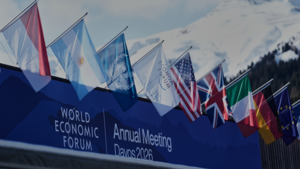
News that the World Economic Forum may come down from the mountain is symbolic of the end of an era but also signals the beginning of new thinking about internationalism. In Davos, Trump, Carney, and Zelenskyy offered competing visions for the future international order.
 Geopolitics
The public supports deploying US troops to defend allies, particularly in Europe, but most oppose using them for territorial expansion.
 Geopolitics
Europe’s security can no longer be taken for granted. We break down why.