Europe's Security Wake-Up Call
 Play Podcast
About This Episode
From US pressure over Greenland to high-stakes peace talks on Ukraine, long-standing assumptions about Europe’s security are being tested. The Economist’s defence editor Shashank Joshi explains how Europe is recalibrating its approach to defense, what this pivotal moment means, and why there may be no return to the old normal.
This transcript has been edited for clarity.
Leslie Vinjamuri: This week, Europe got another reminder that its security can't be taken for granted.
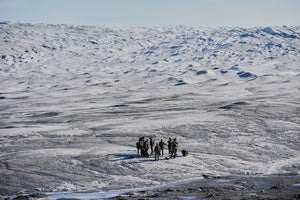
President Trump revived talk of taking over Greenland. A familiar idea, but one that's landing very differently across Europe this time. Because is it really about Greenland? Or is it about whether Europe can still rely on the United States for its security, and what happens if it can't?
At the same time, leaders met in Paris to talk about Ukraine, peace security guarantees, and ceasefires, spotlighting a deeper tension over who's really in charge. So, is Europe recalibrating its approach to defense?
Shashank Joshi: Europe has suffered a systemic shock, and I think that there's no going back to normal.
LV: My guest today is Shashank Joshi, defense editor at The Economist, who's been closely following how these shifts are playing out on both sides of the Atlantic.
I'm Leslie Vinjamuri, president and CEO of the Chicago Council on Global Affairs, and welcome to Deep Dish.
I do want to go right into just the last week, to get our listeners up to speed with your thinking. How did you feel when you woke up? I guess for you it would've been middle of the day when you get the news, on Venezuela and the US government's capture of, albeit, admittedly not legitimately elected leader, but nonetheless a leader of a sovereign state. What was your reaction?
Shashank Joshi: Well, I was blown away because I had expected a US strike in Venezuela. We've all been watching this huge military buildup in the Caribbean, biggest since the Cuban Missile Crisis. I think more than a third of the active US Navy was in the SOUTHCOM Southern Command area of operations. And these are scarce military assets, right? You can't have the USS Gerald Ford hanging around the Caribbean in perpetuity when there are many other global crises warranting its attention. You can't have electronic warfare aircraft, stealthy drones, special forces units and their helicopters all concentrated in Puerto Rico and in the Caribbean and in the Dominican Republic, Trinidad and Tobago, for sort of a year at a time.
In a strange way, Leslie, much as I saw the Russian buildup in late ’21, early 2022, I recognized this has reached a stage where something has to happen or they have to go home. I think something will happen because of the sort of credibility at stake. What I didn't anticipate, of course, was that it would be not a strike on the regime. I thought perhaps it'll be a strike on drug related facilities inside Venezuela, as we saw with the CIA strike in December. I thought perhaps it would be a strike on regime related targets. I didn't realize it would be a raid on Maduro himself. And you know what it reminded me of? Not so much Panama 1989, not so much Grenada. The thing it reminded me of is the Soviet special forces assault on the presidential palace in Kabul in 1979, where they go in with massive force against the well-fortified palace and kill Hafizullah Amin. But of course, they didn't kill him. They successfully exfiltrate him, whisk him away.
So, I was in awe of the military logistics. I was reeling at the political consequences, and I was as surprised as anybody else in terms of the specifics of that.
LV: I'm really glad, first, that you drew the analogy to the Russian buildup on the border of Ukraine. Because one thing that we saw there is that, actually, a surprisingly large number of extremely experienced and well-informed Europeans did not believe, despite that buildup, that Russia was actually going to invade Ukraine. I was in London at the time at Chatham House. We had many meetings on this, and the degree of skepticism, the feeling that it was a bluff. So perhaps question mark for you. Lesson number one, take military buildups and signaling extremely seriously?
SJ: Absolutely. And it's not just that. I would also look at the buildup in Diego Garcia of US bombers. I would look at the buildup of Israeli forces that we saw movement on airfield prior to the strike against Iran. There are lots of indications of this.
Now I think what dissuaded people from believing the intelligence on Russia in 2021 was the audacity of the operation. The sense of this was so audacious and it is so preposterous that nobody could possibly do something so cataclysmic, so audacious in scope, so norm-shattering. I think what we've learned in the past several years is that they may seem a truism, but the consequences are quite profound. Which is that we are back in a kind of era of militarism in which the use of force is a plausible, an acceptable, and in many cases even a desirable instrument of solving problems in the world. This idea that the Trump administration is averse to the use of force that is mistaken, it's out of date and it's deeply misleading.
LV: When I was studying for my doctorate back in the day, one of my advisors was Robert Jervis. His whole theory of international relations was, in part, about introducing studies of cognition and cognitive dissonance. So we have this cognitive distance. You don't use force, you don't bust norms, you follow the international rule of law, especially on sovereignty. It's now, as you just noted, being completely upended by the Trump administration.
SJ: Yes. I just read an essay by John Bew, the former foreign policy advisor in No 10 in the New Statesman Magazine, which links to an earlier essay he wrote last year called “The Rise of Machine Politic.” It's really all about this question of how do powers like Europeans, who have become accustomed to a world of rules and laws and norms, operate in a world where they do not want to become lawless themselves, but have to navigate an environment in which their adversaries increasingly dispensed with those rules? And is there a middle ground between naked militarism that says none of this matters? You act, in a way, that just asserts your power and nothing else is important. And a world in which you’re clinging to the world of international law that straightjackets you. What is the middle ground? What is the compromise? That, I think, is one of the really big animating questions faced by Europe, and it's been thrown into the public domain by a former French prime minister, Gabriel Attal, who basically said Europe is naive for believing it should adhere itself to any of this.
LV: Let's look at that in the context of Venezuela. I think this put Europeans in a very difficult position. You have a leader of Venezuela who has devastated the economy. Who has been a humanitarian and human rights, frankly, nightmare for Venezuelans and created a very difficult situation. In which the international community, such as it is, it's a terrible term, has proven to be basically feckless, unable to have any impact on the regime. And Donald Trump basically says, enough, right? Goes in. Now the words are a problem because the words indicate that he wants to take over the country. Take over the oil sector. Do a big regime change, perhaps even an occupation, but the actions are quite targeted and quite selective. So, Europe then has to respond to this.
How do you think they have done in their response? And, in your view, what should—given what you've just outlined about this straightjacket of international law for Europe—how should Europe be responding to Venezuela? If I'm right, you've tweeted about the John Bew article. John Bew says don't overinvest in responding to Venezuela. Think about Russia, Ukraine, and think about things closer to home.
SJ: I think this partly depends on one's theory of cause and effect in world politics and whether European hypocrisy has a meaningful impact on its relations with the global South and with other powers. Whether to have the credibility of non-aligned states like Brazil or India, you need to be able to more forcibly condemn malign activity and show consistency, whether it's Israel or America, or Russia.
I lean a little bit closer to the John Bew view, which I think implies, actually, “I'm not convinced that these public statements or the need for public consistency exerts such a big impact on Europe's diplomatic options.” What's much, much more relevant to Europe is less the specific assertion of force in Venezuela per se, than the underlying philosophy it reflects, and how that manifests elsewhere in the Western Hemisphere. It's not so much the Venezuela problem. We’ve known for many decades America's always had a view that says its domestic law in some ways supersedes international law. We know this from old US debates over the status of the ICC, for example. We know this from other operations in the past, including the abduction of Manuel Noriega, Panama's dictator in 1989. It struck me looking at American debates how much the legal questions, about whether this was legal, revolve around war powers. The Constitution, Congress, and DOJ indictments have so very little to do with the UN charter and threats of imminence and all these other things that preoccupy European perceptions of this. Which look completely baffling.
But to me, when Europeans look at this, the really concerning things are—and I think correctly— not so much what this means for Venezuela, as brutal as this is in some ways. It's what does it mean for Canada? What does it mean for Greenland? What does it mean for other places? At a time when we are seeing relentless and really intense pressure placed on Europeans through sanctions, through other legal means, in so many other ways as well.
LV: So let's get straight to the next big news item, which brings us into Greenland. The threat of either coercion or financial purchase of Greenland is, I’m sure, deeply unsettling to Europeans. We've seen the reactions, but if push comes to shove, what can Europe really do? How do you assess this current move on Greenland?
SJ: Initially, when this first came up at the beginning of 2025, the Danish response was to say to its European partners, keep this quiet. We deal with this privately through private channels, and we don't want to make this a public jamboree. That has completely changed in the aftermath of the Venezuela operation in which there is a sense of, I think, of American hubris. I don’t know if it reminds you a little bit of post-9/11, post-Afghan, sense of momentum that the US thinks we've knocked over the Taliban. We can use this opportunity to remake the region, right? The famous sense of, this is a domino to be toppled and we can remake the entire Middle East, capitalizing on a single conflict.
I get that same mood out of this administration. That feels successful assertion of power now means we can threaten Cuba, we can threaten Columbia, we can threaten Mexico, we can move on Greenland. But the Danish response, I think, has been really seriously to say in recent days from my own conversations with European officials, is to recognize that this is a different phase, now, this is an absolutely different phase. Even if Marco Rubio is saying, in private, these are threats to compel an economic deal, I don't think anyone necessarily places complete trust in that. And so, the first stage of the response is to marshal public support. We've seen unilateral statements by the Danes saying, this would be the end of NATO. Which isn't necessarily a deterrent of this administration. But we've also seen this effort of joint statements, including countries that are normally very, very cautious about criticizing the United States. Exhibit A being the country I'm in: the United Kingdom. As you know from your time in London, we don't make public comments about the Trump administration very easily. It really takes something quite serious to get us to say that. This very mild rebuke is a sign of that European consensus.
But I think the next steps are going to be Danish intelligence watching very carefully to see American intelligence activity in Greenland. We've already seen suggestions of influence operations to reach out to the Greenland Independence Movement to try to talk to them. Although I think to some degree, America's tactics are putting off even those people inside Greenland as being heavy-handed and unacceptable. I think you will also begin to have conversations of the type you had last year when the French were saying to the Danes, would you like us to put troops on Greenland? Not because we think we'll be firing at Americans, but because we think it'll be a diplomatic trip wire, not a trip wire in the kind of Baltic-Estonian-Latvian-Lithuanian-NATO-forces sense, but a trip wire in the sense of it would complicate any American operation to try to exert its influence in simply annex Greenland as a fait accompli. I think you will see those conversations kick off again with the question of do we put European forces inside Greenland to say to the Americans, we know you can walk over this, but you would have to have the very unsightly and unsavory spectacle of perhaps taking European forces into custody. Of walking past them, of seizing, government offices in Greenland. I think there would be many, many people—not in the administration necessarily, but in the US military who have years of experience working with NATO—who would be absolutely horrified by that prospect. That doesn't necessarily stop them. We saw in the Caribbean strike operations, for example, how Admiral Holsey, the Commander of SOUTHCOM, effectively protested and then resigned or was pushed out of office. That didn't stop them from conducting strikes on drug boats, but I think it would throw sand into the wheels of any American operation to try to take Greenland in a forcible way.
LV: I'm listening to you and I'm thinking, this is an extraordinarily ridiculous distraction at a time of intense threat from Russia, where Arctic security is a genuine concern. Where we have heard that China and Russia are collaborating in the Arctic, question mark. Now we have Europe effectively distracted by the Trump administration, but for very real reasons, focusing on deterring the United States. When really the West, the Transatlantic partnership, NATO, plus, should be focused on Russia. What do you make of that?
SJ: I think we should seriously entertain the hypothesis that the administration simply does not see a threat emanating from Russia, and a lot of its decisions flow from that. I would put to you the contradiction of an administration that says, we are concerned about Russian and Chinese ships swarming Greenland, and the threat to Greenland, with the administration that in its Ukraine diplomacy between Steve Witkoff and Kirll Dmitriev is actively looking at opportunities for joint drilling projects in the Arctic with Russia. Does that suggest to you that the administration is keen to contain Russian power in the Arctic? To me, it shows what they effectively say, which is that Russia is a middle power. It has no ability to really pose an existential threat to Europe. That should enable the US to step back, and seek strategic stability in Europe, to allow America to extricate itself. This is me paraphrasing the National Security Strategy, the NSS, and that therefore, so much of what flows from that is we can focus on other priorities. Such as, in this case, resource extraction and the acquisition of territory and critical minerals for the United States.
Justice in Venezuela, we don't focus on democracy or human rights. We really focus on resources, on access to Venezuelan oil on privileged terms. So that premise that the Russia threat isn't animating this administration explains many of these things, from the gutting of the FBI, to the dismissal of Russia expertise in the CIA and other elements of the US intelligence community, to the approach to critical NATO ally in the high North. They just don't care that much about Russia.
Leslie Vinjamuri: So, then we turn to Europe, and the perception of the threat that Russia faces is not necessarily completely agreed across all of Europe, but it's certainly different from what you've just laid out as we've read in the National Security Strategy. Where do you see the European capacity to align itself internally, and what does this mean for Europe's defense capabilities for Europe's security? This has been the big conversation for a very long time: can Europe develop the capabilities that it needs politically? Is it moving in the right direction militarily? Does it have what it takes financially? I guess two questions. First, how Europeans perceive Russia's intentions? And how Europeans are responding when it comes to their defense capabilities at a time when they're essentially squeezed between the United States on one side and Russia on the other.
SJ: Well, let's take those two separately and start with intentions. I think it's fair to say there's a debate in Europe. If you look at Estonia's intelligence service, you might expect Estonia to be acutely worried about the threat. But actually, they, in some ways, say there is no Russian threat to Europe that is immediate at present. Russia is deterred. Russia is bogged down in Ukraine. But what I see more broadly across Europe is that as the Americans have become much more sanguine about the Russian threat, Europeans have become much more alarmed by it, by and large, particularly in the major countries of Europe.
Let's look at the last couple of week with three big interventions by various countries. In the UK we saw Rich Knighton, the new Chief of Defence Staff, give a speech at RUSI, the think tank, at Christmas where he said the threat of Russian invasion is remote. That is what the Joint Intelligence Committee, the JIC, assesses.
But he then said, let's take a moment to reflect what “remote” means. He gave what I thought was quite an interesting parallel. He said the odds of Liverpool winning the Premier League are about 4%. What remote means in UK intelligence parlance is less than 5%. So, it is remote, but that could mean Liverpool winning the Premier League, which in concrete terms may seem uncomfortably likely to anyone thinking about the prospect of a Russian attack on Europe.
We saw an intervention by, I think it's Fabien Mandon, the French Chief of Defence, who said France must be ready to lose children. Which was his way of mobilizing the public for a conflict, saying, a major war, a major conflict, is possible of the types that our grandparents saw. And we have to be prepared for it. We have to think about a return to conscription and national service has changed, which is being undertaken in France. In Germany, German intelligence agencies have been making public intervention saying Russia is re-arming at a ferocious pace, and what you see is the revealed preference of German defense spending rising at an absolutely extraordinary rate.
So, I think the key is to recognize Russia is in no position to mount a serious attack on Europe at right this very moment. But the minute there is a ceasefire in Ukraine, the clock starts ticking on Russian reconstitution and that Russian rearmament could take place at a more rapid rate than European rearmament. But above all, I agree with Admiral Sir Tony Radakin, the former UK Chief of Defence Staff, when he says that Russia would lose a conflict against NATO. But that effectively hinges on the effective application of NATO air power, and the effective application of NATO air power to overmatch Russia depends on the involvement of the United States and the availability of its munitions. And if that judgment is wrong, if that changes—and that's a political judgment that could change quickly—then NATO could find itself in a close ground war with Russia for which it would not necessarily have the same advantages as it would in a standoff campaign that would be reliant on air power. And in that case, the Russian judgment of its ability to conduct a strike to undermine the European security order could change very rapidly, indeed. So, in that sense, my own assessment of intentions is to say yes, a Russian attack is a remote prospect. Yes, NATO is able to deter Russia. I'm not worried about that right now.
But should the US move away from NATO? Should the politics of that change dramatically? I think the military calculus can change in very unexpected and dangerous ways quite fast.
LV: We're talking about the prospect, how real is it of a Russian attack or an invasion of Europe proper? But you've written extensively and followed the gray zone tactics, the hybrid warfare, the messing with undersea cables. That's already happening, right? That's real. There are lots of questions about who's behind it. Can Europeans respond to these tactics without the help of the United States?
SJ: First of all, there's a debate again on this question as to whether the Russian campaign is a serious threat to the stability of Europe, or more of a nuisance that reflects Russia's earnest desire to challenge. NATO, under the threshold of Article V, but in some ways that reflects its weakness, it reflects its desire to avoid a conventional campaign.
There's a great deal of ambiguity. I've been reporting on cable disruption and when I talk to officials, there is a frank acknowledgement that while Russia may have attempted to cut some cables in the past several years, a great many of these instances are probably just bad seamanship, bad weather, happenstance. Similarly, many of the drone sightings we see, I believe some of them are Russian activity. But a great many of those drone sightings are also just panicked responses to people looking up and imagining things, confusing helicopters for drones, and the like.
My view is that in terms of drones, in terms of cables, in terms of all of these things, this reflects Russian weakness. It reflects Russia's desire to avoid a conflict. It absolutely does not pose an existential threat to Europe, and we should be very careful in avoiding hyping it up, lest it fulfill Russia's aim of whipping up the European populations into a fear of a conflict, which is what Russia wants. They want that fear of a conflict to inhibit European policymakers from responding robustly to support Ukraine. The more panicked Europe is, the more that inhibitory effect takes place.
With one exception, which is, I'm very concerned about political subversion in Europe. Channeling money to far right parties, influence operations to support particular candidates. I do believe that that has a material effect on trust in democracy in Europe, and on the faith in elections, and we've seen how corrosive that can be in your country, in the United States, from 2016. To the point where it's basically resulted in a sitting president calling into question the integrity of elections, on an ongoing basis, even to this day. That has profound consequences for trust in democracy.
Europe has had elements of that. We've seen that in Romania where the cancellation of an overturning of an election result has become a really divisive topic, including one which is now pulling in American officials to say, this is Europe suppressing democracy. And Europeans saying, no, this is us responding to Europe-Russian hybrid campaigns. So that's what I'm most concerned about.
Finally, can we do it without the United States? Well, we need American intelligence. We need American intelligence. If you are trying to understand whether the Russians have conducted a GRU assassination squad, has been trying to kill arms industry executives in Germany, if you are trying to understand whether Russian spies of infiltrated shadow tanker vessels, it is ridiculous to try to do this without the biggest, the best, the most, capable intelligence apparatus in the world—which is that of the United States.
If you were a young American intelligence analyst, does it serve your career right now to be working on Russian intelligence operations, to be pointing to evidence of Russian malfeasance in Europe? Or does that look to the administration like disobedience? Does it look to the administration like awkward subversion of their policy objectives? I'm profoundly worried about the undermining of this longstanding, mutually beneficial intelligence cooperation on the cyber front, on the human intelligence front, on the signals intelligence front. I think this is an absolute disaster for Western security right now.
LV: And on that optimistic note, let me ask you a very big question. It's one that you've been spending a lot of time on. What is the best that we can hope for right now when it comes to Ukraine? A deal? What role do you think Europeans should play when it comes to post a deal? And how much hope is there for the US? Giving some sort of backstop security assurance in this current context. In the first Trump administration, most people seemed to think that the wise strategy was to wait it out, sit it out. That America would maybe not come back at full speed, but that this is a passing moment. Maybe if you could also comment on your views on that, given where we are now.
SJ: First of all, Europe has suffered a systemic shock, and I think that there's no going back to normal. In the last 24 hours, I've been talking to some senior British military officials, others, and of all the states in Europe, the UK is the one most intimately tied to the United States. I talked about our dependencies on nuclear weapons, on intelligence. I'm even hearing a sense that this has to change. We need to unwind, we need to diversify. There is a sense that this is not sustainable for us. Even if you have a Democratic administration in 2028, a democratic administration will also quite understandably be less interested in Europe. We'll have other pressing priorities, including the aftermath of Trump policy in South America, including the pressing issues of Indo-Pacific security, which people in this administration said was their priority, but have not followed up on that, and we'll have to deal with that. But then there is always the prospect of a return to what is a radical, disruptive, and predatory US administration to Europe four years hence. And as you know, defense timelines are not measured in four-year blocks. They're measured in 10-year blocks. That's how long it takes to build fighter jets. That's how long it takes to build submarines. That's how long it takes to build nuclear warheads. So the decisions you take now are decisions that will lock you in beyond the lifetime, even of a successor democratic administration. That, I think, has really settled. The question is the timeline on which this unfolds, and if we do see a crisis over Greenland, if we do see a crisis, over US and NATO, I think we'll have to see defense spending in Europe rise to 5%, 6%, rapidly.
What's the best we can hope for? Well, I think that in Ukraine, actually, I'm strangely optimistic on the prospect of a deal at this stage. I think Ukraine is in a very difficult spot. It knows that its battlefield odds are moving against it because of the direction of US policy, and I should be very clear, Russian proficiency on the battlefield as well, including quicker adaptation than Ukraine. What that means is, I think that Ukrainians realize this is probably an advantageous time for them to strike a deal, even if that deal is not in terms they would wish to have had a year ago. So, I think that's going to happen. My worry is that we will see a European force inside Ukraine, but it will be backstopped by a US commitment, of Article V-like guarantees to Ukraine that will simply not be credible under this administration.
Even if they are ratified by the Senate, which as you know is going to be no easy feat, even under a pretty sympathetic Congress. That is going to create a very brittle and dangerous situation in which Ukraine will have to re-arm extremely fast with European assistance at the same time, as Russia re-arms to avoid a re-invasion. But Europe will then have to contend with the fact that, Russia will be able to shift its forces to the NATO border at the same time. So how do you then give away weapons and equipment and ammunition to Ukraine at the same time as the Russian threat to Europe becomes more acute and the US pulls away? I think that's going to be a very unstable, a very messy scenario in Europe.
I'm really not feeling particularly optimistic about it. I think the best case is that the Americans sort of quietly work with the Europeans privately to say, look, we recognize this. We don't want a resurgence of Russian power in Ukraine. But right now, I'm genuinely concerned that this administration really doesn't see European security as a priority. Thinks that even if Russia attacks Ukraine again, even if Russia expands its influence over Europe, ultimately this is not a problem that fundamentally affects the United States.
LV: This has been an extraordinary conversation. I highly encourage those of you who haven't read Shashank’s work to read it. Thank you so much, Shashank.
SJ: Thank you very much for having me. Great to be on.
LV: Thank you for listening to this episode of Deep Dish on Global Affairs. I'm your host, Leslie Vinjamuri. Talk to you next week.
Deep Dish is a production of the Chicago Council on Global Affairs. If you enjoyed today's episode, make sure to follow Deep Dish on Global Affairs wherever you get your podcasts. And if someone you know might find it interesting, send it their way.
As a reminder, the opinions you heard belonged to the people who expressed them, and not to the Chicago Council on Global Affairs. This episode is produced by Tria Raimundo and Jessica Brzeski, with support from Marty O'Connell and Lizzie Sokolich. Thank you for listening.


Related Content
 Geopolitics
The public supports deploying US troops to defend allies, particularly in Europe, but most oppose using them for territorial expansion.
 US Foreign Policy
America and Europe have been bound together for more than 250 years. Whose ideology will define their future?
 Global Politics
From Poland to Germany, Russian incursions are raising alarms. Experts break down the strategy, the risks, and what comes next.