The Challenges of Charting a New Order

At 250, America is attempting to redefine its position in the global system. Can it convince others to follow?
After 80 years of leadership under the liberal international order it helped create, America is attempting to redefine its position in the global system. What path it will ultimately pursue, however, remains unclear. Will it establish a sphere of influence? Withdraw to Fortress America? Should it recommit to and reinvigorate the liberal international order? Can it share leadership within a G7? Should it pursue a “G2” with China?
Whatever the United States decides, it will face several foundational challenges. Chief among these in successfully establishing a new order is securing the support of at least some other states. Interdependence and growing multipolarity mean that even Washington, with its economic and military might, cannot simply impose its policies and succeed. To advance its global interests, the United States must convince at least some nations that following US leadership comes with significant benefits.
Unfortunately, America will be attempting this redefinition of US-led order when its international prestige is at a low ebb. Negative global views of the United States jumped sharply between 2024 and 2025. And a significant portion of the global public considers the United States itself a threat to global security.
The Trump administration’s transactional foreign policy, where agreements must meet the immediate balance of national—if not personal—costs and benefits, is also a hindrance, and US President Donald Trump’s focus on “deals” comes at the expense of more durable, stable, and lucrative relationships. Short-term agreements typically fail to lock-in consistent rules and structure policy expectations. And even if other countries otherwise want to follow American leadership, the terms of that leadership often are not clear, reducing the attractiveness of any US-led order pinned on transactional, short-term policy.
The choices US leaders make today will define the nation’s international posture in its 250th year. But those decisions need not confine America in its next 250 years.
Moreover, the administration has shown itself quite willing to renege or renegotiate prior agreements as circumstances change. Trump has regularly lambasted the current North American trade rules, even though it was his own administration that negotiated that very agreement. States will thus harbor significant questions about how durable any such relationships will be. For example, the administration attempted to redefine the terms of the US-Japan tariff agreement shortly after it had been signed. If the US administration reneges on its own agreements so quickly, what confidence should countries have that other agreements will be honored long-term?
While a short-term, transactional approach could produce a US-fostered (if perhaps not “-led”) order that advances a narrow understanding of American interests, such an approach will increasingly alienate much of the globe, leaving US allies to look toward alternative leadership for international stability and prosperity. But it is not clear there are any states willing to step into the gap. China, as the most likely alternative, has shown little appetite for embracing hegemonic burdens like serving as the reserve currency or market of last resort, despite the benefits those measures provide.
The choices US leaders make today will define the nation’s international posture in its 250th year. But those decisions need not confine America in its next 250 years. Washington can bolster the success and efficacy of whatever order it pursues by recognizing—and ideally jettisoning—its short-term approach to foreign policy. In doing so, it will create a more durable international structure, rather than a fragile and limited patchwork of relations.
The Chicago Council on Global Affairs is an independent, nonpartisan organization and does not take institutional positions. The views and opinions expressed in this commentary are solely those of the author.


Related Event
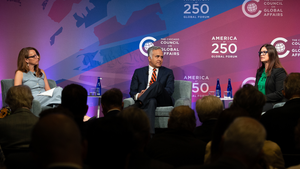
America at 250: The Arc of Global Influence
This content is part of the Council’s America at 250 initiative, a series of high-level dialogues, expert perspectives, public and private programs, and a signature conference focused on the critical questions that will define America’s future.