Trump and Xi Face a New Question: What to Do About AI
 Play Podcast
About The Episode
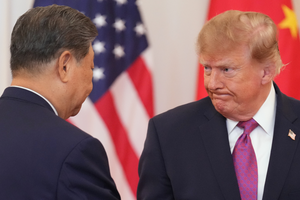
As Trump and Xi meet in Washington, Apple in China author Patrick McGee explains why he’s “a little more hopeful” about what could come out of the summit, where the United States and China could find common ground on AI, and what could still get in the way. Plus, how Apple’s bet on China helped build the manufacturing powerhouse the US is now competing against.
Key Takeaways
- AI safety could create an opening for US–China cooperation. Patrick McGee sees scope for basic agreements on reporting AI incidents and keeping communication channels open, even as the two countries compete for technological advantage. A shared concern about losing control over these rapidly evolving computational systems could make limited cooperation possible.
- Calls for regulation are exposing divisions between the US technology sector and the White House. Leading AI labs want safeguards, while the administration fears slowing the race with China. McGee questions both the evidence behind precise extinction forecasts and the claim that commercial incentives will ensure companies release safe products.
- Beijing’s determination to maintain political control could strengthen its interest in AI safeguards. But McGee notes that China would resist appearing to accept rules imposed by Washington. Framing cooperation around preserving America’s lead over an authoritarian rival makes agreement harder.
- Apple’s success in China has created dependencies with lasting strategic consequences. Its investment in workers and suppliers helped build a manufacturing ecosystem that also supports Chinese competitors. McGee argues that the United States has yet to fully grasp the implications of the industrial capabilities it helped develop.
- A major summit agreement would not necessarily represent a success for Trump. With Xi's ability to play the long game, McGee worries that Trump’s desire for a breakthrough could lead to costly concessions. Maintaining the status quo may be preferable to securing a deal from a position of weakness.
Watch the Video



Related Content
 Public Opinion
More than half of the US public supports a policy of cooperation and engagement with China, including a growing number of Republicans.
 Technology
Without buy-in from Washington and Beijing, proposals aimed at reining in artificial intelligence are unlikely to move the needle.
 Geopolitics
Though internally divided, the grouping normalizes an international landscape where the United States is not at the table.
 Global Politics
As the US pulls back from parts of its traditional role abroad, allies and middle powers are rethinking their relationships. Journalist Ishaan Tharoor explains what that could mean for the future of the international order.