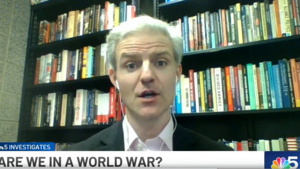
Council Senior Nonresident Fellow Paul Poast argues that multi-military involvement in the conflicts in Ukraine and the Middle East has reached the threshold of a world war—though not "at the level of World War I or World War II."
"We are watching another unwelcome phenomenon return to the global stage: the world war," Council Senior Nonresident Fellow Paul Poast argues in the New York Times.
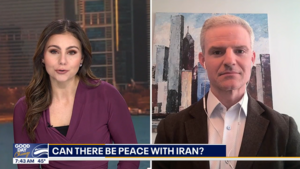
"The US has achieved a type of tactical victory," Council Senior Nonresident Fellow Paul Poast says. "But the terms that are on the table right now would put Iran in a position to be able to control the Strait of Hormuz and actually be in a stronger position than they were even prior to the war."
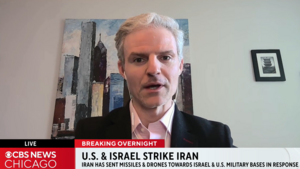
Targeting Iran's public utilities would constitute a war crime, Council Senior Nonresident Fellow Paul Poast tells NBC 5 Chicago. "There's supposed to be distinction between military and civilian [targets]."
"The conditions that typically produce short wars—a decisive military advantage, an adversary willing to negotiate, and a clear political end game—are conspicuously absent in this conflict," Council Senior Nonresident Fellow Paul Poast and Pegah Banihashemi write.
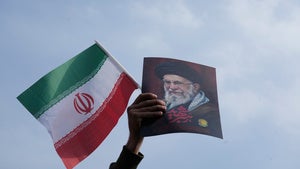
"The strike that killed Khamenei also wiped out a lot of the potential candidates or people that they thought would be the next in line," Council Senior Nonresident Fellow Paul Poast says. "There's still an immense amount of uncertainty."
"It looks like the very motivation that led the US to enter the war in Iraq is now in play with Iran," Council Senior Nonresident Fellow Paul Poast says.