The War in Afghanistan Is Over. Or Is It?
 Play Podcast
About The Episode
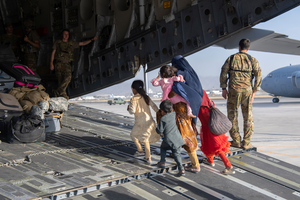
Nearly five years after the United States withdrew from Afghanistan, former US Ambassador Ryan Crocker joins Leslie Vinjamuri to reflect on America’s longest war and what its ending revealed about American power. Crocker argues that the withdrawal emboldened America’s adversaries and sent a dangerous message about its willingness to stay the course. “We went into Afghanistan for the right reasons,” he says. “We came out for the wrong ones.”
Key Takeaways
- The war in Afghanistan did not truly begin with 9/11 or end with the US withdrawal in 2021. With the Taliban seizing control again and terrorist groups still operating in the region, Afghanistan continues to have an outsized impact on regional and international security.
- The central failure was the decision to withdraw completely. By 2021, the US presence had fallen to roughly 3,500 troops, while Afghan forces were doing the bulk of the fighting. A limited US presence could have been sustained while Afghanistan developed the airpower and logistics needed to operate independently.
- Ambassador Crocker rejects the idea that Afghan forces were unwilling to defend their country. He recalls the distinct loses of Afghan security forces and argues that their collapse came after Washington signaled it was leaving and removed the support on which their military model depended.
- Afghanistan exposes a broader problem of American “strategic patience.” Ambassador Crocker questions whether the US political system can sustain long-term commitments across administrations and argues that allies and adversaries increasingly assume Washington can eventually be waited out. He believes the withdrawal helped embolden Putin before Russia’s invasion of Ukraine and sent a similar signal to China and Iran about the limits of American staying power.
- Looking ahead, Ambassador Crocker’s lesson is that policymakers should be as careful about ending military commitments as beginning them. Interventions can produce consequences far beyond what leaders anticipate, but withdrawal can be equally consequential, particularly when it weakens allies’ confidence and adversaries’ perceptions of US resolve.
Watch the Video


Related Content
 Geopolitics
The Mecca Joint Defense Agreement is not just a response to Iran but the divergence between states over theories of power.
 US Foreign Policy
Answers to the questions on what comes next, from the Iran war to the midterm elections.
 Geopolitics
From Venezuela to the Middle East, the Trump administration has not hesitated to use force. But even the world’s most powerful military has its limits.
 US Foreign Policy
At 250, America is attempting to redefine its position in the global system. Can it convince others to follow?