What is a 'Humanitarian Pause' and How is it Different From a 'Cease-fire'?

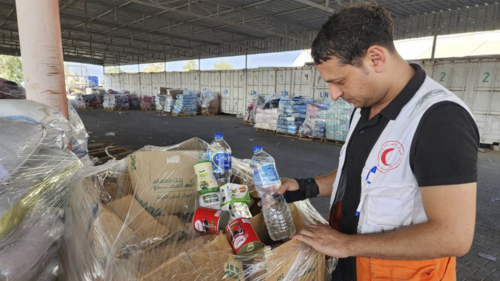
Thousands of Palestinians have been killed, and aid has been blocked. Countries are calling for a cease-fire and the US is calling for a humanitarian pause.
Two resolutions to stop the Israel-Hamas war were vetoed by the U.N. Security Council on Wednesday.
The U.S.-backed resolution called for a “humanitarian pause” in the besieged Gaza Strip. The pause would allow for the delivery of essential goods like food, water, medical supplies, and fuel into the region.
Other council members noted that a pause is not the same thing as a cease-fire, which is supported by U.N. Secretary-General António Guterres among others.
According to the U.N., a “humanitarian pause” is a “temporary cessation of hostilities” so that humanitarian aid can be carried out. A pause usually lasts for a defined period — it could be as short as a few hours — and occurs in a specific area.
A “cease-fire,” by contrast, is intended as a long-term cessation of fighting with the aim to “allow parties to engage in dialogue, including the possibility of reaching a permanent political settlement.”
On Friday, the U.N. General Assembly is expected to vote on an Arab states-backed resolution that calls for an immediate cease-fire.