The World Is Going Electric, with or Without the United States

As the current administration tries to hold back the tide on energy innovation, China is dominating in the production and sale of clean technologies.
As the United States prepares to mark 250 years since the Declaration of Independence was signed, the country finds itself in a perilous period. Internally, the United States is navigating profound challenges of governance and democratic backsliding. Internationally, it faces a potent peer competitor in China and a Russian government that has violated the territorial integrity of its neighbors through conquest.
At the same time, the world is experiencing profound physical shifts, from the adverse effects of climate change to an acceleration of outbreaks of communicable disease. What’s more, both energy and information systems are also undergoing profound changes. Some of these are perhaps as significant as the transitions from wood to coal, from lamplit homes to electricity, and from horse and buggy to the internal combustion engine.
Climate change has accelerated the turn toward new energy sources like wind, solar, and battery storage. As prices have fallen, these sources have revolutionized the scope for the electrification of home lighting, heating, and cooking. The electrification of transportation is also well underway, and likely to extend to other sectors.
Lithium-ion batteries are becoming key building blocks of the 21st century economy in the way that semiconductors were in the last century. These batteries will be deployed for energy storage for electricity and transportation, and have extensive military applications, including in drone production. The artificial intelligence (AI) revolution will accelerate the centrality of electricity, as just a modest uptick in AI applications will likely increase electricity demand—even in industrialized countries where demand had remained relatively flat for many years.
Just as these physical and technological changes are taking shape, we are bearing witness to an equally seismic shift in the global economy. In the wake of the COVID-19 pandemic and worsening relations between the United States and China, globalization and deep interdependence became a source of vulnerability for the United States.
"The future of electricity and transportation is clear, and the electrification revolution will continue with or without the United States."
While China’s ability to produce low-cost and high-quality goods at scale helped slake consumer demand and keep prices down, its model of state-supported capitalism has come at some cost to other countries’ manufacturing capabilities. And its dominance in some areas has created supply-chain risks that could be disrupted or weaponized. The Biden administration sought to reshore some industrial production through the Inflation Reduction Act (IRA), the CHIPS and Science Act, and the Bipartisan Infrastructure Law. The administration also tried to mobilize allies and partners to “friendshore” the production of minerals and other essential goods.
For its part, the Trump administration has repealed many of the provisions of the IRA through the One Big Beautiful Bill Act and rolled back the previous administration’s commitment to climate action, particularly with respect to incentives for companies and consumers to produce and buy electric vehicles. Along with battery storage, electric vehicles are the main industry driving demand for lithium-ion batteries. At the same time, the administration has taken an active interest in the domestic mining and processing of critical minerals, including but not limited to rare earths—which have applications in permanent magnets ranging from missiles to automobiles to wind turbines. The Trump administration has also sought bilateral deals with a number of minerals producers. Many applications of those minerals are in clean technologies, to which the current administration is hostile.
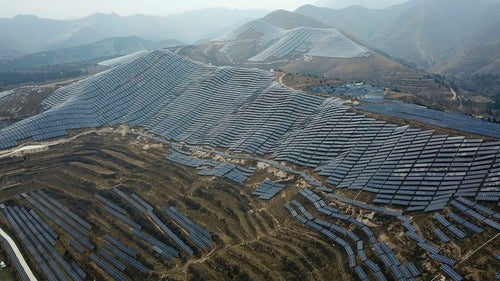
In the meantime, China continues to dominate the production and export of clean technologies. In 2023, clean technology drove more than 40 percent of the country’s economic growth. And Chinese firms have invested more than $210 billion since 2022 in the manufacturing of clean technologies in other countries.
The current administration is trying to hold back the tide of clean energy innovation by pushing 19th- and 20th-century fuels and technologies and undermining other countries’ commitments to clean energy. But the future of electricity and transportation is clear, and the electrification revolution will continue with or without the United States. If the United States tries to hold back the transition, it will likely find itself left behind, with its competitors in China reaping their just rewards for being far-sighted and embracing both the present and the future.
For 250 years, the United States has been a country that has thrived on innovation and new ideas. But the mantle of change may be passing the country by as it looks back over its last quarter-millennium, rather than ahead.


America at 250: The Arc of Global Influence
This content is part of the Council’s America at 250 initiative, a series of high-level dialogues, expert perspectives, public and private programs, and a signature conference focused on the critical questions that will define America’s future.