America: The Prodigal Friend

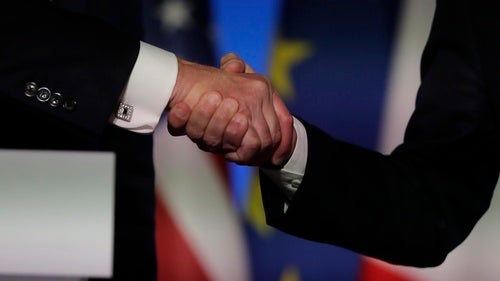
As it prepares to turn 250, the once-respected nation is becoming harder to recognize. Yet America retains the capacity for reinvention.
Imagine a widely respected, highly successful graduate who went off and built a big business and a wonderful family. He donated generously to his alma mater and other good causes over the years. He was the one who stepped up to solve problems and pulled the group together when someone was in trouble. He had a strong moral sense, though he did not always live up to it, and everyone knew he’d had his lapses. Still, he was held in wide esteem as a pillar of the community. Everyone turned to him in a crisis.
But then he began to behave erratically. He froze and terminated contributions to many worthy causes that had long relied on him. At the reunion, he was cranky, critical, reckless in some of his behavior, and unmoored from the values long associated with him. He seemed focused primarily on increasing his own wealth and became close to those on the fringes of the group who were seen as untrustworthy and unprincipled.
Everyone speculated about and sought out a diagnosis: Some thought it was a virus that simply took over the body politic, made newly vulnerable by changes in the surrounding ecosystem. Others argued that this friend had always been guilty of reaching into other people’s business and betraying professed ideals. These latest changes, they said, were a confirmation of what they always thought of this high-profile peer, rather than a metamorphosis.
"America has gone through phases in the past, and it retains the capacity for reinvention."
Some friends began to treat him with leery caution, as if he were a hostage-taker, and avoided false moves that might trigger an extreme reaction that could worsen the tension and risk. The friends who once relied on close family members and associates to act as intermediaries and temper some of the friend’s troubling impulses found that those people had retreated, and those who surrounded him now were reluctant to contradict him and did not see things as the old friends had.
Peer rivals saw an opening and strengthened relations with the friends of the prodigal classmate, doubling down to compete with his business and become the focal point for the collective, which would allow them to set the directions and plan for what came next.
The friend’s drastic changes made it hard to think of celebrating his birthday open-heartedly, as the occasion would bring back a trove of fond memories and enduring accomplishments only to be juxtaposed against an unsettling present and uncertain future.
As America prepares to turn 250, the country we will celebrate is becoming harder to recognize. But unlike a person, a country does not have a fixed lifecycle, nor will it face an irreversible decline in its later years.
America has gone through phases in the past, and it retains the capacity for reinvention. By focusing on what makes America worth celebrating in its 250th year, we may still be able to summon the forces that make it worthy of celebration in the years to come.


America at 250: The Arc of Global Influence
This content is part of the Council’s America at 250 initiative, a series of high-level dialogues, expert perspectives, public and private programs, and a signature conference focused on the critical questions that will define America’s future.