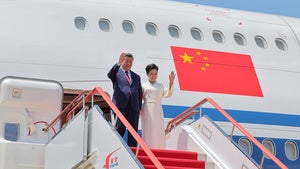
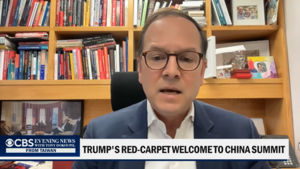
What does China want from the global economy? As leaders gather for this year's Summer Davos meeting, The Economist's Simon Rabinovitch explains what Beijing is trying to achieve and why the world is paying attention.
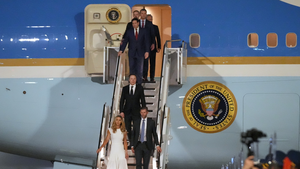
President Trump brought some of America’s biggest tech CEOs to Beijing for a summit with Xi Jinping. What does it mean for the race over AI power? Council on Foreign Relations’ Chris McGuire explains.
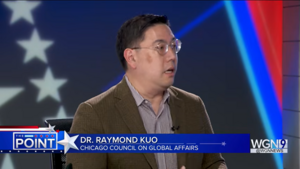
"[China] had a clear sense of priorities," Council Marshall M. Bouton Senior Fellow for Asia Studies Raymond Kuo shared while unpacking the Trump-Xi summit on Chicago Tonight.
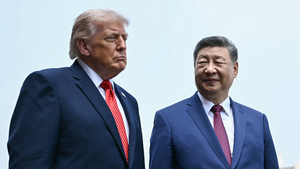
Trump and Xi are meeting in Beijing to try to reset US-China relations at a moment of growing instability. Oriana Skylar Mastro breaks down China’s ambitions and what could come next.
"It provides China with an opportunity to frame itself as a source of prosperity and stability—in contrast to the United States," says Council Distinguished Nonresident Fellow Evan Medeiros.
"The United States needs China to some extent more than China needs us," Council Marshall M. Bouton Senior Fellow for Asia Studies Raymond Kuo tells WGN's The Point.
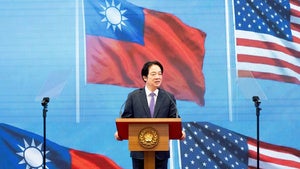
The Beijing meeting gives the United States an opportunity to push back on a Chinese narrative that worsens the bargaining positions of both Washington and Taipei.