Humanitarian Needs Are Growing. Can the World Keep Up?
 Play Podcast
About The Episode
More than 300 million people need emergency humanitarian support as some of the world’s biggest donors scale back their aid. Mercy Corps CEO Tjada McKenna joins Leslie Vinjamuri to discuss who steps in when governments pull back, whether new donors, private capital, or advancing technology can help fill the gap, and why ending conflicts may be just as important as funding the response. With the old model of humanitarian aid under pressure, McKenna says “the world is not returning to what it was before.”
Deep Dish will be on a two-week break. New episodes return September 10, and we look forward to bringing you fresh conversations on the issues shaping our world. Thank you for your continued support of the podcast.
Key Takeaways
- Over 300 million people are now in urgent need of emergency humanitarian support, twice the number before the pandemic. At the same time, assistance from five of the largest donors has fallen by nearly 54 percent.
- Neither philanthropy nor private investment can plausibly fill the gap left by governments. "The gap is not being plugged,” Tjada McKenna says. Foundations lack comparable resources, and capital is unlikely to reach conflict-affected places such as Yemen and Somalia.
- For Tjada McKenna, shrinking humanitarian aid budgets tells only part of the story. As diplomatic efforts to end wars have weakened, humanitarian organizations have been left managing the consequences of conflicts that continue without resolution.
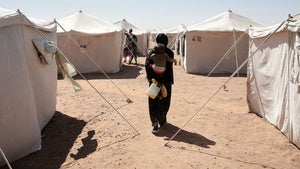
- In places such as Sudan, immediate relief must be paired with support for agriculture, markets, schools, and health systems. Aid to neighboring host countries can also help displaced people remain closer to home.
- “The world is not returning to what it was before,” McKenna says. There is no return to the old humanitarian system. Building its replacement will require greater collaboration, new technology, committed donors, and a renewed political case for aid grounded in both moral responsibility and practical benefits.
Watch the Video


Related Content
 Global Health
As the virus spreads, the United States is turning inward. Can the international community contain the outbreak without Washington?
 Human Rights
As the UNGA prepares to open its 80th session, one of the world’s top humanitarian leaders explains where the global aid system is failing—and how we fix it.
 Food Security & Sustainability
Distinguished Fellow and former Executive Director of the World Food Programme Ertharin Cousin on summoning the political courage to intervene in Gaza.
 Global Politics
Atrocities against civilians in Sudan are once again rising, and now the White House is pushing for a ceasefire. Martin Griffiths explains what’s really at stake.