Where Does Global Health Go from Here?
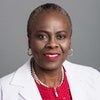
“This moment calls for us to reimagine the possibilities,” Dr. Olufunmilayo I. Olopade tells the Council.
Since returning to the White House, US President Donald Trump has scaled back America's involvement in the global health infrastructure, pulling out of the World Health Organization (WHO) and slashing funding for key initiatives.
To understand how the global health community is responding to this moment, the Council's Christina Colón spoke with Council Board Member Dr. Olufunmilayo I. Olopade, director of the Center for Innovation in Global Health at the University of Chicago and an internationally recognized expert on breast cancer treatment. Olopade shared her thoughts on what is at stake and how communities in Chicago and around the world are charting a path forward.
This interview has been edited for length and clarity.
In the last year, the Trump administration has dismantled the US Agency for International Development (USAID) and formally withdrawn the United States from the WHO. What impact have those decisions had on global health?
I just talked to my collaborators in Nigeria where we have women with breast cancer on a clinical trial. For the past year, we have not been able to get money to them. And we're trying to figure out how to continue our work.
Our universities—the whole country—has been thrown into chaos. I am at the University of Chicago, a private institution where we do not discriminate, and where we allow faculty to do their research and study what they want to study. But because US policy talks about how diversity, equity, and inclusion (DEI) should be wiped off all our grants, then a Black woman like me is being wiped off all grants. You can imagine how that could be really damaging for me personally, having committed and dedicated my life to studying and doing research that impacts every patient on the global stage. And I happen to be living on the South Side of Chicago where I'm also a doctor. To me, global health is local health. If we tolerate injustice anywhere, then we all suffer.
Your research has been instrumental in the early detection and treatment of breast cancer, and you once noted that "the only women at high risk who are not being tested are those who are economically disadvantaged or uniformed." With the United States no longer contributing to the WHO and USAID dismantled, how can sub-state and non-state actors safeguard public health?
I've been privileged to live in Illinois where we have communities that support each other. Friends from all over have come together and said, "We've got to do something about this." Universities have to step up. Private enterprises have to step up. Sub-nationals can't stay paralyzed. Even during the Cold War, scientists reached out to each other and they supported each other.
Our Hippocratic Oath as physicians is to support patients. If healthcare providers are scared, if scientists cannot work because they're afraid of getting laid off, if our patients cannot come to the hospital because they're concerned about being arrested, then we are all disturbed by that. We need to stand in solidarity with children and women, the most vulnerable.
Everybody is really trying their best, and I'm trying to shed light on that. We are a global community. We have to take the most intractable problems and try to solve them.
Illinois was one of three states to join the WHO's Global Outbreak Alert and Response Network following the US departure from the agency. You are on the Illinois task force. What is the value of such a partnership?
I take my students every year to the institutions that shape global health. Last year, we got there and were told that the United States was going to withdraw from the World Health Organization. This year, our students returned and the people there were packing their bags. Our students came back and said, "We cannot understand why our government would withdraw from the WHO. We know that a lot of things need reform, but how can you reform when you are not at the table?"
I am excited about the fact that these young people care. They care about the world they live in. They care about globalization. They care to see how other systems work. No system is perfect. But all of us are looking to reform and to get better.
Young people would like us to really focus on their future. That's really why I think this sub-national committee was put together. With COVID-19, we had warnings, but the policy failed. I joined the committee because I do know that as a global city, we cannot say that the health of the world doesn't concern us. It's as simple as that.
As a medical researcher, you went to communities—from the South Side of Chicago to Nigeria—rather than expecting people to come to you. Why did you choose to relocate your work? And how does an "America First" approach to global health influence such health efforts and outcomes?
In global health, we talk about "One Health"—that we shouldn't isolate ourselves, we should care about the planet, we should care about what we eat and what we drink. So, when I know that my neighbors have lead contamination and when I know that we have arsenic in some waters in mountain states, those things have to be of concern to me. It's why we talk about health literacy, and we talk about scientists being able to communicate their ideas. Science policy is really a big deal.
I talk about reverse innovation. If I want to make a drug faster and cheaper, I can't do it in the United States. It costs $10 billion to bring a drug to market in the United States. People are looking all over the world now to bring drugs to market. We have to do it faster and cheaper. We cannot spend 17.5 percent of our GDP taking care of people in the last months of their lives. Doing interventions before someone is 5 years old can be a life gain. Why is it that every child in America doesn't have access to vaccines? Access to food? Access to the very thing that will give them a life trajectory that they deserve? This should matter to all of us.
We are in a particularly challenging global moment: a widening conflict in the Middle East, war in Ukraine, mass displacement in Sudan, and a humanitarian crisis in Gaza. How is this period shaping the global health response and how might it inform our future understanding?
Everything is cyclical.
In 1991—when we thought we had won the Cold War—the Department of Defense wanted anyone who had an idea to study breast cancer to write a proposal. So, I wrote a proposal to study breast cancer in Nigeria. The reason I had that idea was because in medical school, I saw women coming in with breast cancer in an advanced stage, and I came to Chicago and saw women coming in at an advanced stage. I wanted to ask, was it genes or the environment? And the Department of Defense funded me because we wanted to discover what we did not know about breast cancer. Fast forward to now, and we now know a lot.
I want us to continue to have ideas and for young people to have confidence that this is a moment for us to be creative. We can use drones to deliver medicine anywhere in the world. Right now, everybody is seeing how these drones are acting during a military conflict. But what if we converted all of that to deliver oral medications to wherever a patient is? This moment calls for us to reimagine the possibilities. It's scary now. It seems bad. But I think we can do this.
The Chicago Council on Global Affairs is an independent, nonpartisan organization and does not take institutional positions. The views and opinions expressed in this commentary are solely those of the author.
Related Event