The United States and Iran Reach a Deal but Agree to Little

Trump celebrated his 80th birthday with a UFC fight and a preliminary deal with Iran, kicking off a 60-day clock for negotiations.
The United States and Iran reached a deal on Sunday to end the war. US President Donald Trump and Vice President JD Vance announced that they had virtually signed the preliminary agreement on Monday, with Trump writing in a post to Truth Social that ships were “starting to move, many loaded up with Oil, out of the Strait of Hormuz.” Yet neither party has released text of the agreement, and conflicting reports of what it contains have led to speculation about its scope.
Council Vice President of Research Ariane Tabatabai spoke with the Council’s Christina Colón about what the deal means for Iran’s nuclear capabilities, how Israel could upend the process, and why Trump is so eager to reach an agreement now.
This interview has been edited for length and clarity.
The United States and Iran reached an agreement on Sunday to end the war. What do we know about this deal?
We don't really know a whole lot about the deal. The Iranian government and Iran's state media have been putting out statements and texts that they claim reflect the agreement. Trump has said that what has been circulating online is not the text that negotiated by the United States. So, for now, we're just waiting to see what the actual agreement is going to look like.
What we do have are some of the contours of the agreement for what seems like an interim deal, if you will—a stepping stone toward an actual final agreement that would effectively end the conflict and address some areas of concern between the United States and Iran.
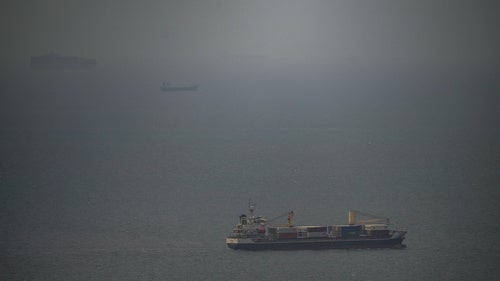
What this interim deal seems to entail is the reopening of the Strait of Hormuz, which is going to allow for the restoration of freedom of navigation through the chokepoint, including for oil tankers. That had obviously been a big sticking point because Iran had been trying to assert control over who could transit the strait, tolling certain ships and wholesale denying passage to others. The United States, in turn, had imposed its own blockade. It seems like this deal is going to end this situation in the strait.
The pieces that are missing so far include the nuclear issue, which is perhaps the most complex and important part of the Iran problem-set. One of the stated objectives of Operation Midnight Hammer last summer and the ongoing Operation Epic Fury has been to degrade Iran's nuclear capabilities. But it doesn't seem like this particular deal is going to address what comes next: what nuclear activities Iran can and can’t resume, and how we verify that it is not weaponizing its nuclear program. What is being said, however, is that this interim deal will lead to an agreement that will address the nuclear issue.
Other things missing from this agreement, as far as we know, are Iran's support for proxies and terrorist groups around the region, and Iran's ballistic missile program, which was a key criticism of the Joint Comprehensive Plan of Action (JCPOA)—especially among those who opposed the deal years ago.
And then there's been some reporting that Iran might be getting a significant amount of money as a result of this deal. Again, we don't have the details confirmed yet. But if that were to be the case, then this deal would be providing Iran with a lot of concessions on the front end without really knowing where things are going to go and whether we're going to get a sustainable end to this conflict and change in Iran's most problematic behaviors.
The two countries have nearly reached a deal several times only for talks to collapse. What makes this time—and particularly this deal—different?
We don't know if this time is different yet. A number of things can still happen.
For one, part of the negotiations pertains to Israeli operations in Lebanon. It seems like what has been agreed to by the United States is that Israel ceases its operations in Lebanon. However, Israel has shown that it is not really inclined to follow through on what the US administration promises and has said that the administration doesn't speak for it. Notably, Israel is not part of these negotiations. So, the United States can't really promise that Israel is not going to do its own thing.
Iran can also play spoiler itself. Iranian proxies in the region could also decide to take actions that undermine the whole process. That is not necessarily very likely, but it is entirely possible.
Israel’s national security minister actually came out on Monday and said that the agreement does not bind Israel and that it will not be withdrawing from Lebanon. It was not an entirely surprising move given that Israel has made its demands and goals clear throughout the duration of the war.
Trump also entered the conflict with stated goals and intentions. But what has the United States actually achieved in this conflict? And what will it get out of this deal?
There is no doubt that, on an operational level, the United States military has been successful in degrading some of Iran's military capabilities, including the missile and drone programs. However, the question that remains is if Iran is going to rebuild those capabilities. I think the answer is yes, the question is how and what it is going to rebuild. And if we're going to give Iran a pile of cash, then it is probably going to use that money to rebuild.
Some things that have been accomplished on an operational level may have actually been counterproductive on a strategic level. For decades, Iran had threatened that it would close the Strait of Hormuz if it ended up in some sort of conflict with the United States. And they've really learned a lot from this whole process that they're going to be able to carry forward. Back in January, Iran didn't have a full picture of how its closure of the Strait of Hormuz might actually play out. Now it does.
Some things that have been accomplished on an operational level may have actually been counterproductive on a strategic level.
Iran also has a lot more insights into US capabilities. And I suspect this conflict is going to be studied by Iran, Russia, China, and others to learn about US military capabilities and how it conducts warfare.
The United States has also been depleting stocks of munition. A lot of US facilities in the region have been damaged. Service members have been in the theater for months and months on end. All of this takes a toll of US military readiness and will entail tradeoffs elsewhere down the line and for years to come. There are just some of the areas where the United States is worse off now than it was back in in January.
The announcement of the deal coincides with several big things for President Trump: His 80th birthday, a UFC fight on the White House lawn, the nation's 250th anniversary. Does the timing of this agreement have anything to do with all of this?
It's obviously hard to tell what is driving the president's decisions and timelines, but I think it's fair to assume that the timing is not entirely coincidental.
Going back a bit over a decade, President Trump, then candidate Trump, was very critical of the Obama administration’s approach to Iran and the flagship nuclear deal negotiated then. It was one of the few foreign policy issues that Trump raised again and again in a pretty consistent manner.
I think he is trying to show that he was able to get his own deal with Iran, and portray that to his base as a big win regardless of the fact that this agreement, as reported right now, seems to give Iran more than the JCPOA and get fewer concessions in return.
The United States and Iran virtually signed the agreement on Monday. What happens now?
The 60-day clock to negotiate an agreement that will settle a number of issues between the United States and Iran has started. What I want to stress is that these are very complex issues, and they're going to be complex negotiations. And so, 60 days is actually a really short amount of time. That is, if the administration’s goal is to get a thorough deal that can verifiably deny Iran a nuclear weapon and do so for a good amount of time.
Now, we could end up with some sort of thin agreement that doesn't really say a whole lot in terms of details. We could get Iran to say, ‘yes, we will abide by the nuclear nonproliferation treaty. We will commit to not acquiring a nuclear weapon. And we will do X, Y, and Z on our highly enriched uranium stock—and maybe even allow International Atomic Energy Agency inspectors back into Iran.’ But I suspect a lot of the details will be left open or unsaid, which can create problems down the line.
The reason why the Iran nuclear deal of 2015 was roughly 160 pages was that you need to make sure you're crossing your t's and dotting your i's when you're negotiating a very complex and technical set of issues like nuclear activities and with an adversary with which you have decades and decades of tensions and distrust. If you leave things unsaid, there is always a chance that the agreement won't survive, and, even if it does, that there will be additional tensions down the line.
The Chicago Council on Global Affairs is an independent, nonpartisan organization and does not take institutional positions. The views and opinions expressed in this commentary are solely those of the author.

Related Content
 Geopolitics