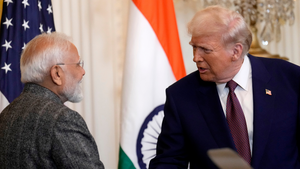
As Secretary Rubio heads to India, the Indo-Pacific is on edge as US priorities shift, and the Quad is being tested. Derek Grossman explains what’s at stake.
Ariane Tabatabai, the Council's vice president of research on security and defense and senior fellow on the Middle East, joins the podcast to talk through the week's biggest national security stories.
The Iran war is spreading far beyond the Middle East. ECFR’s James Crabtree explores what that means for China, India, and the implications for the Indo-Pacific region.
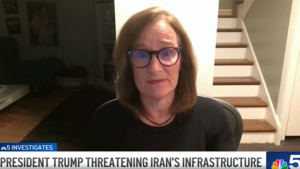
"Bushehr—the nuclear power plant—is closer to Doha and Dubai than it is to Tehran," says Council Lester Crown Senior Nonresident Fellow Rachel Bronson. "Our allies would be at risk . . . should there be a leak."
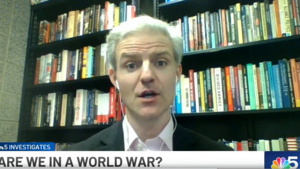
Council Senior Nonresident Fellow Paul Poast argues that multi-military involvement in the conflicts in Ukraine and the Middle East has reached the threshold of a world war—though not "at the level of World War I or World War II."
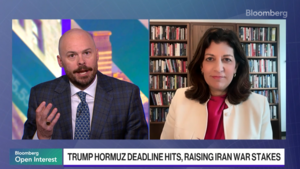
The US blockade of Iran's coastline raises concerns about a potential confrontation with China and others who have managed to get ships through the Strait of Hormuz, Council President and CEO Leslie Vinjamuri tells Bloomberg. "This is very unchartered territory."
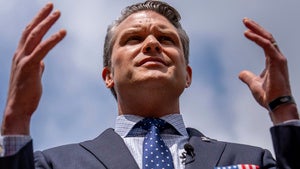
US Defense Secretary Pete Hegseth’s deployment of religious rhetoric in the Iran war has come under increased scrutiny. What happens when the line between political conflict and religious warfare blurs?
"I want to know who the nuclear experts are that are going," the Council's Rachel Bronson said of the US delegation. "We're sending over novices at the moment, and that should give us considerable concern."
"The US has achieved a type of tactical victory," Council Senior Nonresident Fellow Paul Poast says. "But the terms that are on the table right now would put Iran in a position to be able to control the Strait of Hormuz and actually be in a stronger position than they were even prior to the war."