NATO at a Crossroads: Continuity or Change in the Trump Era
The North Atlantic Treaty Organization (NATO) is under significant internal pressure.
Since US President Donald Trump returned to the White House, he has mused about annexing Greenland, making Canada the fifty-first state, and reducing US force posture in Europe, prompting many members to question the value of US security guarantees and rethink their approach to their alliance with the United States. Such intra-NATO tensions have not been contained to the transatlantic relationship: Asian nations, including China, are taking note of what it means for their own global position.
While many Americans hope the 2028 presidential election will bring a return to business as usual, a reset will likely be required when a new administration takes office. European and Asian allies are not monolithic in their views of US foreign policy and the future of the alliance. As such, any planning for what comes next must begin with understanding these different perspectives.
The Chicago Council on Global Affairs has set out to capture differing views on Washington’s standing within its main alliance architecture. Through three edited volumes, experts will examine the geographical divide with the alliance, the implications of intra-NATO tensions, the United States' standing in the shifting order, and what this moment means for US-China relations and Asian nations. The first volume will be released in May 2027.



Related Content
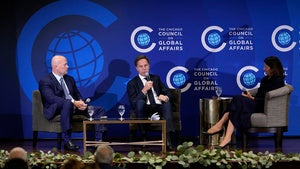
NATO Secretary General Mark Rutte, US Permanent Representative to NATO Ambassador Matthew G. Whitaker, and Leslie Vinjamuri convene in Iowa to discuss the future of the alliance and what it means for Americans at home.

North American and European industry representatives met in Ankara to discuss how to enhance the alliance’s capabilities through increased production, cooperation, and joint procurement.
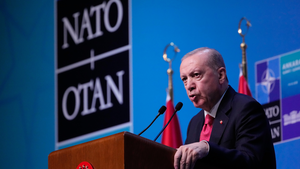
As NATO adapts to wars in Europe and the Middle East, Turkey is becoming harder to ignore. Aslı Aydıntaşbaş explains how Turkey is balancing its alliances, expanding its influence, and positioning itself as a middle power.

Ahead of the 2026 NATO Summit, Council experts examine deeper fractures over threat perception, alliance trust, and Washington's commitment.