What a Democratic-Controlled Congress Could Mean for US Economic Policy and the Global Economy

Today’s rising inflation, debt, and economic problems are nearly entirely self-inflicted.
The US midterm elections are upon us. If the polls are even close to accurate, Democrats are on track to take back control of the House of Representatives, and quite possibly the Senate. What might the outcome mean for US economic policy, the global economy, and transatlantic relations?
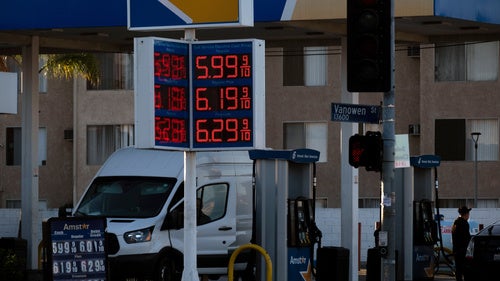
At present, inflation is high and continues to rise. US consumer prices were up 3.7 percent in September, largely driven by a 9.1 percent surge in gas prices. Energy prices have risen 20.4 percent in the last year, with diesel prices seeing the most dramatic increase (61%). Debt and deficits also continue to increase. The US federal budget deficit reached a near noncrisis historical high of 6.2 percent of GDP ($1.992 trillion), with the US gross debt-to-GDP ratio standing at 126 percent in September.
To be clear, this is not leftover inflation or debt from the COVID-19 economic crisis and Biden administration policies. When US President Donald Trump took office in January 2025, US Personal Consumption Expenditures (PCE) inflation (the Federal Reserve’s preferred metric) had fallen sharply from a June 2022 peak of 7.22 percent to 2.63 percent, bringing it close to the Federal Reserve’s 2 percent PCE target. Similarly, the gross debt-to-GDP ratio fell under US President Joe Biden, dropping from a high of 133 percent in 2020 to 121 percent at the end of 2024.
Today’s rising inflation and debt are nearly entirely self-inflicted problems. Rising gas and energy prices have been almost entirely driven by Trump’s war with Iran and its impact on shipments through the Strait of Hormuz. And the Federal Reserve said earlier this month that inflation on everyday items has been entirely due to Trump’s tariffs. The election outcome thus stands to determine whether these massive, self-inflicted policy shocks continue.
Inflation and fiscal policy
A Democratic-controlled Congress could alter the outlook for inflation and fiscal policy in three ways. First, if Democrats take control of Congress, there would likely be stronger pushback against Trump’s political attacks on the Federal Reserve, including his ongoing attempts to fire Federal Reserve Governor Lisa Cook. Federal Reserve Chairman Kevin Warsh would also likely find it easier to assert the Federal Reserve’s operational independence over monetary policy, especially given Trump’s deep unpopularity among Americans over soaring gas, energy, and food prices.
The federal budget could also look very different. Although Democrats are unlikely to secure veto-proof majorities in Congress, they are likely to try to restore Affordable Care Act premium subsidies and reverse the roughly $1 trillion in Medicaid cuts passed through the One Big Beautiful Bill Act. Democrats would also likely attempt to rein in presidential war powers, put a stop to Trump’s proposed $350 billion "mandatory funding" for the Department of Defense, and restore money to fund priorities including National Institutes of Health (NIH) research. Again, whether these attempts will survive the Senate, let alone a presidential veto, is unclear. But they would signal a shift in the political and fiscal landscape over the next two years. Bond markets and investors would likely recalibrate their expectations about US debt and deficits, with potentially significant implications for Treasury yields, the dollar exchange rate, and commodity prices.
The potential for the US inflation and fiscal outlook, as well as the broader trajectory of the global economy, to change significantly in the year ahead as a result of the elections is very real.
Furthermore, if the Democratic majority can reassert congressional control over war powers, Trump’s ability to continue waging war on Iran might finally be constrained. Whether this would lead to a full reopening of the Strait of Hormuz and ease oil and gas prices remains to be seen. But the potential for the US inflation and fiscal outlook, as well as the broader trajectory of the global economy, to change significantly in the year ahead as a result of the elections is very real.
Transatlantic trade and geopolitical relations
The signs are clear that Democrats would also make a serious attempt to rein in executive tariff authority. House Minority Leader Hakeem Jeffries has said that overturning or limiting Trump’s tariffs is a first 100-days priority should the Democrats take control of Congress. And while the series of bills Democrats have introduced in recent weeks to significantly limit or repeal presidential tariff authority are unlikely to pass in the current Congress or during the lame-duck session, they well might in a Democratic-controlled 120th Congress. Moreover, Democrats are also laying plans to conduct a series of investigations into potential corruption surrounding specific bilateral trade deals and tariff exemptions made under the Trump administration since January 2025.
Although the degree to which any of these initiatives would succeed remains unclear (Trump will likely try to veto legislation were it to pass), they could lead to more restraint on Trump’s ability or willingness to take new actions. Furthermore, they would signal to our allies—especially Canada and the European Union—a desire to “normalize” trade (and security) relations in the future. While a full “reset” to pre-Trump 2.0 trade policies, let alone a re-engagement with the World Trade Organization (WTO) and its moribund court, are highly unlikely, an end to an open trade “war” with our closest allies is possible.
Should Republicans manage to retain control of one or both chambers, however, we are likely to see more of the same on both economic policy and lack of legislative constraints on Trump. And so long as Trump remains in the White House, we are unlikely to see a meaningful restoration of US-European Union and US-Canada relations, either on trade policy or other major geopolitical issues. Nonetheless, a Democratic Congress could well provide a meaningful check on Trump’s most disruptive trade and security policies. What it could mean for transatlantic relations and how Canada and other close allies (who remain deeply angry with the United States for upending 80 years of institutionalized cooperation) would respond to overtures from Democratic congressional leaders to “normalize” relations, remains to be seen. But a Democratic victory in November might well be the first step in a long road to repairing American ties with its closest allies and trading partners.
The Chicago Council on Global Affairs is an independent, nonpartisan organization and does not take institutional positions. The views and opinions expressed in this commentary are solely those of the author.
Related Event