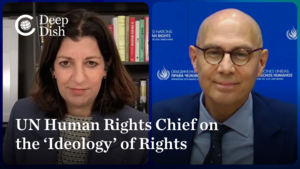
UN Human Rights Chief on the 'Ideology' of Rights
 Play Podcast
About This Episode
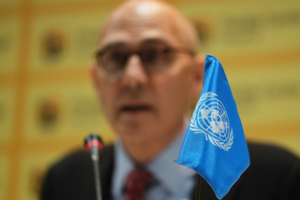
As the US pulls back from UN human rights institutions, can international law still hold powerful countries accountable? UN High Commissioner for Human Rights Volker Türk joins Deep Dish host Leslie Vinjamuri to examine the growing challenges facing the UN as conflicts intensify and new weapons make it harder to protect civilians. He explains why he believes international law remains a “compass” in an increasingly divided world.
Key Takeaways
- The number of active conflicts is at its highest level since World War II, while democracy and global freedoms have been declining for more than two decades.
- UN High Commissioner Türk emphasizes that human rights are not simply political ideals or Western values. Human rights are a universal framework underpinning social cohesion, peace, security, and development.
- A rules-based international order provides stability, predictability, and protection against the use of brute force. UN High Commissioner Türk stresses that international law is not something imposed on countries, but rather a reflection of obligations they have voluntarily negotiated and accepted.
- UN High Commissioner Türk warns against using human rights violations as a justification for military intervention or regime change. Using Iran as an example, he argues that military action has added to the suffering of an already oppressed population and has strengthened rather than weakened the existing regime.
- Migration is driven by a combination of conflict, persecution, climate change, poverty, and economic instability. UN High Commissioner Türk argues that governments need to address these underlying pressures while developing effective asylum systems and migration policies.
- UN High Commissioner Türk believes immigration enforcement and border management can coexist with humanity, dignity, and respect for human rights. He also highlights America's historical tradition of immigration and community-based refugee resettlement.
Watch the Video


Related Content
 US Foreign Policy
But recent polling finds little consensus on whether the Trump administration's policies are working.
 Global Politics
Is there any prospect for accountability when major powers ignore international law? Former UN High Commissioner for Human Rights and legal expert Louise Arbour answers.
 Human Rights
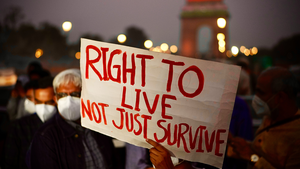
 Day arrives as norms fade, and pressures such as inequality and disinformation are rising. Kenneth Roth explains what’s really at stake.
 Global Politics
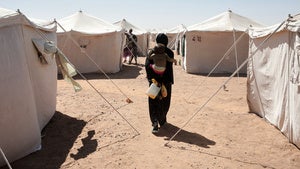
Atrocities against civilians in Sudan are once again rising, and now the White House is pushing for a ceasefire. Martin Griffiths explains what’s really at stake.