Could Burnham's 'Manchesterism' Be a Model for Fixing the West's Crisis?

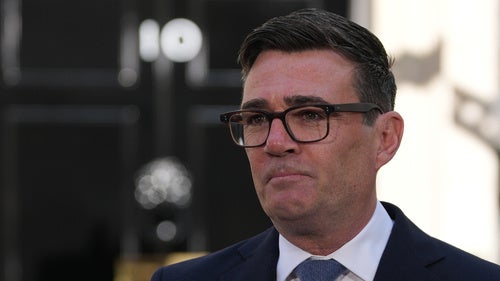
New UK leader Andy Burnham is wagering that economic renewal at home, not global strategy, is what stands between Britain and its own populist reckoning.
Andy Burnham entered 10 Downing Street on July 20 facing as unforgiving an inheritance as any incoming prime minister in modern times. At home, an economy under significant pressure: public debt approaching the size of national output, debt-interest payments totaling roughly $146 billion, and a historically low investment rate. Beyond, an unrelenting war in Ukraine, an escalating confrontation between the United States and Iran over the Strait of Hormuz, “sweeping” new US tariffs on 80 nations (though for now, the United Kingdom may be marginally better off), and a Europe flooded by Chinese exports and struggling to carve out its own technological autonomy.
Given the current state of global geopolitics, it might seem obvious that Burnham's premiership would be consumed by building Britain's defense capabilities, diversifying its partnerships, addressing international conflict, and, especially, by managing Britain's relationship with US President Donald Trump. But Burnham's greatest concern is domestic: namely, the threat of a Reform UK Party victory in the United Kingdom’s next general election. It is thus not surprising that Burnham has made clear that fixing Britain's broken economic model is his priority.
In his first speech as prime minister, he promised the biggest changes in 40 years for the United Kingdom, including "a new political model and a new economic model" dubbed ‘Manchesterism.’ The governing philosophy is one of devolution, characterized by stronger public control of essential services, procurement-led industrial policy, and regional investment. And it is a direct challenge to the four decades of neoliberalism he argues have failed many of the communities that built the Labour Party. It is an ambitious and bold agenda, and it’s one that meets the moment. Britain’s circumstances demand thinking equal to the scale of its challenges.
Burnham’s decision to first address challenges within the United Kingdom may appear counterintuitive in this global moment. But as former Chatham House Director and Chief Executive Sir Robin Niblett and I argued in Foreign Affairs, the crisis of the Western order "has come from within"—rooted in the deep economic inequalities of the democracies themselves.
The crisis of the Western order "has come from within"—rooted in the deep economic inequalities of the democracies themselves.
In the United States, real median household incomes began stagnating in the mid-1970s. A child born in 1940 had a 92 percent chance of outearning their parents. For a child born in 1984, it was a coin toss. It is hardly surprising that the country turned to Donald Trump. In Hungary, Viktor Orbán returned to power just two years after a financial crisis devastated Hungarian households indebted in foreign currencies. Britain's own version of the story began with the post financial crisis policy of austerity and worsened with Brexit, contributing to the rise of the Reform UK Party.
Delivering a new economic model—and one built on the promise of affordability—will not be easy. Writing in The Times this week, former Conservative Party leader William Hague put the danger starkly: according to projections by the Office for Budget Responsibility (OBR), public debt could rise from roughly 95 percent of GDP today to 300 percent in the 2070s if policy remains unchanged. Though lenders would force Britain to change course long before it reached that point.
A YouGov poll conducted largely before Burnham took office found 23 percent of voters intended to vote for the Reform UK Party. Twenty percent said their support would go to the Labour Party. Immigration concerns remain central to those in Reform UK’s coalition, but the increased support is not explained by this factor alone. Among voters who switched their support from the Labour Party to Reform UK Party, 51 percent identified the cost of living as a leading concern. Burnham is thus betting that visible improvements in housing, transport, energy, the National Health Service, and other public services can recover lost voters and further keep the entire political contest from being defined by the immigration debate.
Already, Burnham's decisions have produced surprises revealing how the domestic premiership will be disciplined by external constraints. The first is his pick of John Healey as chancellor. Healey resigned from Starmer’s government only last month after the Treasury declined to fund the $37 billion that military chiefs said the defense investment plan required, declaring as he left that "our adversaries do not follow timetables set by the Treasury." Burnham has now put him in charge of the Treasury, which investors received as a relatively reassuring appointment.
Europe offers one of Burnham's few plausible routes to greater investment and productivity, but it presents its own political constraints. YouGov found that 55 percent of Britons support rejoining the European Union in principle, but that support drops to 35 percent if Britain is unable to retain its former opt-outs on mobility, regulatory alignment, and financial contributions, among other things.
One of the most important decisions for Burnham will be how to manage Trump. Within days of taking office, Burnham approved the continued use of British bases—Diego Garcia and RAF Fairford—for US defensive strikes against Iranian missile threats. It was an interesting move by the leader, who rose by attacking the concentration of power in Westminster and began his premiership by reaffirming the deepest structures of Britain's Atlantic dependence. But if proximity to American power gives Burnham the political bandwidth to undertake serious reforms at home, the move could prove to be prescient.
Still, the United States could easily become an even more demanding ally as Trump’s efforts to deliver peace in the Middle East are stymied, leading to greater escalation and putting Europe in an even more difficult position. Trying too hard to manage the US president or predict the contours of a winning US strategy may be a fool's errand. And Burnham should expect this to get worse, not better, after the US midterm elections, when Trump may become more constrained at home in the United States and lean even more into a disruptive foreign policy agenda. The saving grace is that Trump respects strength, which means Burnham’s efforts to make Britain work better will be respected (if they are successful).
Ultimately, the threat to the West's democracies was never only abroad; it accumulated at home, in the gap between what governments promised and what people's lives delivered. Burnham has staked his premiership on closing that gap. Whether ‘Manchesterism’ is a model for national renewal or a language of discontent unable to survive, the constraints of national power will reveal whether Western democracies can shape the world by first rebuilding at home.
The Chicago Council on Global Affairs is an independent, nonpartisan organization and does not take institutional positions. The views and opinions expressed in this commentary are solely those of the author.