"Ultimately, I don't think that either the United States or Iran wants to return to March, when we had large-scale operations," says Council Vice President of Research for Security and Defense Ariane Tabatabai. "And so this, in my mind, is the new steady state for the foreseeable future."
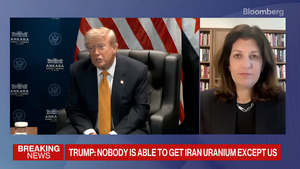
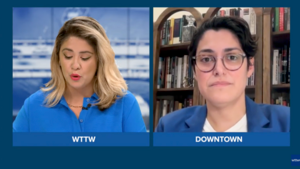
Council President and CEO Leslie Vinjamuri joined Bloomberg Open Interest to explain why President Trump's latest Iran threats are aimed at gaining negotiating leverage rather than launching a full-scale war.
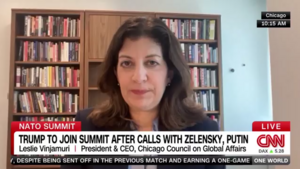
"Having that provocation on the eve of the NATO summit could lead President Trump to do what he should do, which is to double down on NATO's demonstration of unity," Council President and CEO Leslie Vinjamuri argues on CNN. "I mean, after all, this is this is a summit."
"Implementing NATO 3.0 in any meaningful sense requires the administration to name the threat that the alliance exists to deter," Council Vice President of Research for Security and Defense Ariane Tabatabai and John Drennan write.
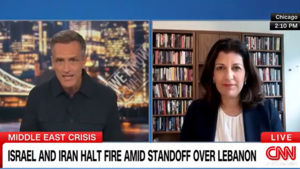
" Iran would like to see this an integrated peace process, that the ceasefire in Lebanon between Lebanon and Israel needs to be part of the overall deal," Council President and CEO Leslie Vinjamuri says. "That is going to continue to be one of the major blocks to this next phase."
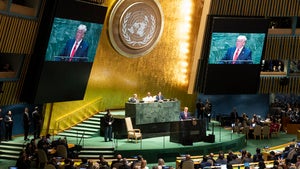
"Despite open enmity toward multilateral institutions, the Trump administration finds itself turning back to these bodies to handle crises, distribute funds, and shoulder burdens," Council Lester Crown Senior Nonresident Fellow Suzanne Nossel writes.
"Once you start a conflict, you don't always end it on your terms," Council Vice President of Research on Security and Defense Ariane Tabatabai tells The Daily Blast podcast.
The recent strikes could complicate US efforts to negotiate a deal with Tehran, Council President and CEO Leslie Vinjamuri tells CNN. "This sort of escalatory violence, if there's a return to that, it gets that much more difficult."