When The Global Economy Becomes a 'Weapon'
 Play Podcast
About The Episode
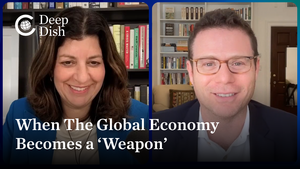
Five months after the conflict between the United States, Israel, and Iran began, Council on Foreign Relations’ Edward Fishman joins Leslie Vinjamuri to explain how strategic "chokepoints" — from the Strait of Hormuz to the US dollar — have become powerful tools of geopolitical competition. They discuss what makes a true chokepoint, why tariffs aren't always effective, and how the United States can compete in a more fragmented global economy.
Key Takeaways
- The post-Cold War era of globalization was built for a period of unipolar American power, and the absence of great power competition. Fishman argues that as geopolitical rivalry returned, states have turned economic dependencies, once prized for efficiency and prosperity, into a source of leverage through sanctions, tariffs, and export controls.
- Not every economic dependency is a “chokepoint.” Fishman says a true chokepoint combines a dominant market position, few substitutes, and the ability to hurt an adversary more than yourself—a test the dollar passes, but broad US tariffs generally do not.
- The dollar remains America’s most powerful tool of economic warfare because it is used in roughly 90 percent of foreign-exchange transactions. This enables Washington by forcing international banks to choose between sanctioned countries and the US financial system, effectively “conscripting” them into sanctions of enforcement.
- The Strait of Hormuz is a true chokepoint because the Persian Gulf has no alternative maritime exit. Fishman warns that Iran’s use of military force to control it could normalize “militarized economic warfare” at other geographic chokepoints.
- Looking ahead, Fishman argues that the United States should pursue allied cohesion and avoid weakening its own leverage by targeting allies as readily as adversaries. Pushing Europe, Canada, and Japan to reduce their dependence on America could leave the world “sleepwalking into autarky.”
Watch the Video


Related Content
 Public Opinion
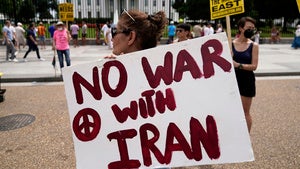
New polling finds 68 percent of Americans believe the costs of the war with Iran have outweighed the benefits, though Republicans stand apart.
 US Foreign Policy
President Trump called NYT’s David Sanger directly to talk about the Iran deal. He shares with us what he learned from those conversations and what he's watching next.
 US Foreign Policy
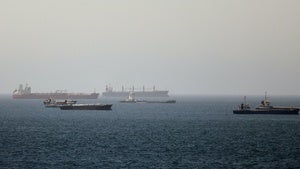
The desire to unlock the Strait of Hormuz will continue to focus the mind of the United States and its allies.
 Global Economy
Americans of all partisan stripes agree free trade agreements are important, but Republicans want them with a side of trade barriers.