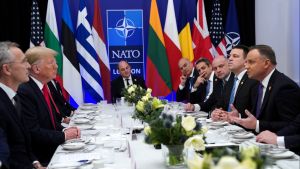
Council President Ivo Daalder discusses emerging global stories with The New York Times’ Carol Giacomo, POLITICO’s Matt Kaminski, and the Financial Times’ Philip Stephens.
Europe is right that Biden’s election offers an opportunity to build a strong and enduring partnership — but success will require Europe to be strong, united and committed in that very effort as well.
A new model for development—based on synergy, vigour, and sustainability—may be key to addressing changing needs in an age of globalisation and digital revolution.
Better training and coordination between officials at all levels of government will give subnational diplomacy the chance to bolster American soft power abroad while boosting trade and foreign direct investment at home.
Council President Ivo Daalder discusses emerging global stories with Peter Spiegel of the Financial Times, Carla Anne Robbins of the Council on Foreign Relations, and James Harding of Tortoise Media.